You might find flying for international trips to be a daunting experience, but with the right strategies, you can conquer your fear and enjoy your travels. This guide offers practical tips to help you manage anxiety, understand the flying process, and build confidence, ensuring that your journey becomes an enjoyable part of your adventure rather than a source of stress. From preparation techniques to in-flight coping mechanisms, you’ll discover effective methods to transform your flying experience.
Key Takeaways:
- Preparation: Familiarize yourself with the flight process, including boarding and safety procedures, to reduce anxiety.
- Relaxation Techniques: Practice deep breathing, meditation, or visualization exercises to calm your nerves before and during the flight.
- Support: Consider traveling with a supportive friend or family member who understands your fear and can help comfort you.
- Professional Help: Seek guidance from a therapist or counselor who specializes in aviation anxiety for tailored coping strategies.
- Positive Mindset: Shift your focus to the excitement of the destination and the experiences that await you on your international trip.
Understanding the Fear of Flying
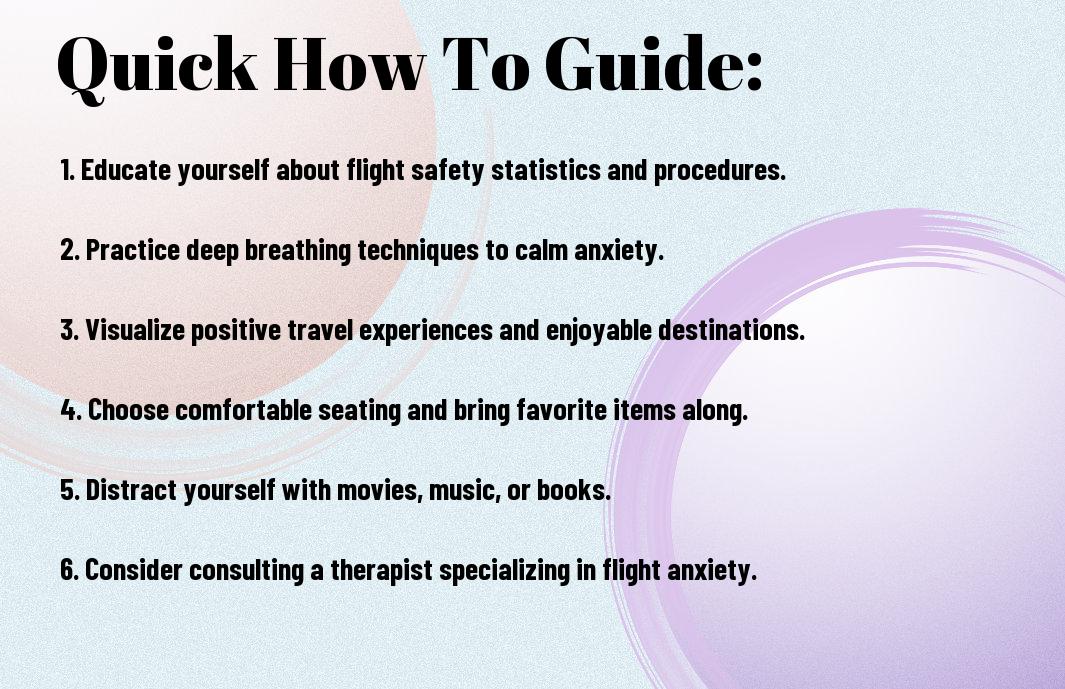
Before you board an international flight, it’s important to understand your fear of flying. This fear can stem from various sources, including past experiences or anxiety about being in confined spaces. To learn more about managing this fear, check out How to Deal With a Fear of Flying on Your First International Trip.
Common Causes of Flight Anxiety
For many, the fear of flying can be linked to specific triggers. These may include worrying about turbulence, fear of heights, or concerns about safety. External factors, such as hearing negative stories or watching movies that depict air travel accidents, can also exacerbate your anxiety.
Psychological Factors at Play
Even the psychological aspects can greatly influence your fear of flying. Factors like a lack of control and anxiety can manifest during your flight. The unpredictability of flying can leave you feeling uneasy or overwhelmed. Some common psychological triggers include:
- Fear of loss of control
- Panic attacks
- Claustrophobia
- Generalized anxiety
This highlights how understanding your feelings can be the first step in overcoming flight anxiety.
Commonly, individuals experience a range of psychological challenges that can contribute to their fear of flying. These can include a heightened sense of vulnerability, fear of the unknown, and anticipatory anxiety. If you identify with any of these feelings, engaging in calming techniques or speaking with a professional may be beneficial:
- Relaxation techniques
- Gradual exposure to flying
- Cognitive behavioral therapy (CBT)
- Mindfulness practices
This understanding can empower you to take charges of your emotions and work towards a more enjoyable flying experience.
Preparing for Your Trip
The key to overcoming fear of flying lies in preparation. By understanding various facets of your upcoming trip, you can find comfort and confidence in the unknown. Start by gathering the necessary information about your travel experience, which can be a game-changer when it comes to alleviating anxiety. From checking your flight details to packing your belongings, every step should be approached with mindfulness to ensure a smoother journey ahead.
Researching Your Destination and Airline
Your journey begins with researching both your destination and the airline you’ll be flying with. Familiarize yourself with the culture, weather conditions, and activities at your travel location, as knowledge can help dispel fear. Additionally, understanding the airline’s safety record, policies, and onboard services can provide you with reassurance. Knowing what to expect contributes significantly to reducing anxiety ahead of your flight.
Planning Your Travel Itinerary
Even a well-structured travel itinerary can play a significant role in alleviating your fear of flying. Having a clear plan in place makes you feel more in control and lessens uncertainties that can fuel anxiety. Knowing where you will be going and what activities you have lined up often provides a sense of comfort, allowing you to focus on the exciting aspects of your trip rather than the fear of flying.
Itinerary management goes beyond just listing activities; it encompasses organizing accommodations, vital transport details, and even downtime for relaxation. Integrating a balanced mix of exploration and rest ensures you’re not overwhelmed, which could amplify anxiety. Creating a detailed schedule allows you to visualize your trip better, reinforcing excitement over apprehension when you consider the adventures that lie ahead.
Tips for Managing Anxiety Before the Flight
Keep your anxiety in check by implementing strategies before your flight. Consider these tips:
- Plan your travel itinerary thoroughly.
- Arrive at the airport early to avoid rushing.
- Limit caffeine and alcohol intake.
- Stay hydrated and eat light meals.
- Listen to calming music or podcasts.
Any proactive measures you take can significantly reduce your anxiety.
Breathing Exercises and Relaxation Techniques
On the day of your flight, practice deep breathing exercises to promote relaxation. Inhale deeply through your nose, hold for a moment, and exhale slowly through your mouth. This technique helps to lower anxiety levels, calm your mind, and provides a sense of peace as you prepare for your journey.
Visualizing a Positive Flight Experience
Some people find it helpful to visualize their flight as a positive experience. Picture yourself boarding the plane calmly, enjoying a pleasant flight, and landing safely at your destination. Visualizing these positive scenarios can shift your focus away from fear and help cultivate a sense of control.
It’s important to practice this visualization regularly, ideally leading up to the day of your flight. By imagining each stage of the journey—from check-in to take-off and landing—you can reinforce a sense of familiarity and comfort. This mental rehearsal can help reduce fear and create a positive mindset around flying.
Strategies During the Flight
Once again, addressing your fear of flying during the flight is vital for a more enjoyable experience. Implementing strategies such as breathing exercises, visualization, and grounding techniques can help you maintain a sense of calm. Prepare yourself in advance by bringing along tools that reduce anxiety, and view the flight as an opportunity to relax and escape from daily stressors. This way, you can start to redefine your flying experience and take control over your fear.
Distraction Techniques and Activities
Techniques to keep your mind engaged can make a significant difference in your flying experience. Consider bringing a book, downloading podcasts, or watching movies to distract yourself from any feelings of anxiety. Engaging in puzzles, drawing, or even practicing mindfulness activities can help you immerse yourself in something positive. The more occupied you keep your mind, the less likely you are to dwell on your fear.
Communicating with Flight Attendants
An important strategy you can employ is to engage with flight attendants. They are trained professionals who understand the challenges some passengers face and can provide reassurance. Don’t hesitate to share your concerns; by letting them know about your fear of flying, they can offer support and guidance throughout your journey.
The information you provide to the flight attendants will help them assist you more effectively. They can check on you during the flight, offer tips on relaxation, or even provide updates on flight progress to ease your worries. Their supportive presence can greatly enhance your comfort level, so take advantage of their expertise when you need it the most.
Using Professional Resources
Your journey to overcoming the fear of flying can be greatly enhanced with the support of professional resources. These experts provide techniques and strategies tailored to help you manage anxiety, empowering you to face your fears head-on. Seeking their guidance can provide you with a supportive environment and the tools necessary to build confidence for your international trips.
Cognitive Behavioral Therapy (CBT)
On your path to freedom from flight anxiety, Cognitive Behavioral Therapy (CBT) is a highly effective option. This therapeutic approach helps you identify negative thought patterns related to flying and replace them with positive, realistic thoughts. By working with a trained therapist, you can learn coping mechanisms and desensitize yourself to the triggers that cause fear, ultimately making flying a more manageable experience.
Support Groups and Workshops
Support groups and workshops can provide you with a community of individuals who share similar fears. Engaging with others who understand your struggles can be comforting and empowering, allowing you to express your feelings openly in a judgment-free environment. These resources often offer workshops led by professionals who teach effective coping strategies, breathing exercises, and visualization techniques specifically for flying anxieties.
This supportive environment reinforces the idea that you are not alone in your fears, making it easier to share experiences and gain insights. Through group discussions and interactions, you’ll find opportunities to learn from fellow participants while also benefiting from expert advice. These collective experiences can foster empathy and encouragement, leading you to feel more confident about conquering your fear of flying for upcoming international trips.
Tips for First-Time International Flyers
Unlike domestic travel, international flights can feel daunting for first-time flyers. To ease your nerves, consider these helpful tips:
- Arrive at the airport early.
- Familiarize yourself with your airline’s policies.
- Stay hydrated before and during your flight.
- Learn some basic phrases in the local language.
- Pack a comforting item to help you relax.
Perceiving these tips as a checklist can help streamline your flying experience.
Familiarizing Yourself with Airport Procedures
With a better understanding of airport processes, you can approach your journey feeling more at ease. Start by familiarizing yourself with check-in procedures, security screenings, and boarding protocols. Many airports have maps available online, which can help you identify your terminal and gate in advance. This proactive approach allows you to navigate the airport confidently, reducing anxiety as you prepare for your flight.
Packing Essentials for Comfort
If you want to enhance your flying experience, careful packing is key. Focus on bringing items that promote relaxation and comfort during your trip, such as neck pillows, noise-canceling headphones, and lightweight blankets. Additionally, consider packing snacks, an eye mask, and mini toiletries to keep you refreshed. The right items can make a significant difference in your overall comfort, helping you enjoy your journey without stress.
Essentials such as these contribute to a more pleasant atmosphere while flying. A supportive neck pillow can help prevent stiffness, and noise-canceling headphones allow you to block out unwanted sound. Snacks keep your energy levels up, while brightening your mood. Always consider bringing layers of clothing, as cabin temperatures can fluctuate. By packing thoughtfully, you set the tone for a more enjoyable flight experience.
Conclusion
The key to overcoming your fear of flying for international trips lies in understanding your anxiety and implementing effective coping strategies. By educating yourself about flying, exposing yourself gradually to the experience, and utilizing relaxation techniques, you can build your confidence. It’s also beneficial to seek support from friends, family, or professionals who can provide encouragement. Embrace positive thinking and focus on the exciting destination ahead, turning your fear into a manageable part of your journey.
FAQ
Q: What are some effective techniques to manage anxiety before a flight?
A: There are several techniques that can help alleviate anxiety before flying. Visualization is one approach where you imagine yourself on the plane, calm and enjoying the flight. Deep breathing exercises are also beneficial; practice inhaling slowly for a count of four, holding for four, and exhaling for four. Additionally, you might consider listening to calming music or engaging in a distraction, such as watching a movie or reading a book to keep your mind occupied.
Q: How can I prepare for an international journey to reduce my fear of flying?
A: Preparation is key when addressing your fear of flying. Start by familiarizing yourself with the flight process; learning about takeoff, turbulence, and landing can help demystify the experience. Moreover, consider booking a direct flight if possible, to minimize the duration of the journey. Arriving at the airport early can also provide a relaxed start, allowing you time to adjust to the environment without feeling rushed. Lastly, engage in conversations with seasoned travelers who can share their tips and experiences, as well as your own coping strategies.
Q: Are there professional resources available to help with fear of flying?
A: Yes, several professional resources are available for those struggling with the fear of flying. Many airlines offer courses specifically designed to help passengers overcome their fears, often featuring expert psychologists or counselors. You can also seek individual therapy or counseling focused on anxiety management techniques. Support groups, both in-person and online, can provide camaraderie and shared experiences, making you feel less isolated in your fear. Additionally, self-help books and podcasts on the subject can provide valuable insights and coping strategies.
