Travel

How to Avoid Common Scams When Traveling Internationally

There’s nothing like the thrill of exploring new places, but navigating the world can come with its share of risks, especially when it comes to scams. To ensure your travels are as enjoyable and safe as possible, you need to arm yourself with knowledge about common scams you might encounter abroad. In this guide, you’ll discover practical tips and strategies to help you recognize and avoid these pitfalls, allowing you to fully embrace your adventure without worry.

Key Takeaways:

  • Always research scam awareness before traveling, as different regions have unique tactics.
  • Be cautious with public Wi-Fi; use a VPN to protect against data theft.
  • Keep your valuables secure in hotel safes and avoid displaying them in public places.
  • Verify transportation services in advance to avoid unlicensed taxis and potential price gouging.
  • Use official sources for bookings, tickets, and information to minimize the risk of fraud.

Understanding Common Scams

The world of travel can expose you to various scams designed to exploit unsuspecting tourists. By familiarizing yourself with these scams, you can safeguard your trip and enhance your travel experience. Awareness is the first step to ensuring that you enjoy your adventure without falling prey to deceitful schemes.

Types of Scams to Watch For

On your travels, you may encounter a variety of scams. Here are some common types:

  • Fake guides or tour operators
  • Overpriced transportation services
  • Pickpocketing in crowded areas
  • Currency exchange scams
  • Accommodation fraud via online listings

Any one of these could lead to an unpleasant surprise if you are not vigilant.

Type of Scam Description
Fake guides Unlicensed individuals posing as legitimate guides.
Overpriced rides Drivers charging excessive fees or taking longer routes.
Pickpocketing Theft in crowded markets or tourist spots.
Currency fraud Disguised unfavorable exchange rates at kiosks.
Fake rentals Scams involving non-existent properties online.

Red Flags and Warning Signs

Scams can often be detected if you are aware of certain red flags.

For instance, you should be cautious if a stranger approaches you with unsolicited assistance or if a service seems suspiciously too good to be true. Watch for poorly written signs or aggressive sales tactics, as these are often indicators of a scam. Always trust your instincts; if something feels off, it’s best to proceed with caution. Staying alert and recognizing these signs can significantly reduce the risk of becoming a victim while traveling.

How to Research Your Destination

If you’re planning to travel internationally, taking the time to research your destination is necessary for avoiding scams. Knowing local customs, currency, and safety warnings will empower you to navigate unfamiliar surroundings confidently, making your trip smoother and more enjoyable.

Utilizing Online Resources

Research reputable travel websites and forums to gather insights about your destination. These platforms often provide valuable information, including safety tips, local scams to watch out for, and reviews from fellow travelers who have firsthand experience.

Consulting Local Experts and Forums

There’s a wealth of knowledge to be gained from local experts and online communities. Engaging with travel forums or social media groups specific to your destination can offer you practical advice and warnings that may not be available through mainstream travel sources.

For instance, by joining a Facebook group related to travel in your chosen country, you can ask recent travelers about their experiences and any scams they encountered. Local experts, such as guides or residents, often share insights that can help you prepare better for your journey, allowing you to steer clear of potential pitfalls.

Tips for Safe Transactions

Not all transactions are safe while traveling, and being vigilant can protect you from scams. Here are some tips:

  • Use reputable financial institutions for transactions.
  • Keep your cards and cash in a secure place.
  • Avoid using public Wi-Fi for financial transactions.
  • Confirm payment amounts before finalizing any transaction.

The key to a safe transaction experience lies in your attentiveness and awareness.

Using Credit Cards vs. Cash

Cash may seem convenient, but using credit cards offers better security and fraud protection. Credit cards often come with added benefits, such as travel insurance and rewards programs, making them a valuable option during international travel.

Verifying Payment Methods

Clearly, assessing the legitimacy of payment methods is crucial to avoid scams. Always verify the systems being used for transactions, whether you’re at a restaurant or a vendor stall.

The practice of verifying payment methods involves checking for secure payment systems and ensuring that the equipment used does not appear tampered with. When using a point of sale terminal, look for logos that indicate secure processing. If you feel uncertain, asking for an alternative payment method could safeguard you against potential fraud.

Staying Aware in Public Spaces

For travelers, maintaining awareness in crowded areas is vital to avoiding scams. Keep an eye on your surroundings, especially in tourist hotspots where pickpockets and scammers thrive. By staying alert and being cautious of anyone getting too close, you can significantly reduce the risk of falling victim to a scam.

Protecting Your Belongings

Now is the time to evaluate how you secure your possessions while traveling. Invest in anti-theft bags or use locks on your backpacks. Keep valuables, such as your passport and money, in front pockets or hidden pouches and avoid carrying too much cash at once.

Avoiding Distracting Situations

Assuming that distractions are harmless can lead to pitfalls in unfamiliar environments. Scammers often create diversions to draw your attention away from your belongings, so stay vigilant. Watch for situations that might seem innocuous but can be ploys for theft.

Aware of your surroundings is vital, especially in bustling areas. Groups of individuals may approach you with seemingly innocent questions or requests for help, while others may try to divert your focus. If you find yourself in a situation that feels suspicious, prioritize your safety by moving away and securing your belongings. By maintaining an observant mindset, you significantly lower the likelihood of falling victim to scams.

Factors to Consider While Interacting with Locals

All interactions with locals can enhance your travel experience, but it’s imperative to be mindful to avoid scams. Consider the following factors:

  • Maintain a friendly but cautious demeanor.
  • Observe local customs and etiquette.
  • Be wary of unsolicited help or overly friendly strangers.
  • Trust your intuition about people’s motives.

Perceiving the social dynamics of your surroundings can guide your interactions effectively.

Cultural Awareness

While traveling, understanding the cultural norms of the destination can significantly improve your interactions with locals. Be observant of non-verbal cues, respect their traditions, and engage with an open mind to foster positive relationships. This awareness not only enhances your experience but also reduces the chances of misunderstandings and scams.

Trusting Your Instincts

Interacting with locals may sometimes lead to uncomfortable situations, which is why trusting your instincts is vital. If a conversation feels off or a situation seems dubious, don’t hesitate to disengage or walk away. Your gut feelings are often well-informed by your subconscious awareness of body language and social cues.

This natural intuition is your best ally when navigating unfamiliar environments. Trusting your instincts allows you to evaluate situations quickly, ensuring your safety and comfort. Should an encounter raise any red flags, take it seriously and prioritize your well-being. Often, it’s better to err on the side of caution when you feel uneasy. Your instincts will help you to stay alert and avoid potential scams.

Emergency Preparedness

Once again, being prepared can make a significant difference in your travel experience. When you venture into unfamiliar territory, it’s important to have a plan for emergencies, whether it’s a medical issue, a natural disaster, or a scam. Take time to research local resources and identify emergency numbers for your destination. Carry a copy of your important documents and always have a means to communicate, such as a local SIM card or a reliable messaging app. Your preparation will empower you to handle any situation that arises confidently.

Having a Plan in Place

One of the best ways to ensure your safety while traveling is by having a clear plan in place. Outline your daily itineraries, including accommodations and important contact numbers, and share this information with a trusted friend or family member back home. Furthermore, familiarize yourself with local transportation options and emergency routes. A well-thought-out plan can help you navigate unforeseen circumstances with ease and comfort.

Knowing Local Authorities

Local authorities are your first line of defense in any emergency. Familiarize yourself with the police, hospitals, and other relevant institutions in the area. Understanding how to reach these services quickly can save you valuable time and provide reassurance. In emergencies, knowing which authorities to contact ensures that you receive timely help.

Another helpful tip is to research the reputations and reliability of local authorities in the area you’re visiting. Look for travel advisories or forums where other travelers share their experiences. This knowledge can help you judge which services to trust and how to interact with local law enforcement or emergency personnel effectively. Having this information will give you peace of mind and enhance your overall travel experience.

Final Words

Drawing together the tips and strategies outlined, you can significantly reduce the risk of falling victim to common scams while traveling internationally. By staying informed about potential scams, using reputable services, securing your personal information, and maintaining a healthy level of skepticism, you empower yourself to enjoy your travels with confidence. Always trust your instincts and seek assistance when something feels off. With these precautions in place, you can focus on creating memorable experiences and exploring new destinations safely.

Q: What are some common scams travelers should be aware of when visiting popular tourist destinations?

A: Many tourists fall victim to scams that exploit their lack of familiarity with the area. Common scams include overcharging taxi drivers, where they may not use the meter or provide inflated fares. Another frequent scam involves individuals offering unsolicited help with luggage or directions and then demanding money for their ‘service.’ Additionally, watch out for fake tour operators offering deals that seem too good to be true, which can lead to abandoned tourists or subpar experiences. It’s advisable to research reputable transportation and tour options in advance and remain cautious of overly friendly strangers.

Q: How can I protect my personal information from theft while traveling abroad?

A: Safeguarding personal information is necessary when traveling. Use hotel safes for storing passports, extra cash, and important documents. Regarding online activity, avoid using public Wi-Fi for banking or sensitive transactions, as these networks can be insecure. If necessary, use a VPN to enhance security. Prepaid cards can also be a good option for limiting exposure, as they can be loaded with a specific amount, reducing the risk if they are lost or stolen. Furthermore, be cautious of sharing travel plans or location details on social media, as this could attract unwanted attention.

Q: What steps can I take to ensure I am not falling victim to a money-changing scam?

A: Currency exchange scams are prevalent in many tourist areas. To avoid these scams, always use reputable exchange services, such as banks or official exchange offices, rather than street vendors. Before exchanging money, familiarize yourself with the current exchange rate to ensure you aren’t being misled. Check the denominations and total amount carefully while completing the transaction, as some scammers may switch bills or overcharge during the exchange. Lastly, consider using ATMs located in secure areas or bank branches to withdraw local currency, as they often provide competitive rates without the risk associated with cash exchange.

The Best International Destinations for Relaxation and Wellness

Relaxation begins the moment you decide to escape the stress of everyday life and invest in your well-being. Whether you seek serene beaches, soothing spa retreats, or tranquil mountain getaways, this guide will highlight the best international destinations that cater to your relaxation and wellness needs. Discover places where you can unwind, recharge, and rejuvenate your mind and body. From holistic treatments to breathtaking natural landscapes, these destinations will help you cultivate a deeper connection with yourself while promoting overall health and tranquility.

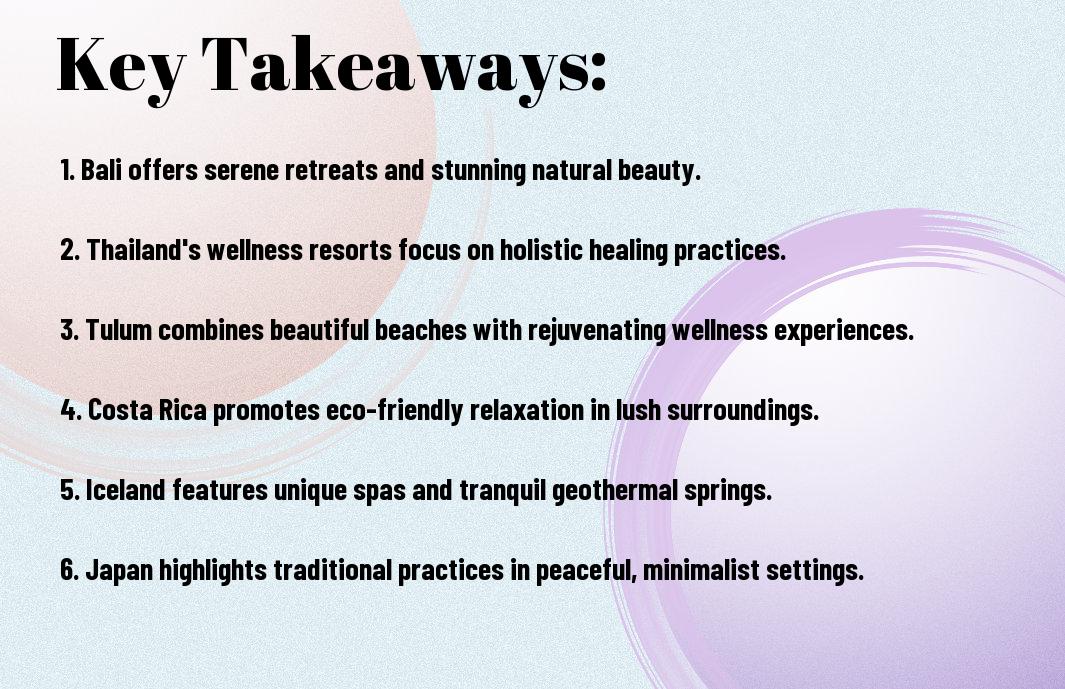
Key Takeaways:

  • Serenity of Nature: Destinations like Bali and the Maldives offer breathtaking landscapes that promote peace and relaxation.
  • Therapeutic Treatments: Spa services and wellness retreats in places such as Thailand and Costa Rica focus on holistic healing techniques.
  • Cultural Experiences: Engaging in local traditions and practices, like yoga in India or meditation in Japan, enhances the overall wellness experience.
  • Healthy Cuisine: Many wellness destinations provide organic and nutritious food options that support health and rejuvenation.
  • Digital Detox: Locations like the Swiss Alps encourage disconnecting from technology, allowing individuals to fully immerse themselves in relaxation.

The Benefits of Relaxation and Wellness Travel

To begin on a journey focused on relaxation and wellness is to prioritize your overall well-being. This kind of travel allows you to escape the stresses of daily life, enabling you to recharge both mentally and physically. As you immerse yourself in serene environments and indulge in holistic activities, you nourish your body and soul, ultimately leading to enhanced happiness, productivity, and a renewed sense of purpose in your everyday life.

Mental Health Advantages

Before delving into your next adventure, consider the profound impact that relaxation travel can have on your mental health. Immersing yourself in tranquil settings promotes mindfulness and reduces anxiety, allowing you to reconnect with your inner self. As you step away from the demands of everyday life, you cultivate a clearer mind, improved mood, and heightened emotional resilience, supporting your mental well-being long after your trip ends.

Physical Health Improvements

Below the surface of mental rejuvenation, wellness travel offers significant benefits for your physical health as well. Engaging in activities such as yoga, meditation, and spa treatments not only alleviates stress but also enhances your physical well-being. These experiences may result in lowered blood pressure, improved sleep quality, and a strengthened immune system, setting the stage for a healthier lifestyle upon your return.

Relaxation and wellness travel can transform your physical health in multiple ways. As you surrender to the rhythm of relaxation-focused activities, your body responds positively by reducing levels of cortisol, the stress hormone. This reduction not only aids in weight management but can also alleviate symptoms related to chronic conditions. By participating in mindful practices and nourishing your body with wholesome foods during your travels, you lay the groundwork for lasting changes that enhance both your well-being and vitality.

Top International Destinations for Relaxation

Assuming you seek a serene escape that rejuvenates your mind and body, look no further than these international havens. Each destination offers unique experiences tailored for relaxation, surrounded by stunning landscapes and soothing atmospheres. From lush tropical retreats to sunlit coastal paradises, these places provide the perfect ambiance for you to unwind and embrace tranquility. Discover how you can immerse yourself in these ultimate relaxation spots around the globe.

Bali, Indonesia

International travelers flock to Bali for its captivating blend of lush landscapes, tranquil beaches, and rich cultural experiences. You can indulge in rejuvenating spa treatments, practice yoga amidst serene rice paddies, or simply bask in the sun on pristine shores. The island’s warm hospitality and spiritual vibe create a perfect setting for you to disconnect from the hustle and bustle of everyday life.

Santorini, Greece

One of the most picturesque destinations in the world, Santorini offers an idyllic escape characterized by stunning sunsets and breathtaking views. You can relax on the famous caldera cliffs with a glass of local wine, or explore the charming whitewashed villages that dot the landscape. Each moment feels like a dream, allowing you to recharge your spirit while soaking in the vibrant Greek culture.

Further, Santorini’s unique charm extends to its therapeutic hot springs and serene beaches, where you can unwind to the gentle sounds of the Aegean Sea. Culinary experiences also await you, with fresh local ingredients featuring prominently in the island’s distinctive flavors. Whether you choose to lounge at your luxury hotel or take leisurely strolls through the scenic streets, Santorini’s enchanting allure is sure to uplift your soul and promote genuine relaxation.

Unwind in Nature: Eco-Friendly Retreats

After a hectic period of daily life, immersing yourself in the serenity of nature through eco-friendly retreats can rejuvenate both your body and mind. These sanctuaries, nestled amidst breathtaking landscapes, promote sustainability while offering holistic wellness experiences. You can enjoy activities like yoga, meditation, and organic dining, all while connecting with the environment. Whether you seek solitude or a community experience, these retreats encourage you to slow down and appreciate the beauty that surrounds you.

Costa Rica

Across lush rainforests and pristine beaches, Costa Rica offers a wealth of eco-friendly retreats where you can relax and revitalize. You can indulge in wellness programs that highlight local traditions and natural resources, with opportunities for yoga sessions accompanied by the soothing sounds of nature. The warm climate and biodiversity make it an ideal spot for exploring trails, waterfalls, and flora, ensuring that your experience is not only restorative but exhilarating as well.

The Swiss Alps

One of the world’s most stunning natural landscapes, the Swiss Alps provide a perfect escape for relaxation and wellness enthusiasts. With majestic mountains and pristine air, you can indulge in a balanced retreat offering tranquility and adventure in equal measure. Opportunities to learn about alpine flora, engage in guided meditation, and participate in wellness workshops are plentiful.

A visit to the Swiss Alps not only allows you to enjoy breathtaking scenery but also invites you to partake in holistic practices that enhance your well-being. Whether you prefer the quiet of a mountainside lodge or the vibrancy of a wellness center in the valley, you can find a range of eco-friendly options to suit your needs. Enjoy activities such as hiking, yoga, and spa treatments that incorporate local herbs and traditions, fostering a deeper connection between you and nature. This serene environment sets the stage for reflection, rejuvenation, and lasting memories.

Spa Capitals Around the World

Many travelers seek the ultimate places for rejuvenation and self-care, where serene settings and expert treatments merge to create blissful experiences. From luxurious resorts nestled in breathtaking landscapes to historical towns known for their restorative practices, these spa capitals offer everything you need to unwind and promote wellness. Whether you’re looking for a tranquil escape or a rejuvenating retreat, these destinations can help you achieve the relaxation you crave.

Baden-Baden, Germany

World-renowned for its thermal baths and wellness culture, Baden-Baden offers a holistic escape into relaxation. This charming town combines the elegance of classic spa architecture with natural mineral springs, allowing you to indulge in rejuvenating treatments surrounded by lush greenery. You can partake in various wellness services, including massages, body wraps, and hydrotherapy, all designed for your ultimate relaxation.

Tulum, Mexico

Below the surface of Mexico’s vibrant culture lies Tulum, a haven for wellness enthusiasts seeking a tropical retreat. This bohemian paradise is celebrated for its eco-friendly resorts that prioritize relaxation and holistic healing. Enjoy yoga sessions at sunrise, immerse yourself in soothing spa treatments, or practice mindfulness on the pristine beaches, all while the calming sounds of the Caribbean waves surround you.

Mexico has become a go-to destination for wellness retreats, and Tulum leads the charge. With its stunning beachfront, lush jungles, and ancient ruins, the environment itself promotes a sense of peace. You can choose from an array of wellness offerings, including temazcal ceremonies, traditional Mayan healing rituals, and organic cuisine, ensuring a well-rounded approach to relaxation and rejuvenation. Your time in Tulum promises to nourish your body and soul, leaving you refreshed and renewed.

Wellness Retreats Focused on Mindfulness

Once again, when considering wellness retreats that prioritize mindfulness, you will discover a variety of sanctuaries designed to help you center your thoughts and deepen your self-awareness. These retreats often incorporate methods such as meditation, yoga, and holistic therapies to facilitate inner peace and personal growth while allowing you to escape daily distractions. Immerse yourself in serene environments where the goal is not just relaxation, but also to cultivate a profound sense of presence and mental clarity.

Sedona, Arizona, USA

For those seeking a transformative experience, Sedona offers wellness retreats uniquely infused with the area’s stunning red rock landscapes. You can enjoy yoga sessions that harness the power of the magnetic vortexes, meditation practices that connect you with nature, and workshops focused on personal development. The tranquil surroundings provide an ideal backdrop for reflection and rejuvenation, ensuring a revitalizing getaway.

Rishikesh, India

Focused on spiritual well-being, Rishikesh is the yoga capital of the world, attracting those looking to enhance their mindfulness through traditional practices. With the Ganges River flowing nearby and the picturesque Himalayas as your backdrop, you can engage in immersive yoga retreats that blend ancient teachings with modern techniques. The local culture embraces holistic living, making Rishikesh a perfect destination for your wellness journey.

Retreats in Rishikesh are renowned for their combination of yoga, meditation, and spiritual teachings. You can participate in daily yoga classes that cater to all levels, alongside guided meditation sessions designed to clear your mind. Many retreats also offer workshops that probe into Ayurvedic principles, giving you tools to nurture your body and mind. This serene environment, paired with the rich spiritual heritage, helps you connect deeply with your inner self, elevating your mindfulness practice to a new level.

Cultural Experiences that Promote Relaxation

Now that you understand the importance of relaxation and wellness, immersing yourself in unique cultural experiences is an excellent way to enhance your journey. These experiences can provide deep, restorative moments that connect you with the local traditions, environments, and practices. Whether through sacred ceremonies, traditional cooking classes, or serene nature walks, each destination offers a wealth of cultural nourishment that can leave you feeling centered and refreshed.

Kyoto, Japan

Promote tranquility and inner peace by visiting Kyoto, where ancient temples and serene gardens abound. You can explore the enchanting Arashiyama Bamboo Grove, participate in a traditional tea ceremony, or simply stroll through the Zen Rock Gardens. Each moment spent in Kyoto’s peaceful surroundings encourages mindfulness, allowing you to reconnect with yourself and your surroundings.

Marrakech, Morocco

Marrakech offers a vibrant cultural tapestry that invites you to unwind and rejuvenate. The city’s rhythmic sounds and rich colors create an immersive experience where you can explore the historic medina, relax in beautiful riads, and indulge in traditional hammam rituals that cleanse both body and mind.

Japan is celebrated for its attention to detail and serene aesthetics, particularly in cities like Kyoto. Here, you can experience a range of activities designed for relaxation, from zen meditation retreats to traditional onsens (hot springs) set against stunning natural backdrops. Your journey can be enriched with authentic culinary experiences such as kaiseki dining, further enhancing your sense of well-being in this tranquil environment.

To wrap up

Drawing together your desire for relaxation and wellness, the world offers numerous destinations to rejuvenate your body and mind. Whether you seek tranquil beaches, serene mountains, or luxurious spa resorts, these international locations promise to enhance your overall well-being. As you explore options, consider your personal preferences and what resonates with you the most. For detailed insights, check out the 9 Top Destination Spa and Wellness Resorts in the World to find your perfect escape.

Q: What are some of the top international destinations known for relaxation and wellness?

A: Some of the leading international destinations for relaxation and wellness include Bali, Indonesia, with its serene beaches and holistic wellness retreats; Tulum, Mexico, which offers a blend of beautiful coastline and wellness-focused resorts; and Sedona, Arizona in the USA, renowned for its vibrant energy vortexes and wellness spas. Each of these locations provides unique experiences that cater to relaxation and rejuvenation.

Q: What types of wellness activities can I expect at these international destinations?

A: At these wellness destinations, you can engage in a wide range of activities designed to promote relaxation and well-being. This includes yoga and meditation classes, spa treatments such as massages and facials, nutrition workshops, and nature excursions like hiking and beach walks. Many resorts also offer wellness programs that incorporate local traditions and holistic health practices specific to the region.

Q: How can I choose the best relaxation and wellness destination for my needs?

A: Choosing the best destination depends on your personal preferences and wellness goals. Consider factors such as the climate, activities available, and the type of environment you thrive in—be it tropical beaches, mountain retreats, or urban wellness centers. Additionally, reflect on your wellness interests, such as spa treatments, fitness programs, or mindfulness practices. Researching reviews and experiences from other travelers can also help you make an informed decision.

How to Travel Internationally During the Holiday Season

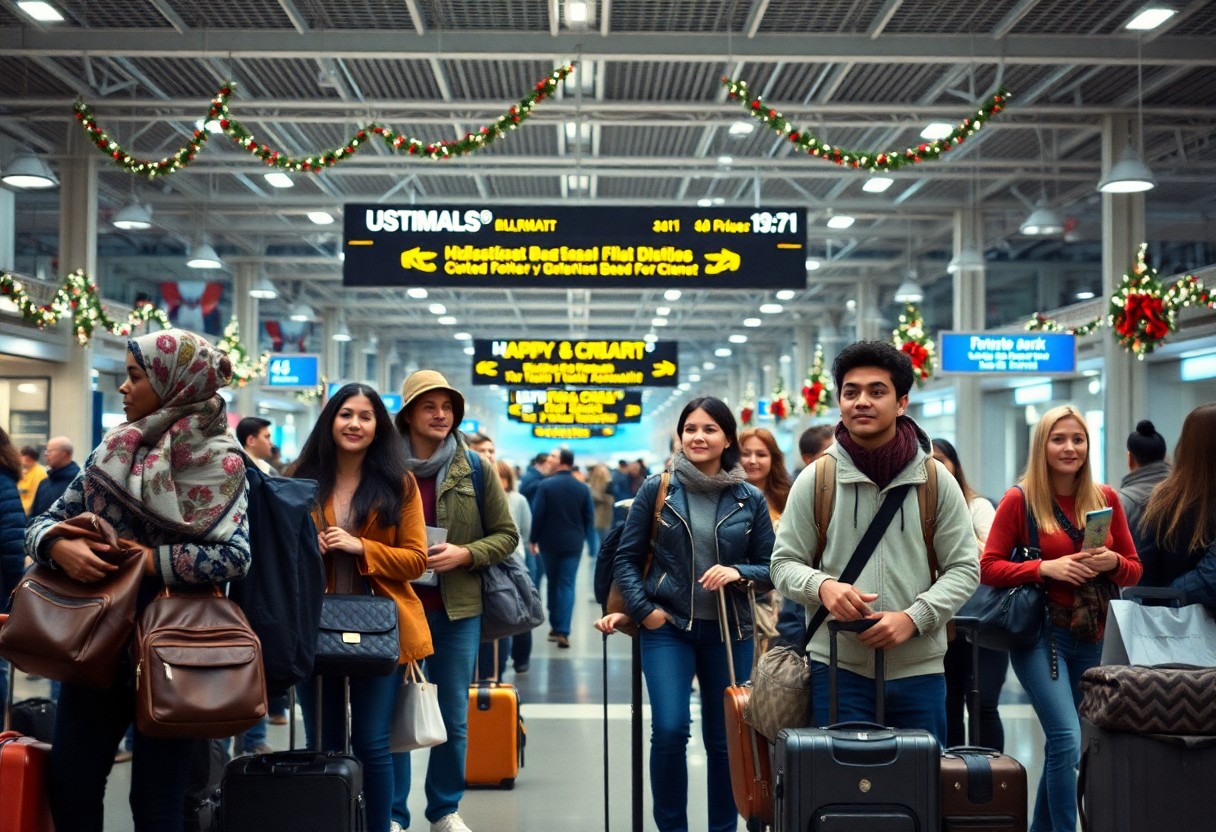
Just planning an international trip during the holiday season can feel overwhelming, but with the right approach, you can make your journey smooth and enjoyable. From securing the best flight deals to navigating the complexities of customs, this guide will equip you with crucial tips and strategies to enhance your travel experience. Embrace the festive spirit as you explore new destinations; your adventure awaits, packed with excitement and memorable moments to cherish for years to come.

Key Takeaways:

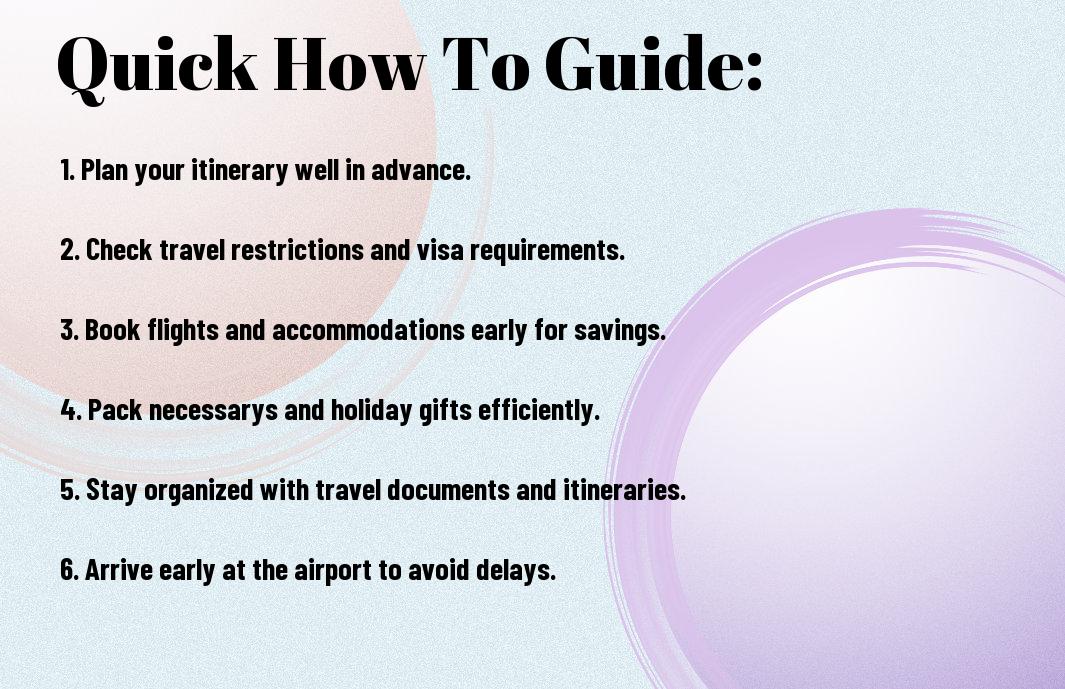
  • Plan Ahead: Book flights and accommodations early to secure the best deals and availability during the busy holiday season.
  • Research Requirements: Check visa regulations, vaccination, and testing requirements for your destination to ensure a smooth journey.
  • Pack Strategically: Consider the climate and activities planned, and make sure to include vitals, limiting luggage if possible to avoid extra fees.
  • Stay Flexible: Be prepared for potential changes in travel plans due to weather disruptions or health regulations and have alternate arrangements in mind.
  • Enjoy Local Traditions: Immerse yourself in the local culture by engaging in festive activities and trying traditional holiday foods at your destination.

Understanding International Travel During the Holidays

While the holiday season can be a magical time for travel, it also brings unique complexities. Increased demand for flights, packed airports, and fluctuating prices can make your travel plans feel overwhelming. Navigating these challenges requires foresight and adaptability, allowing you to enjoy a smooth experience as you begin on your holiday adventures abroad.

Common Challenges

Some of the most frequent challenges you may face during holiday travel include crowded airports, lengthy security lines, and unpredictable weather conditions. Additionally, flight cancellations and delays can occur more often than usual, leading to travel disruptions. Having a clear understanding of these potential pitfalls can help you manage your travel experience more effectively.

Importance of Early Planning

Challenges arise when you leave your travel arrangements to the last minute. By planning early, you can secure better flight options and accommodations while having more time to research your destination.

The earlier you begin your travel planning, the more opportunities you’ll have to save money and reduce stress. Booking flights and accommodations in advance allows you to compare prices and ensure availability during peak travel times. Moreover, early planning enables you to apply for necessary travel documents, such as visas or vaccinations, without the pressure of impending deadlines. Ultimately, proactive planning sets the stage for a more enjoyable and fulfilling holiday journey.

How to Choose Your Destination

Assuming you have the flexibility to select your vacation destination, consider a mix of personal preferences, convenience, and cultural experiences. Take into account how different locations celebrate the holidays, as this can significantly enhance your travel experience. Your destination should resonate with your interests and offer the right atmosphere for a memorable getaway.

Factors to Consider

Now, consider the following factors to ensure your destination aligns with your travel goals:

  • Budget: Assess your financial limits for accommodation, dining, and activities.
  • Climate: Research the weather conditions during your travel dates.
  • Cultural Experiences: Evaluate the local traditions and festivities.
  • Travel Restrictions: Check for any travel advisories or entry requirements.

Knowing these factors will help you make an informed decision that suits your holiday desires.

Popular Holiday Travel Destinations

Some of the most sought-after holiday travel destinations include cities known for their festive atmosphere and unique celebrations. Locations such as New York City, Munich, and Amsterdam offer stunning decorations, vibrant markets, and cultural events that embody the spirit of the season.

For instance, New York City dazzles visitors with its iconic Christmas tree at Rockefeller Center, while Munich’s Christkindlmarkt showcases local crafts and traditional German treats. In Amsterdam, the holiday light festival illuminates the picturesque canals, creating an enchanting experience. By selecting one of these popular destinations, you can immerse yourself in the cultural richness and festive joy that the holidays bring.

Tips for Booking Flights

Not all flight deals are created equal. To increase your chances of securing the best fares, consider the following:

  • Book well in advance.
  • Be flexible with your travel dates.
  • Use fare comparison websites.
  • Sign up for fare alerts.
  • Travel on weekdays or during off-peak times.

Any approach you take should prioritize both convenience and cost-effectiveness.

Timing and Price Trends

Booking flights during the holiday season requires keen awareness of price trends. Generally, fares tend to increase as departure dates approach, with the best deals often appearing between two and three months prior to travel. However, keep an eye on flash sales or promotional offers, which can emerge sporadically, allowing you to snag a lower price even closer to your departure.

Best Practices for Finding Deals

One of the most effective ways to secure great airfare is to stay informed about deals and promotions. Regularly check airline websites and subscribe to newsletters that provide information about discounts and sales.

Understanding how airlines operate can significantly influence your ability to find deals. Each airline has its own pricing strategies and promotional hours, so monitoring their offerings can help you identify patterns. Additionally, using tools like Google Flights to track prices and set alerts can keep you updated on any drops, allowing you to book at the right moment for maximum savings.

Accommodations: Finding the Right Place to Stay

Many travelers overlook the importance of choosing the right accommodations, especially during the bustling holiday season. Selecting a place that caters to your needs can enhance your travel experience and create lasting memories. Aim for a balance of comfort, convenience, and cost-effectiveness to make the most out of your international holiday adventure.

Types of Accommodations

Types of accommodations can greatly influence your trip. Here’s a list of popular options:

  • Hotels
  • Hostels
  • Apartments
  • Vacation Rentals
  • Bed and Breakfasts

Thou must choose wisely to align with your travel style and expectations.

Accommodation Type Pros & Cons
Hotels Often have amenities but can be pricey.
Hostels Budget-friendly and social but less privacy.
Apartments Great for families, can cook meals but may lack hotel services.
Vacation Rentals Unique experiences but check for reliability.

Booking Strategies

Types of accommodations may change based on your booking strategy. Finding the best deals often requires flexibility in both location and timing. Utilize comparison websites and apps to help narrow your options and filter based on your budget and desired amenities.

Right timing can make a significant difference in your booking success. Secure your accommodations early to avoid elevated prices during the holiday rush. Additionally, consider looking for last-minute deals or exploring alternative locations that offer similar experiences at lower rates. Keeping an eye on seasonal promotions can also yield savings without sacrificing quality.

Packing and Preparation Essentials

After deciding on your destination, packing and preparation become the next important steps. Start by making a comprehensive list of everything you’ll need for your trip, considering the varying climates and activities you’ll engage in. Be mindful of space and weight limitations of your luggage, aiming for versatility in clothing and vitals, while also including any gifts or items you’ll want to take back home.

What to Pack for International Travel

There’s a fine balance between packing efficiently and ensuring you have all the necessities. Prioritize lightweight, wrinkle-free clothing that can be mixed and matched, and don’t forget versatile shoes. Include your toiletries, medications, a travel adapter, and any gifts you plan to bring, but try to limit the bulk to avoid excess baggage fees.

Travel Documents and Essentials

You must gather the appropriate travel documents well in advance. This includes your passport, visa (if necessary), travel insurance, and any vaccination or health documentation required by your destination.

Preparation does not stop at packing your bag; you need to ensure all your travel documentation is in order. Check that your passport is valid for at least six months beyond your planned return date. Print out copies of your travel itinerary, accommodation details, and emergency contacts, as having these handy can save you time and hassle during your journey. Additionally, consider having digital copies on your phone or in a secure cloud service for easy access when needed.

Navigating Customs and Entry Requirements

Keep your travel experience smooth by familiarizing yourself with customs and entry requirements in your destination country. It’s wise to check for updates on regulations to avoid any unexpected challenges, especially during peak travel times. For insights from a flight expert, refer to A flight expert’s hot take on holiday travel: ‘Don’t do it’ : Life Kit.

Understanding Visa Regulations

Entry into a foreign country often hinges on your visa status. Ensure you research the visa requirements for your destination well in advance, as processing times can vary significantly. Many countries offer e-Visas or visa-on-arrival options, but these can change, so it’s best to verify the latest information to avoid delays.

Health and Safety Protocols

Any traveler should stay informed about health and safety protocols that may be in place at their destination. Guidelines can include vaccination proof, testing requirements, or quarantine measures, and these can change frequently based on the public health situation.

With health and safety protocols constantly evolving, it’s vital to check official government sources or your airline for the latest information before your trip. You may need to provide documentation related to vaccinations or negative COVID-19 tests upon arrival. Properly preparing for these requirements can help ensure a hassle-free entry into your chosen destination.

Summing up

Now that you understand how to navigate international travel during the holiday season, you can plan effectively to minimize stress and maximize enjoyment. From booking flights well in advance to understanding local customs and travel restrictions, each step you take will enhance your experience. Make sure you pack appropriately, stay updated on safety protocols, and embrace the festive spirit of your destination. With careful planning and preparation, you can create unforgettable memories while exploring new cultures during this special time of year.

Q: What are some tips for booking flights during the holiday season?

A: When booking flights during the holiday season, flexibility is key. If possible, consider flying on the actual holiday itself or during off-peak times to find better deals and less crowded airports. Use flight comparison websites to track prices and set up notifications for fare drops. Additionally, booking in advance can often help secure lower rates, especially for popular routes. Finally, joining airline loyalty programs can provide benefits like priority boarding and additional baggage allowances.

Q: How can I prepare for potential travel delays or cancellations during the holidays?

A: Preparing for travel delays or cancellations during the holiday season involves a few key steps. First, always check the weather conditions at your departure and arrival destinations before you head to the airport. To minimize stress, allow for extra time between connecting flights and choose early morning flights, as these are often less susceptible to delays. It’s also wise to familiarize yourself with your airline’s policies regarding delays and cancellations, and consider travel insurance for added protection. Keep necessary items like medications, chargers, and snacks in your carry-on, so you are prepared for unexpected interruptions.

Q: What should I know about customs and immigration when traveling internationally during the holidays?

A: When traveling internationally during the holidays, it’s important to understand customs and immigration protocols for your destination. Check the entry requirements well in advance, as some countries may have specific documentation needs, such as proof of onward travel or vaccination certificates. Make sure your passport is valid for at least six months beyond your intended return date. Upon arrival, be prepared to declare any goods you are bringing with you and to answer questions about your stay. Familiarizing yourself with local customs regulations can also help avoid unnecessary delays.

How to Travel to Countries with Different Religions Respectfully

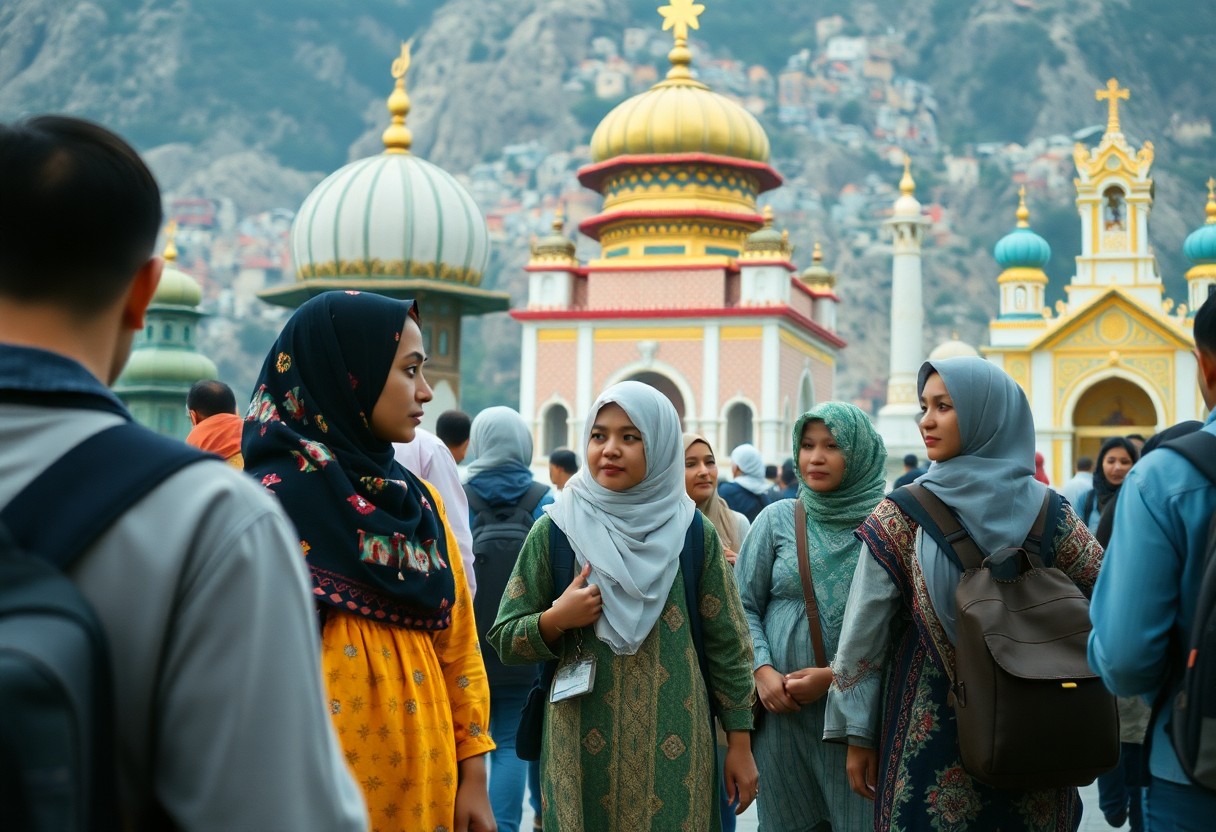
Most travelers encounter diverse religions during their journeys, making it crucial for you to approach these experiences with sensitivity and respect. Understanding the beliefs and practices of the cultures you visit can enhance your travel experience and foster meaningful connections. In this guide, you will learn practical tips to navigate religious customs, dress appropriately, and engage with local communities without causing offense, allowing you to appreciate the rich tapestry of global spirituality while ensuring your journey is respectful and enriching.

Key Takeaways:

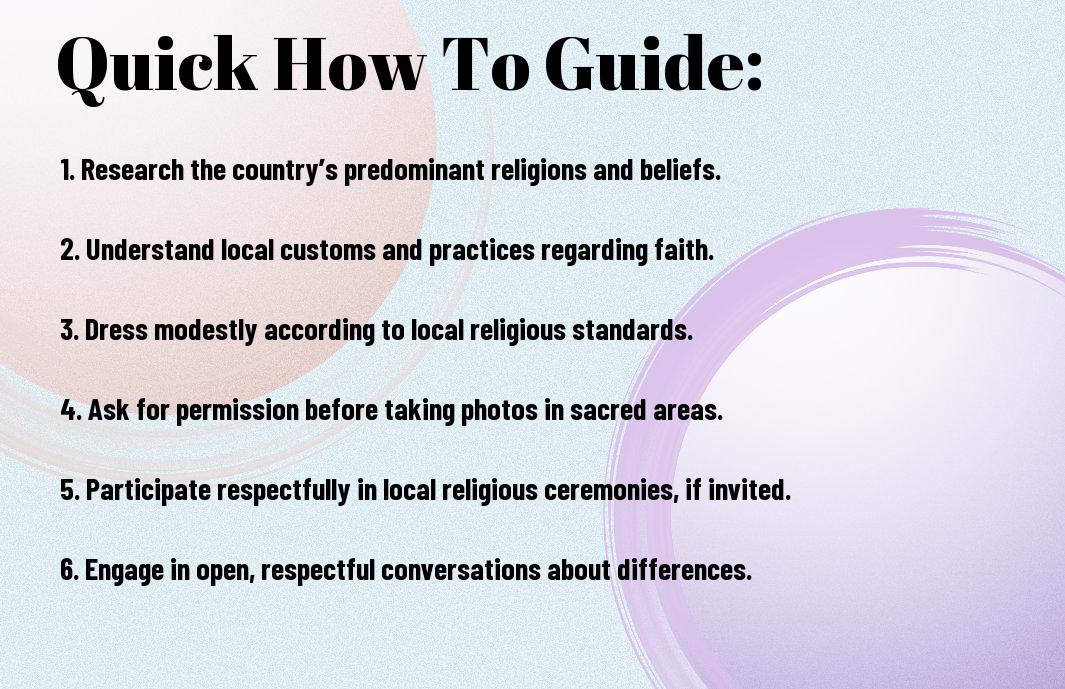
  • Research the local customs and traditions associated with the prevalent religion in the country you are visiting.
  • Dress Appropriately by considering cultural norms and dress codes, especially when visiting religious sites.
  • Be Mindful of your behavior in religious settings, such as being quiet, respectful, and observant of local practices.
  • Engage Politely in conversations about religion and culture, and be open to learning from locals.
  • Avoid Stereotypes and generalizations, recognizing that beliefs can vary widely even within a single faith.

Understanding Religious Diversity

Before traveling to a country with different religions, it’s imperative to embrace the rich tapestry of beliefs that define its culture. Appreciating religious diversity not only enhances your experience but also fosters respect and understanding between you and the local community. Each religion contributes unique traditions, values, and practices, making it vital for you to approach your journey with an open mind and heart.

Acknowledge Different Beliefs

If you strive to connect authentically with others, acknowledging the existence of various belief systems is a significant first step. You can do this by maintaining a respectful attitude, refraining from judgment, and demonstrating curiosity about the perspectives and practices of individuals from different faith backgrounds.

Learn About Local Practices

While exploring a new destination, paying attention to local customs and rituals that align with the dominant religions enriches your travel experience. Understanding these practices can help you navigate social situations, avoid unintentional disrespect, and engage meaningfully with the community.

Different cultures may have unique observances, such as prayer times, dietary restrictions, or specific clothing that should be worn in sacred spaces. To fully appreciate these local practices, you might consider researching before your trip or asking locals about their traditions when you arrive. This awareness can lead to more profound connections, offering you a chance to participate respectfully in local life while reinforcing the importance of cultural sensitivity in your travels.

Preparing for Your Journey

Any traveler seeking to engage respectfully with different cultures should begin their journey with thorough preparation. Understanding the customs and practices of the religions prevalent in your destination will help foster a respectful interaction with the local community. This preparation sets the stage for more meaningful experiences while traveling and aids in avoiding unintentional offenses.

Research Destination’s Religion

Religion varies significantly across countries, and understanding the beliefs and practices of your destination’s predominant faiths will enhance your travel experience. Investigate local customs, sacred sites, and important festivals or rituals, as these can provide profound insights into the cultural landscape. Engaging with the local religion respectfully prepares you for interactions that may arise during your journey.

Pack Respectfully

Your packing choices can greatly affect your experience in a country with distinct religious norms. Being mindful of the attire you bring can signal respect for the local culture. Choose clothing that adheres to local customs, especially when visiting religious sites, ensuring you dress modestly to avoid drawing unwanted attention.

Preparing your wardrobe thoughtfully involves selecting versatile outfits that align with local expectations. Research the dress code for sacred sites or religious events you plan to visit, so you can pack items that are appropriate and comfortable. Additionally, consider accessories that could enhance modesty, like shawls or scarves, which can be used to cover shoulders or heads when necessary. This consideration reflects not only your respect for local customs but also enriches your overall travel experience.

Engaging with Local Cultures

Unlike tourist hotspots, engaging with local cultures requires an open mind and genuine curiosity. Take the time to learn about the traditions, values, and practices of the communities you visit. Engaging with locals through conversations, food, or cultural events can enrich your travel experience and foster mutual respect. Always approach interactions with humility, showing a willingness to understand rather than impose your own perspectives.

Appropriate Dress Codes

Cultures vary in their expectations regarding dress, especially in religious settings. When visiting places of worship or local communities, aim to dress modestly and in accordance with local customs. Research specific dress codes to avoid any discomfort or offense. Simple adjustments, like covering your shoulders or wearing long skirts or trousers, can show respect for the local culture.

Communicating Respectfully

The way you communicate can greatly impact your interactions with locals. Using polite language and showing genuine interest in their culture is beneficial. Even a simple “hello” or “thank you” in the local language can go a long way in establishing goodwill. Being mindful of body language, maintaining personal space, and being attentive to social cues are vital aspects of respectful communication.

To further enhance your communication, actively listen and engage in conversations without assumptions. When discussing cultural differences, remain open and avoid controversial topics that may offend or alienate. It’s important to appreciate diverse viewpoints and express your thoughts sensitively. Additionally, a willingness to ask questions when unsure can demonstrate your commitment to understanding their culture, fostering a more meaningful connection.

Participating in Religious Activities

Now that you are in a country with different religious practices, you may feel inclined to partake in local ceremonies and traditions. Participating in religious activities not only deepens your understanding of the culture, but it also shows respect for the beliefs of others. However, it is important to approach these experiences with an open mind and a willingness to adapt your behavior to fit the customs and expectations of the community.

Observing Worship Ceremonies

Activities such as attending worship ceremonies can be enlightening and rewarding. You may witness various rituals, music, and communal prayers that offer a glimpse into the faith and practices of the local population. It is important to be attentive to the atmosphere, dress modestly, and follow any guidelines provided by the hosts to ensure that your presence is welcome and appreciated.

Seeking Permission

Religious activities often have specific protocols, and seeking permission before participating demonstrates your respect for the beliefs and practices of the faith community. Approach leaders or practitioners to express your interest and request their approval, showing genuine humility and curiosity. By doing so, you pave the way for a more meaningful and inclusive experience.

Observing religious traditions may vary across different cultures and faiths, so understanding the context is key. Engaging in dialogue about your desire to participate enriches your experience and establishes rapport with community members. Showing deference to local customs and attire will foster goodwill and ensure that your efforts to connect with their spiritual practices are well-received. Always prioritize mutual respect in these interactions to promote an authentic cultural exchange.

Being Mindful of Cultural Sensitivities

All travelers should approach diverse cultures with respect and understanding. Acknowledging that different religions often shape cultural practices is crucial. You should familiarize yourself with local customs and etiquette to ensure you engage respectfully and do not inadvertently offend anyone. Understanding these nuances will enrich your travel experience and promote positive interactions with those you meet.

Avoiding Stereotypes

If you want to build meaningful connections during your travels, avoid making assumptions about individuals based on stereotypes. You should strive to see each person as a unique individual with their own beliefs, experiences, and background. Here are some tips to guide you:

  • Learn about the local customs before you visit.
  • Engage with locals and listen to their stories.
  • Question preconceived notions you may hold.
  • Be aware of your biases and address them.

Any attempt to break down your preconceptions will allow for better communication and relationships with the local community.

Responding to Differences

One of the most enriching aspects of traveling is experiencing and witnessing differences in beliefs and practices. When encountering a cultural practice or belief that differs from your own, approach it with an open mind and genuine curiosity. This openness allows for a richer exchange of ideas and provides deeper insight into the culture you are experiencing.

Sensitivities abound when navigating diverse religious practices and cultural norms. You should be prepared to adapt your behavior if you find yourself in settings that require specific dress codes or actions. For instance, some places may require modest clothing or the removal of shoes. Being proactive in understanding these differences will demonstrate your respect and willingness to learn, ultimately enriching your travel experience and fostering goodwill with the locals.

Tips for Respectful Interaction

Many travelers overlook the importance of respectful interactions with individuals from different religious backgrounds. To foster a positive connection, consider the following tips:

  • Be mindful of cultural customs.
  • Watch your language and avoid potentially offensive jokes.
  • Ask questions to show your interest and understanding.
  • Observe local practices and adhere to them.
  • Express gratitude and appreciation for hospitality.

Any effort you make to engage respectfully can lead to enriching experiences and meaningful conversations.

Active Listening

There’s a powerful impact in truly listening to others, particularly when discussing their beliefs and practices. Engage in conversations with an open heart and mind, providing space for them to share their thoughts without interruption. Your attentiveness demonstrates respect and fosters a deeper connection.

Open-Mindedness

Assuming you have all the answers can hinder your experience. Approaching different beliefs with an open mind invites personal growth and understanding. Embrace the diversity of thought, and challenge your own convictions in a respectful manner as you engage with various perspectives.

Open-mindedness can enrich your travels immensely. It encourages you to explore new ideas and embrace different ways of life, leading to transformative experiences. By allowing yourself to consider alternate viewpoints, you become more adaptable and receptive, building bridges with those you encounter. This attitude fosters harmony and a greater appreciation for the rich tapestry of human beliefs and practices.

Summing up

Presently, traveling to countries with different religions can be an enriching experience when approached with care and consideration. You should take the time to learn about local customs, dress codes, and religious practices to ensure your conduct aligns with local expectations. Engaging respectfully with local communities not only enhances your journey but also fosters mutual understanding. By actively listening and showing appreciation for different beliefs, you enrich your travel experience while promoting harmony and respect across cultures.

Q: How can I prepare myself for traveling to a country with a different religion?

A: Research is key to understanding the religious customs and practices of the country you plan to visit. Familiarize yourself with the major beliefs, traditions, and values of the local religion. Learn about appropriate dress codes, places of worship, and any specific etiquette that may be required, such as removing shoes before entering a mosque or temple. Additionally, reading about the local history and current socio-political context can deepen your understanding and enhance your experience during your travels.

Q: What should I do if I inadvertently offend someone due to a cultural misunderstanding?

A: If you find yourself in a situation where you may have offended someone, apologize sincerely and politely. Acknowledge the mistake without making excuses, and express your willingness to learn from the experience. Most people understand that cultural differences can lead to misunderstandings, and a genuine apology can go a long way in mending any hurt feelings. Additionally, be open to asking questions about local customs and practices to avoid future misunderstandings.

Q: Are there specific behaviors or actions I should avoid while traveling in diverse religious environments?

A: Yes, there are certain behaviors that are generally best to avoid. Steer clear of discussing sensitive religious topics or engaging in debates about beliefs unless invited to do so. Avoid making derogatory comments about any religion or engaging in actions that could be perceived as disrespectful, such as taking photos in places of worship without permission. Additionally, refrain from public displays of affection in conservative religious settings, as these may be considered inappropriate. Observing and adapting to the local customs will help you show respect during your travels.

How to Use Public Transportation Abroad Like a Pro

Transportation can be both exciting and daunting when traveling abroad. To navigate unfamiliar cities with ease, it’s imperative to understand how to effectively use public transportation systems. In this guide, you will discover expert tips and tricks to make your journey smoother, from understanding schedules and ticketing to mastering local customs. By equipping yourself with the right knowledge, you can confidently explore your destination while saving time and money. Let’s examine the imperative steps that will help you travel like a pro!

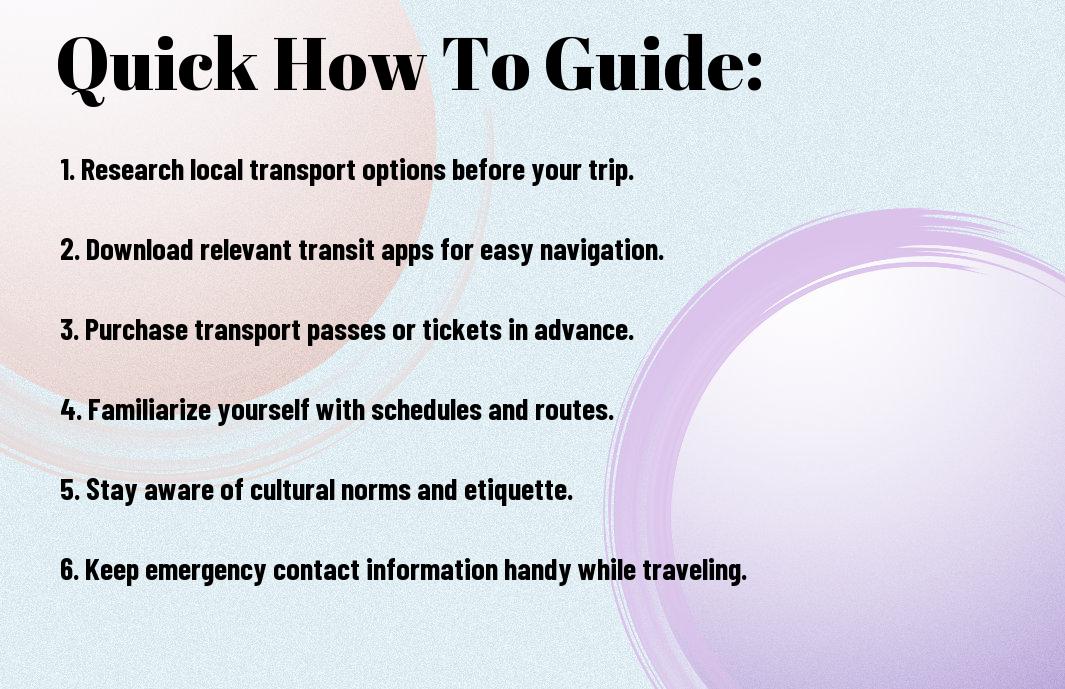
Key Takeaways:

  • Research local transit options: Before traveling, familiarize yourself with the public transportation systems available at your destination, such as buses, subways, or trams.
  • Purchase passes in advance: Look into day passes or travel cards that can save you money and time, especially if you plan to use public transit frequently.
  • Download apps for navigation: Utilize transportation apps to help with route planning, real-time updates, and finding the best options to reach your destination.
  • Learn key phrases in the local language: Basic communication skills can enhance your experience, especially for asking for directions or understanding transit signage.
  • Stay aware of your surroundings: Keep an eye on your belongings and be mindful of your surroundings to ensure a safe and pleasant journey.

Understanding Public Transportation Systems

To navigate a new city with ease, it’s important to grasp the public transportation system in place. Knowing how to identify various transport options, their schedules, and routes will simplify your journeys, allowing you to explore like a local and save time and money.

Types of Public Transportation

To fully utilize public transportation, familiarizing yourself with the different types available is beneficial:

  • Buses
  • Subways
  • Trains
  • Trams
  • Taxis and Rideshares

After selecting your preferred mode of transport, you can confidently initiate on your travel adventures.

Type Description
Buses Commonly used for both short and long distances
Subways Fast and efficient for urban travel
Trains Connects cities and rural areas over longer distances
Trams Ideal for local travel within cities
Taxis and Rideshares Convenient for direct, flexible transport

How Public Transportation Works Abroad

Now that you have an overview of the types of transportation, understanding how they operate is key to your success. Each city may have unique systems, payment methods, and schedules that are important to grasp before your travels.

Understanding how public transportation operates abroad helps minimize confusion. It’s advisable to research the local transit rules, fare structures, and any available apps or websites that provide real-time updates on transit schedules. Mastering these elements ensures you can efficiently move around your destination without encountering unexpected challenges.

How to Plan Your Public Transportation Route

You can navigate foreign cities like a pro by effectively planning your public transportation route. Start by familiarizing yourself with the various transit options available, as they can differ significantly from what you are used to. Be sure to check schedules, map routes, and understand ticketing systems to make your travel experience as smooth as possible.

Researching Local Transit Options

Local transit systems often include buses, trams, trains, and subways, each with its own rules and schedules. Look for official transportation websites or local guides that outline the services offered, including any discounts for tourists or special day passes. Understanding these options can help you choose the best routes to your destination.

Using Navigation Apps and Websites

Websites and apps can serve as invaluable tools when navigating public transportation abroad. They offer real-time updates on schedules, route information, and even alerts for delays or changes. By inputting your starting point and destination, these resources can provide optimized travel suggestions based on current conditions.

Another advantage of using navigation apps and websites is the ability to save your routes for offline access. Many apps allow you to download maps and schedules, so you won’t need an internet connection while traveling. This feature is especially helpful in areas with limited service. Utilizing these digital tools can significantly enhance your confidence and efficiency as you explore new cities using public transportation.

Tips for Purchasing Tickets

Keep your ticket purchasing experience smooth by following these imperative tips:

  • Research ticket options ahead of time.
  • Buy tickets at kiosks or vending machines when possible.
  • Use mobile apps for convenience and potentially discounted fares.
  • Always check for return or multi-ride tickets to save money.

Assume that situations may arise where you will need to ask for assistance; language barriers can often be navigated with simple phrases or translation apps.

Understanding Fare Structures

Little do many travelers know that fare structures vary significantly between cities. Some transportation systems may charge based on zones, while others have flat rates regardless of distance. Familiarize yourself with the local fare system to ensure you are purchasing the correct ticket and avoiding unnecessary penalties.

Buying Tickets: Methods and Best Practices

Practices for buying tickets can greatly enhance your public transportation experience abroad. Start by identifying the most common ticket purchasing methods available in your destination, as this can save you valuable time and avoid confusion.

Another effective strategy is to familiarize yourself with the available methods for purchasing tickets. Many major cities offer an array of options, including contactless payment systems, cash transactions at kiosks, and mobile apps. Ensure you have a suitable payment method ready, and consider carrying a small amount of local currency for instances where electronic payments may not be accepted. This way, you can enjoy a hassle-free transit experience without the stress of ticketing issues.

Factors to Consider When Using Public Transportation

All travelers should keep several factors in mind when utilizing public transportation abroad. These considerations will enhance your experience and ensure smoother journeys:

  • Research local transportation options and routes.
  • Familiarize yourself with ticket purchasing procedures.
  • Check for operating hours and frequency of services.
  • Stay informed about peak travel times.
  • Consider language barriers and identification methods.

After weighing these factors, you’ll be better prepared to navigate the public transport system efficiently.

Safety and Security Measures

Some necessary safety and security measures can help you avoid potential issues while using public transportation. Always keep your belongings close, and be aware of your surroundings. Utilize well-lit stations or stops, especially at night, and avoid displaying valuable items. If you feel uncomfortable, don’t hesitate to seek assistance from staff or fellow passengers.

Cultural Etiquette on Public Transport

Public transportation varies greatly across cultures, and understanding local etiquette can make your journey more pleasant. Observing local norms, such as giving up your seat to those in need or keeping noise to a minimum, can enhance your experience.

To fully immerse yourself in the local culture, take time to observe how other passengers behave. In some places, maintaining personal space is necessary, while in others, close proximity is the norm. Speaking quietly and avoiding phone calls can also be important, as loud conversations may be deemed disrespectful. By adapting to local customs, you not only show respect but may also foster a more enjoyable atmosphere during your travels.

Navigating Challenges on Public Transportation

Once again, using public transportation abroad can present unique challenges. From crowded buses to complex train systems, you may encounter obstacles that could deter even the most seasoned traveler. However, with the right mindset and preparation, you can navigate these situations skillfully, ensuring your journey remains smooth and enjoyable. Embrace the unexpected and stay adaptable; you’ll often discover hidden gems and local insights along the way.

Overcoming Language Barriers

Assuming you are in a country where the language is different from your own, language barriers may feel intimidating. To tackle this, consider downloading translation apps or carrying a pocket phrasebook. Familiarize yourself with common transportation terms and phrases to facilitate interactions with locals. Using visual aids, like maps and signs, can also enhance your understanding of transit systems, making communication more accessible.

Dealing with Delays and Cancellations

Some delays and cancellations are unavoidable when relying on public transportation. Instead of allowing frustration to set in, focus on staying calm and finding solutions. Maintaining a flexible schedule can help, as it gives you room to adjust your plans in response to any setbacks.

This approach not only helps alleviate stress but also allows you to make the most of unexpected downtime. Use delays to explore nearby attractions or grab a snack. Keep your smartphone handy to check for real-time updates on schedules, and have backup plans ready while you navigate through the challenges of public transportation abroad.

Enhancing Your Experience on Public Transportation

Despite the challenges that come with unfamiliar public transportation systems, you can enhance your experience by being adaptable and open-minded. Embrace local customs, engage with fellow travelers and locals, and take the time to plan your routes in advance. Utilizing mobile apps and translation tools can also help you navigate the system more effectively, making your commute not just efficient but enjoyable.

Making the Most of Your Journey

The journey can be a wonderful cultural experience if you approach it positively. Use the time spent in transit to relax, read a book, listen to music, or practice the local language. This way, you turn travel time into an opportunity for personal enrichment or reflection, enhancing your overall travel experience.

Exploring the City through Public Transit

Through public transit, you can connect deeply with the city’s culture and daily life. Each bus, train, or tram you board is an invitation to witness the locals’ way of living and operating, turning your commute into a mini-adventure.

Transit systems often cover vast areas, allowing you to traverse various neighborhoods that you might miss when using taxis or rideshares. By choosing public transit, you’re not just getting from point A to point B; you’re immersing yourself in the rhythms of the city. You’ll discover hidden gems, from quaint cafes to lively markets, and meet new people who may share their recommendations and stories with you. This authentic connection can greatly enrich your travel experience and make your time abroad truly memorable.

To wrap up

On the whole, using public transportation abroad can enhance your travel experience and save you money. By familiarizing yourself with local transit systems, obtaining maps and apps, and understanding cultural nuances, you’ll navigate easily and confidently. Always keep your belongings secure and be mindful of peak hours to avoid crowds. Engaging with locals and asking for assistance can also enrich your journey. Embrace the adventure of discovering a new place through its public transit, and you’ll likely uncover hidden gems along the way.

Q: What are the best ways to plan my public transportation routes abroad?

A: To effectively plan your public transportation routes, start by downloading relevant transportation apps specific to the city or country you are visiting. Many cities have their own transit apps that offer real-time updates, maps, and route planning. Additionally, familiarize yourself with the local transit system by checking their website for maps and schedules. You can also use global apps like Google Maps, which can provide public transport options and estimated travel times. Always consider peak hours and any service disruptions, and give yourself extra time to navigate unfamiliar routes.

Q: How can I communicate and ask for help if I get lost?

A: If you find yourself lost while using public transportation, don’t hesitate to ask locals for assistance. It can be helpful to learn a few key phrases in the local language, such as “Where is…?” or “How do I get to…?” You can also use translation apps to help bridge any language barriers. Additionally, carrying a map or a screenshot of your desired route in the local language can make it easier to show to someone for directions. Look for transit staff at stations; they are typically trained to assist travelers. A friendly smile and patience go a long way in getting help.

Q: What are the etiquette tips I should follow when using public transportation abroad?

A: Etiquette can vary greatly depending on the country, but some general tips apply: always give up your seat for the elderly, pregnant women, or those who seem in need; keep your volume low when talking or listening to music; and be mindful of personal space, especially during peak hours. Avoid blocking entrances or exits, and remember to take your bags off the seat next to you during busy times. If eating is allowed, choose non-messy snacks to avoid causing a disturbance. Finally, observing and following the local customs will help you integrate more seamlessly into the culture while traveling.

Skip to content