Travel

How to Avoid Pickpockets and Scams While Traveling Abroad

Safety should always be a priority when you travel abroad, especially in unfamiliar areas where pickpockets and scams can be prevalent. By adopting a few practical strategies and being aware of your surroundings, you can significantly reduce the risk of falling victim to theft or deceit. This blog post will provide you with necessary tips to protect your belongings and ensure a worry-free travel experience, empowering you to enjoy your adventures with confidence and peace of mind.

Key Takeaways:

  • Stay Aware: Always be mindful of your surroundings and the people around you, especially in crowded places like markets or public transport.
  • Secure Your Belongings: Use anti-theft bags or wear items like money belts, and keep valuables out of sight to deter pickpockets.
  • Trust Your Instincts: If a situation feels off or too good to be true, it’s best to walk away and protect yourself from potential scams.

Understanding Pickpocket Techniques

For travelers, understanding the techniques employed by pickpockets can significantly reduce the risk of becoming a target. Pickpockets often work in teams, using distraction methods or creating chaos to divert your attention while they steal your belongings. Being aware of their tactics lets you stay vigilant and safeguard your valuables, ensuring a more enjoyable travel experience.

Common Methods Used by Pickpockets

The most common methods employed by pickpockets include distraction, such as a sudden loud noise or an unexpected obstacle, which creates an opportunity for theft. Some may pose as street performers or vendors, while others might ask for help or directions to catch you off guard. Their aim is to take advantage of your momentary lapse in attention.

Recognizing Red Flags

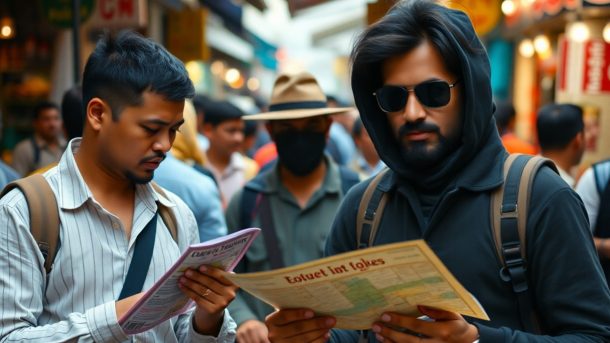
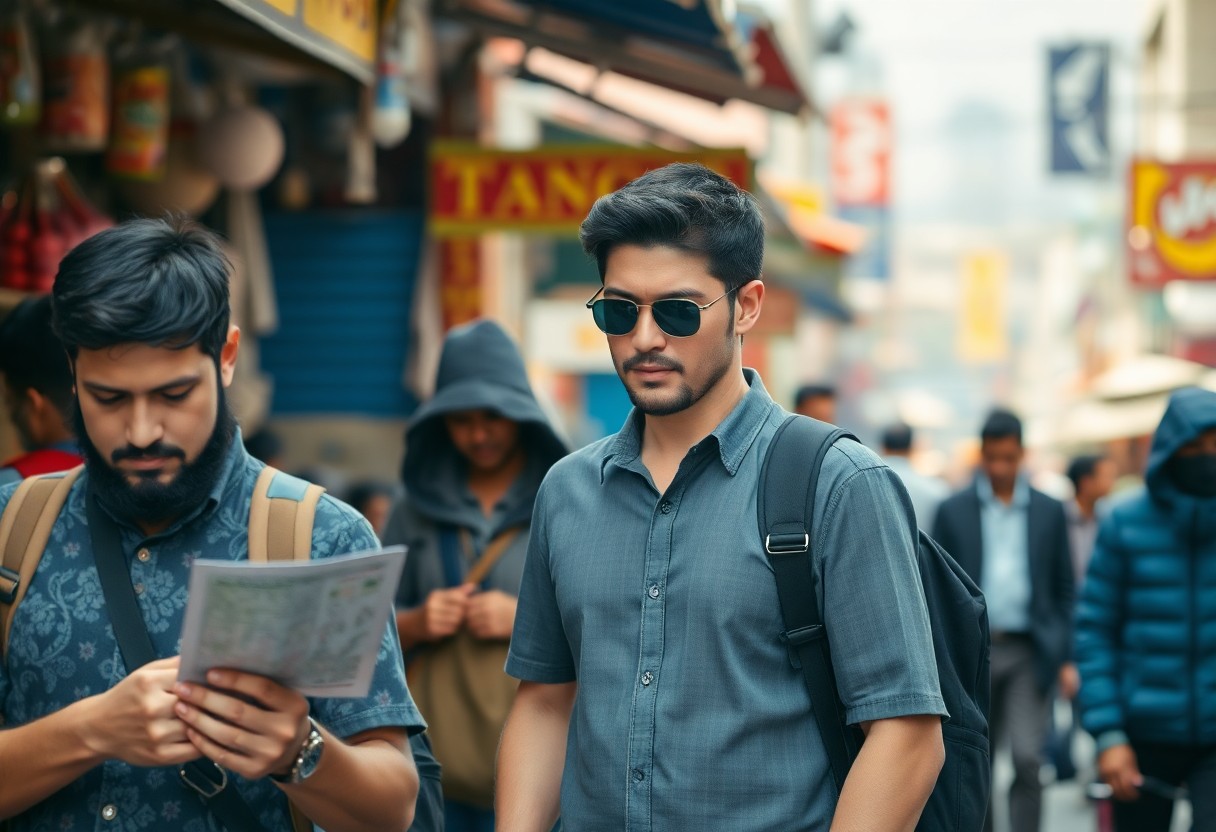
By staying alert to certain behaviors, you can better protect yourself from pickpockets. Pay attention to individuals who seem overly interested in your belongings, people who appear to be following you, or groups that cluster too closely. Scenarios that feel unusual, such as unexpected crowds or sudden distractions, can also indicate potential threats.

Hence, it’s beneficial to trust your instincts and be mindful of your surroundings. If something feels off, take a moment to assess the situation and adjust your position or secure your belongings. Familiarize yourself with the common tactics and characters of pickpockets in the areas you visit, equipping you with a sense of awareness that can deter would-be thieves.

Essential Precautions to Take

You can greatly reduce your risk of falling victim to pickpockets and scams by taking some vital precautions. Start by being aware of your surroundings and staying in well-lit, populated areas. Plan your daily itinerary in advance and avoid displaying large amounts of cash or valuables. Choose your destinations wisely, and don’t hesitate to ask locals for safe routes or areas to avoid.

Choosing the Right Bag

Above all, selecting the appropriate bag can make a significant difference in keeping your belongings secure. Opt for a bag that fits snugly against your body and features zippers or locks. Crossbody bags or money belts can be a deterrent for pickpockets, ensuring that your valuables remain close and out of sight.

Securing Your Valuables

Precautions should be taken to keep your valuables safe while you travel. Store your passport, cash, and credit cards in a secure place, such as a money belt or a locking pocket inside your jacket. Make copies of your important documents and keep them in a separate location, and consider using a hotel safe for any items you don’t need daily.

Choosing multiple layers of security for your valuables can enhance your protection. Consider using travel lock bags and pack items in discreet pockets. It’s also wise to distribute your money and cards in different locations, like your wallet, front pocket, and bag. This way, if one item gets compromised, you have backups available. Taking these extra steps can provide peace of mind during your travels.

Staying Alert in Crowded Areas

After stepping into bustling marketplaces or busy streets, you should be especially vigilant. Crowded areas are prime spots for pickpockets who thrive on distraction. Keep your belongings secure and close to your body, and maintain an awareness of your surroundings. Trust your instincts; if something feels off, it probably is. Aim to travel with a buddy when possible to enhance your vigilance and share the responsibility of keeping an eye on your belongings.

Navigating Public Transport Safely

Around public transport, such as buses and trains, you need to be extra cautious. When commuting, keep your bag zipped and close to you. Avoid standing near open doors or windows, as these can create opportunities for thieves. If you find yourself in a crowded carriage, try to position yourself near the exit to facilitate a quick escape if necessary and stay alert to any unusual behavior.

Remaining Aware in Tourist Hotspots

Staying mindful in tourist hotspots is vital for protecting your valuables. These areas can be filled with distractions, such as street performances or vendors trying to sell you something, making it easier for thieves to go unnoticed. Always keep your belongings in front of you and avoid leaving valuables unattended, even for a moment.

Further, enhancing your awareness in tourist hotspots can help thwart potential scams. Engage with your surroundings; scan the people around you and be cautious of overly friendly strangers who may be trying to distract you. If you encounter a seemingly ‘too good to be true’ offer, trust your instincts and walk away. Keeping a low profile and not displaying expensive items can also help you blend in and avoid becoming a target.

Dealing with Scams

All travelers should be aware of the various scams that exist in popular tourist destinations. Scammers often target unsuspecting tourists by employing techniques that can range from deceptive tactics to outright theft. To protect yourself, it’s important to remain vigilant and informed about how these scams operate. Being prepared can help you navigate your travels without falling prey to dishonest individuals looking to exploit vulnerabilities.

Identifying Common Scams

To avoid falling victim to scams, familiarize yourself with common tactics used by scammers. These may include fake charity requests, overly friendly strangers offering unsolicited help, or overly aggressive street performers who demand tips. Understanding these scenarios can significantly reduce your risk while traveling.

How to Respond to Scammers

Around scammers, maintaining a cool demeanor is necessary. If approached by someone trying to exploit you, it’s best to walk away without engaging. Staying alert and moving on will help you avoid escalating the situation. Trust your instincts—if something feels off, it’s better to remove yourself from the situation.

Another effective strategy is to speak firmly and, if necessary, loudly to make it clear that you’re not interested in their proposal. This can deter them and attract attention from others, further protecting you. Always prioritize your safety over saving face; walking away is a sign of strength, not weakness. Keeping your distance and sticking to well-traveled areas can also help ensure a smoother experience while traveling.

Technology and Travel Safety

Many travelers now leverage technology to enhance their safety abroad. Utilizing modern tools can significantly reduce the risk of falling victim to pickpockets or scams. From sophisticated tracking devices to safety apps, these advancements can keep you informed and secure during your travels. By integrating technology into your travel plans, you not only enhance your safety but also provide peace of mind for both yourself and your loved ones.

Using Apps for Security

Before initiateing on your trip, explore various apps designed to bolster your security. Consider downloading apps that provide real-time location sharing, emergency contact information, or alerts for local scams and safety tips. These tools allow you to stay informed about your surroundings and can guide you in making safer choices while navigating unfamiliar places.

Staying Connected with Family

The ability to stay connected with family while traveling can greatly enhance your safety. Regular communication not only reassures your loved ones but also keeps them informed of your whereabouts, especially in unfamiliar environments. This connection can serve as a preventive measure against potential incidents, allowing someone to act quickly if necessary.

Using messaging apps like WhatsApp, or location-sharing features, you can provide real-time updates to family or friends back home. Setting specific times to check in ensures they know you’re safe, while also providing you with the emotional support of familiar voices. Staying connected adds an additional layer of security, making it easier to handle any unexpected situations that may arise during your travels.
Best Practices for Social Interactions

Now that you’re immersed in a new culture, it’s necessary to interact with locals wisely. Engage with people in a respectful manner, but always maintain a level of awareness regarding your surroundings. Keep your belongings secure and be cautious when sharing personal information or accepting unsolicited help. Rely on established communication channels, like asking recognized staff at hotels or tourist areas, for recommendations to enhance your travel experience without compromising your safety.

Engaging with Locals Safely

Beside having meaningful interactions, it is necessary to approach conversations with caution. Politely ask locals about their recommendations, but if someone seems overly eager or pushy, trust your instincts and create some distance. Give preference to structured environments like organized tours or group activities where you can interact in a safer setting.

Avoiding Overly Friendly Strangers

Across your travels, you may encounter overly friendly strangers who seem too good to be true. They might engage you in lively conversations or offer unsolicited assistance aimed at garnering your trust. While friendliness is a part of many cultures, be on guard; such interactions can lead to scams or theft. Always assess the situation carefully and don’t hesitate to distance yourself from confrontations that feel uncomfortable or invasive.

Interactions that feel overly friendly may be a cover for less-than-honest intentions. Scammers often employ charm and friendliness to lower your defenses, making it necessary to stay vigilant. If someone approaches you asking for help or trying to befriend you quickly, keep your personal space and prioritize your safety. Your intuition is a valuable tool in these situations—don’t overlook it. Trusting your gut will help you navigate these encounters safely and maintain awareness while enjoying the richness of local cultures.

Conclusion

With this in mind, you can significantly enhance your travel experience by staying vigilant and informed about pickpockets and scams. Always keep your belongings secure and stay aware of your surroundings, especially in crowded areas. Educate yourself on common local scams and use your judgment when interacting with strangers. By taking these practical steps, you can better protect yourself and enjoy your adventures abroad with peace of mind.

FAQ

Q: What are some effective ways to secure my belongings to avoid pickpockets while traveling?

A: To keep your belongings safe, opt for anti-theft bags or backpacks that come with lockable zippers and RFID protection. Consider wearing a money belt or a neck pouch hidden under your clothes. Keep your wallet, phone, and other valuables in front pockets, and avoid carrying large sums of cash. Additionally, organize your bag in a way that makes it difficult for thieves to access items without your notice. Regularly check that your belongings are secure and stay aware of your surroundings, especially in crowded areas.

Q: How can I identify and respond to potential scams while traveling?

A: To spot potential scams, familiarize yourself with common scams in the area you’re visiting, such as fake taxi drivers, street performers demanding money, or overly friendly locals offering unsolicited help. Maintain a cautious attitude and be skeptical of offers that seem too good to be true. If approached by someone attempting to scam you, calmly and firmly decline their offer. It helps to move to a more crowded area or seek out security personnel if you feel threatened. Trust your instincts and remove yourself from any uncomfortable situation promptly.

Q: What precautions should I take when using public transportation to avoid becoming a target for pickpockets or scams?

A: When using public transportation, keep your belongings close and secure. Hold your bag tightly and avoid placing it on your lap or the seat next to you. Choose a seat with minimal foot traffic and try to avoid sitting near the doors, where thieves may target unsuspecting passengers getting on or off. Stay alert about your surroundings and avoid engaging with overly chatty strangers who might distract you. If using a smartphone or other device, do so discreetly and be vigilant to prevent snatch-and-grab incidents.

The Best International Cities for Coffee Lovers

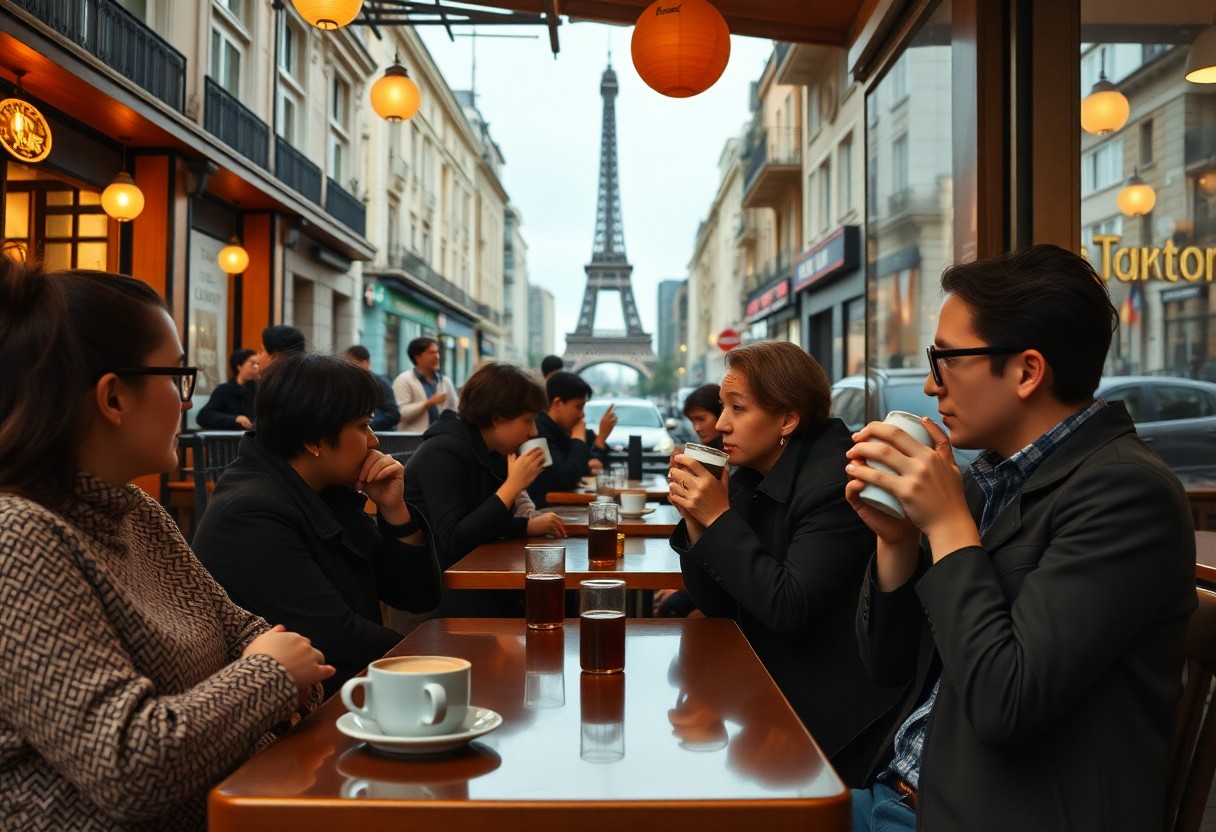
It’s time to initiate on a global journey that celebrates one of your favorite beverages: coffee. If you consider yourself a true coffee enthusiast, exploring international cities known for their vibrant coffee cultures will thrill your taste buds. From bustling cafes to unique brewing techniques, this guide will unveil the best destinations where you can indulge in exceptional coffee experiences. Whether you’re planning your next adventure or dreaming of far-off places, get ready to discover where your coffee passion can take you.

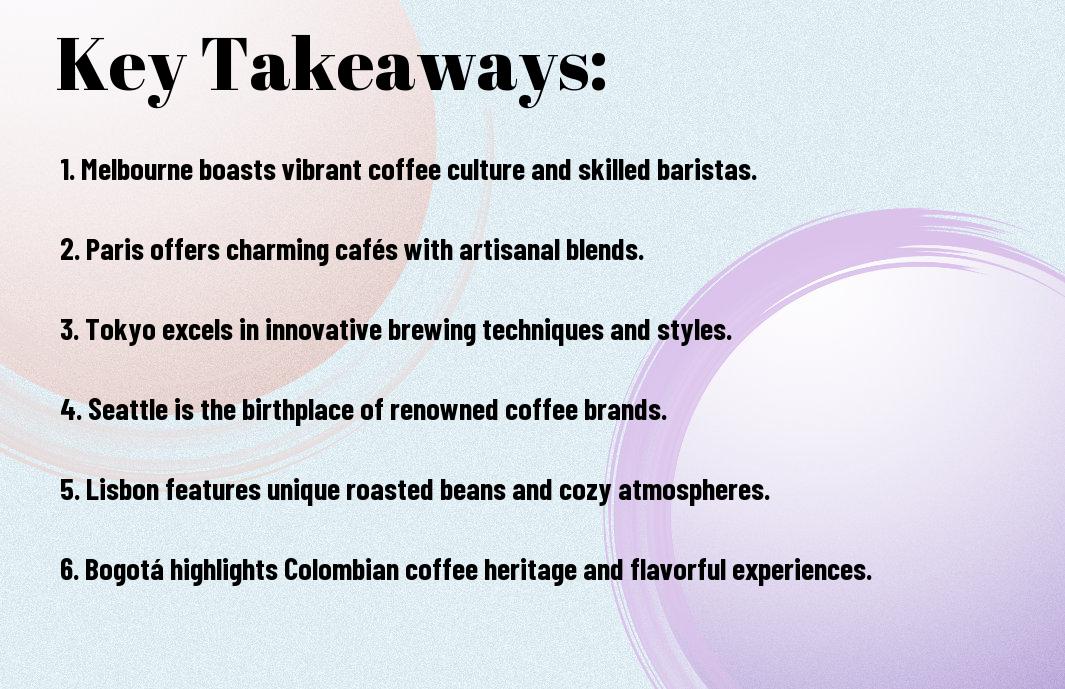
Key Takeaways:

  • Diverse Coffee Cultures: Each city offers a unique blend of local coffee traditions, showcasing various brewing techniques and flavor profiles.
  • Quality Roasteries: Many of these international cities are home to top-notch coffee roasters, ensuring high-quality beans and expertly crafted brews.
  • Vibrant Café Scenes: Coffee lovers will find a plethora of charming cafés, each providing an inviting atmosphere to enjoy their favorite drinks and socialize.

Top Global Coffee Cities

A diverse range of international cities beckons coffee lovers with their unique brews and vibrant café cultures. If you’re an avid coffee enthusiast, check out this Bucket list coffee cities to discover the best spots around the world.

Seattle, USA

Behind its misty skyline and rich Pacific Northwest culture, Seattle stands as a pioneering city for coffee lovers. Home to the first Starbucks, this city is a hub for indie roasters and artisanal cafes, making it a haven for your caffeine cravings. Don’t miss the chance to explore its intricate coffee shops, each with its distinctive blends and brewing methods.

Melbourne, Australia

Australia has gained global recognition for its thriving coffee culture, particularly in Melbourne. This city boasts an impressive array of specialty coffee shops, where passionate baristas prioritize quality and experimentation. From flat whites to cold brews, the local coffee scene blends traditional Ethiopian beans with modern brewing techniques, appealing to both purists and adventurous drinkers.

Cities around Melbourne feature street-side cafes where you can enjoy your coffee while soaking in the bustling atmosphere. With a strong emphasis on sustainable practices and local sourcing, Melbourne invites you to savor a world-class coffee experience at every turn.

Addis Ababa, Ethiopia

Cities like Addis Ababa offer a mesmerizing journey through the birthplace of coffee. Here, you’ll uncover a tradition that dates back centuries, with local coffee ceremonies celebrated in homes and cafes alike. Addis Ababa’s vibrant coffee scene showcases the unique flavors of Ethiopian beans, making it a must-visit destination for any coffee lover.

Hence, Addis Ababa not only serves up aromatic brews but also provides you with a cultural experience steeped in history. Engage with friendly locals as they prepare coffee in the traditional way, and immerse yourself in the rich heritage that surrounds every cup.

Vienna, Austria

Beside its historical charm, Vienna dazzles with its exquisite coffeehouse culture, where time seems to stand still. You’ll find elegant cafes that offer a comfortable environment to sip on a Melange or an Einspänner while enjoying the local ambiance. Every establishment is steeped in tradition, making your coffee experience here unforgettable.

Coffee in Vienna transcends mere caffeine; it’s a communal ritual that invites you to linger over your drink. From grand coffee houses to intimate bistros, you’ll discover a place where you can unwind, read, or engage in conversation, all while enjoying some of the finest brews the city has to offer.

Coffee Culture and History

Some of the best international cities for coffee lovers are steeped in rich coffee culture and history. This fascinating journey through time reveals how coffee has evolved from a simple beverage to a global phenomenon, connecting people across diverse cultures. As you explore these vibrant cities, you’ll discover not only unique brews but also the stories behind the beans, the art of preparation, and the communal spaces that have emerged around this beloved drink.

Historical Origins of Coffee

By tracing the origins of coffee, you will find it is believed to have first emerged in Ethiopia, where legend credits a goat herder named Kaldi with its discovery in the 9th century. He noticed that his goats became energetic after eating the berries from a certain shrub. This fascinating tale led to the first brewing of coffee in the Arab world, ultimately spreading into Europe and beyond, paving the way for the global coffee culture we know today.

Modern Coffee Trends

Historical shifts in coffee consumption have paved the way for modern trends that highlight specialty brews, sustainable sourcing, and innovative brewing techniques. You may notice an increasing focus on direct trade relationships with farmers, ensuring quality and promoting ethical practices, all while introducing you to unique flavor profiles.

It is exciting to see how modern coffee trends emphasize artisan techniques such as pour-over, cold brew, and nitro coffee, enhancing your coffee experience. Many cafes now offer a variety of brewing methods, encouraging you to explore different flavors and aromas. Additionally, the rise of plant-based alternatives and an emphasis on eco-friendly practices are reshaping your coffee shop visits, making them not just about coffee but also about sustainability and personal choice. Such trends foster a deeper appreciation for the beverage and the cultural practices surrounding it.

Coffee Specialty Shops

Your passion for coffee can lead you to some of the best specialty shops around the globe. These cafés focus on high-quality beans, unique brewing methods, and expert baristas who elevate the coffee experience. Whether you’re in search of single-origin brews or innovative blends, these specialty shops become your haven for exploring coffee culture in an unparalleled way.

Must-Visit Cafés

On your journey to discover exceptional coffee, there are must-visit cafés that craft extraordinary beverages using artisanal methods. Each spot boasts its own unique atmosphere, and the stories behind their beans will enrich your coffee experience. Dive into these local favorites that have garnered attention for their exceptional quality and inviting ambiance.

Unique Brewing Techniques

At many specialty shops, you’ll find an array of unique brewing techniques that highlight the intricacies of each coffee bean. From the slow pour-over method to mesmerizing siphon brewing, these practices draw out distinct flavors and aromas that traditional methods may overlook.

Also, exploring these techniques can deepen your appreciation for coffee. Not only do they reflect the barista’s skill, but they also allow you to experience the nuances of different coffee varieties. Techniques like cold brew and nitro-infused coffee bring yet another layer of richness and novelty to your cup. Be sure to ask the baristas about their brewing methods for an enlightening experience!

Coffee Festivals Around the World

Keep your calendar marked for the vibrant coffee festivals that take place around the globe. From the Italian Espresso Festival in Rome to the Seattle Coffee Festival, these events offer you the chance to explore the rich diversity of coffee culture, sample unique brews, and connect with fellow coffee aficionados. You’ll delight in the engaging workshops, live demonstrations, and the opportunity to meet renowned baristas while gaining insights into the intricacies of coffee production and preparation.

Celebrating Coffee Culture

Behind every coffee festival is a celebration of the deep-rooted culture surrounding this beloved beverage. These gatherings bring you face-to-face with coffee growers, roasters, and enthusiasts who share their passion and knowledge. The festivals not only showcase exquisite brews but also highlight the stories of the farmers and producers who cultivate the beans you savor, making every sip a meaningful experience.

Major Annual Events

By participating in major annual coffee events, you place yourself at the center of the coffee universe. From barista competitions to tasting sessions, these festivals are designed to enhance your appreciation for coffee in all its forms. They create a vibrant atmosphere where you can engage with industry leaders and explore the latest trends shaping the coffee scene.

World-renowned coffee festivals draw thousands of attendees each year, giving you a unique opportunity to immerse yourself in the latest innovations. Notable events like the Specialty Coffee Expo and the London Coffee Festival feature workshops, tasting booths, and exclusive releases from top coffee brands. These gatherings not only celebrate coffee but also foster community among enthusiasts, making them a must-visit for anyone looking to deepen their knowledge and enjoy the wonders of coffee.

Sustainable Coffee Practices

Not all coffee is created equal, especially when it comes to sustainability. As a coffee lover, you should seek out cities that prioritize environmentally friendly practices. Sustainable coffee involves responsible farming, ethical purchasing, and a commitment to preserving the natural resources of the regions where coffee is grown. By choosing cafes and brands that embody these values, you can enjoy your favorite brew while supporting the planet and its communities.

Farm-to-Cup Initiatives

Around the globe, innovative farm-to-cup initiatives are reshaping the coffee experience. These programs bridge the gap between growers and consumers, allowing you to connect directly with coffee farms. By sourcing beans straight from the producer, you gain a deeper appreciation for the journey of your coffee while ensuring that farmers receive fair compensation for their hard work. This approach not only enhances flavor profiles but also promotes transparency and sustainability in the coffee industry.

Ethical Sourcing

Initiatives focused on ethical sourcing are gaining momentum, ensuring that your coffee is harvested under fair conditions. This means working with suppliers who prioritize fair wages, safe working environments, and social equity for their employees. By supporting brands that engage in ethical sourcing, you align your coffee choices with broader social values, contributing to positive change in coffee-growing communities.

The emphasis on ethical sourcing in the coffee industry is transforming the way you enjoy your daily brew. With an increasing number of roasters committed to transparency, you can feel confident that your coffee is sourced from farms that uphold labor rights and sustainable practices. This movement not only benefits the communities that produce your coffee but also enhances its quality, allowing you to savor every sip with a clear conscience.

Conclusion

With these considerations, you can begin on a delightful journey to the best international cities for coffee lovers. Each city offers its own unique coffee culture, vibrant cafés, and local roasters ready to satisfy your caffeine cravings. Whether you prefer the rich espressos of Italy, the innovative brews of Australia, or the cozy ambiance of American coffee shops, you can find a destination that caters to your taste. So pack your bags and get ready to explore these coffee havens that promise unforgettable experiences tailored to your palate.

Q: What are some of the top international cities known for their coffee culture?

A: Several cities around the world are renowned for their vibrant coffee culture. Among the best are:

  • Seattle, USA – Known for its rich coffee history and as the birthplace of Starbucks, Seattle has a plethora of independent coffee shops that offer artisanal brews.
  • Melbourne, Australia – Known for its café culture, Melbourne boasts a variety of unique coffee blends and an emphasis on espresso-based drinks.
  • Lisbon, Portugal – With its traditional cafés and strong espresso, Lisbon offers a charming environment for coffee aficionados who enjoy sipping their drinks in scenic settings.
  • São Paulo, Brazil – As one of the largest coffee producers in the world, São Paulo is home to numerous specialty coffee shops that incorporate local flavors.
  • Tokyo, Japan – Tokyo’s obsession with coffee includes a blend of traditional and modern practices, along with unique brewing techniques that set the cafes apart.

Q: What are some experiences that coffee lovers can expect in these cities?

A: Coffee lovers visiting these international cities will find a range of experiences tailored to their passion. Some highlights include:

  • Coffee Tasting Tours – Many cities offer guided tours that take coffee enthusiasts through various cafés, allowing them to sample different roasts and brewing methods.
  • Workshops and Classes – Interested individuals can participate in workshops that teach the art of brewing, latte art creation, and cupping techniques.
  • Local Coffee Festivals – Many cities host annual coffee festivals that feature tastings, competitions, and talks from industry experts.
  • Innovative Coffee Shops – Visitors can explore unique venues that often combine art, music, and coffee, making for a holistic café experience.
  • Traditional Cafés – In places like Lisbon and Vienna, coffee lovers can immerse themselves in the history of coffee by visiting classic cafés that have been around for centuries.

Q: How can I find the best coffee spots when traveling to these cities?

A: To discover the best coffee spots while traveling, consider the following methods:

  • Online Reviews and Guides – Websites like Yelp and TripAdvisor are excellent resources for finding highly-rated coffee shops in any city.
  • Social Media – Platforms like Instagram and TikTok often showcase trending cafés, making it easier to discover popular local spots.
  • Mobile Apps – There are apps specifically designed for coffee enthusiasts that highlight cafés based on location and user recommendations.
  • Ask Locals for Recommendations – Engaging with locals can lead to discovering hidden gems that may not be widely advertised.
  • Coffee Tours – Consider booking a coffee tour; professional guides can take you to their favorite cafés, ensuring a unique and tailored experience.

How to Travel to Countries with Strict Visa Requirements

Traveling to countries with strict visa requirements can be a daunting experience, but with the right preparation, you can navigate the process smoothly. Understanding the specific entry requirements for your destination is necessary to avoid any last-minute hurdles. From gathering necessary documents to applying well in advance, you can ensure that your travel plans proceed without a hitch. In this guide, you will find practical tips and insights to help you successfully obtain the necessary visas and make the most of your trip abroad.

Key Takeaways:

  • Research Requirements: Thoroughly investigate the visa requirements, including documentation and processing times, for your destination country.
  • Plan Ahead: Start the visa application process early to avoid any last-minute complications or delays.
  • Consult Experts: Seek advice from travel agencies or visa consultants who specialize in travel to countries with strict visa policies.

Understanding Visa Requirements

A comprehensive grasp of visa requirements is important when planning your travel. Each country has specific regulations and procedures for obtaining a visa, which can differ significantly. Always check the official embassy or consulate website of your destination to get the most accurate and up-to-date information. Your ability to travel will largely depend on your nationality and purpose of visit, so staying informed is key.

Types of Visas

Along with understanding the requirements, you should familiarize yourself with the various types of visas available. Here’s a brief overview:

Tourist Visa For leisure and tourism activities
Business Visa For business-related activities
Student Visa For study purposes
Work Visa For employment in the host country
Transit Visa For passing through a country
  • You may need to provide additional documents.
  • Each visa type comes with its own processing time.
  • Check if a visa-on-arrival is an option for your destination.
  • You may require a sponsor from the host country for certain visas.
  • Thou should validate your visa type before application.

Common Restrictions

Around the globe, many countries impose specific restrictions that you must take into account. These might include limited duration of stay, prohibited activities, or requirements for insurance coverage. Adhering to these limitations can prevent any complications during your travels.

Consequently, it’s important to understand that violations of visa restrictions can lead to serious repercussions, including fines or deportation. Many countries also require proof of onward travel and sufficient funds to support your stay. Being aware of these common restrictions will help ensure a smoother experience during your time abroad. Always read up on specific country policies well in advance to avoid any pitfalls.

Preparing for Your Trip

Some of the most exciting adventures can begin with the challenges of obtaining a visa. Before launching on your journey, ensure you familiarize yourself with the particulars of the destination’s visa policies. You can find valuable insights and experiences shared by fellow travelers on 10 most difficult countries to get a visa : r/knowyourvisa.

Researching Visa Options

Among the first steps in your preparation should be thorough research into the various visa options available for your destination. Different countries impose different requirements based on your nationality, the purpose of your visit, and the length of your stay. Make sure to explore official government websites and consult recent travel forums for comprehensive details on the types of visas you can apply for.

Gathering Necessary Documents

By gathering the necessary documents well in advance, you can streamline the visa application process. Typically, you will require a valid passport, recent photographs, an itinerary, proof of accommodation, and sometimes financial statements to demonstrate your ability to support your stay.

Also, be aware that specific countries may request additional documentation such as a letter of invitation or a travel insurance policy. Organizing these documents early on can prevent delays in the process. Always double-check the requirements for your country and category of visa to ensure you have all necessary paperwork at hand when applying.

Applying for a Visa

Now that you understand the importance of a visa for your travel, the next step is applying for it. This process can vary significantly depending on the country you intend to visit, so it’s important to familiarize yourself with their specific requirements and guidelines. Detailed preparation can make the difference between a smooth application and unnecessary delays that could affect your travel plans.

Application Process

Around the world, visa applications typically require you to fill out a form and submit various documents, including your passport, photographs, and travel itinerary. Some countries may also ask for proof of financial means or an invitation letter. Always check the official embassy or consulate website to ensure that you gather all necessary documents and follow the proper procedures to avoid any complications.

Tips for a Successful Application

Along with carefully completing your application, there are several tips to boost your chances of success. Ensure you check the visa processing times and submit your application well in advance to avoid last-minute issues. Here are some key pointers:

  • Double-check your application for errors.
  • Provide all requested documentation in the correct format.
  • Be ready for an interview if it’s part of the application process.

The more thorough and accurate you are, the smoother your application process will likely be.

Further enhancing your application outcome involves thorough preparation and understanding of common pitfalls. Ensure that your finances are in order and all documents reflect accurate information. Consider the following additional practices:

  • Reach out to others who have successfully applied for a visa to gain insights.
  • Use a checklist to keep track of your documentation and deadlines.
  • Seek expert advice if you encounter difficulties during the process.

The effort you invest in this preparation pays off with a higher chance of your visa application being approved.

Navigating Interview Processes

Not every visa application is straightforward, and navigating interviews can be overwhelming. Countries with strict visa requirements often conduct interviews to assess your eligibility. It’s necessary to approach this process with confidence and preparedness to increase your chances of approval.

Types of Interviews

  • In-person interviews
  • Telephone interviews
  • Video interviews
  • Group interviews
  • Follow-up interviews

Recognizing the type of interview you will face is vital for your preparation.

Interview Type Description
In-person Face-to-face meetings at embassies or consulates.
Telephone Conducted over the phone, often for initial assessments.
Video Using conferencing software for remote interviews.
Group Interviews with multiple applicants assessed together.
Follow-up Additional interviews if further clarification is needed.

Preparing for Common Questions

About anticipating the questions that may arise during your interview, preparation is key. Familiarizing yourself with common queries can help you formulate clear and concise responses.

To effectively prepare, research and compile a list of typical questions asked during visa interviews, such as your travel purpose, financial stability, and ties to your home country. Practice your responses aloud, ensuring you convey your intentions clearly. It’s also helpful to have relevant documents at hand to support your answers, which demonstrates your preparedness and determination.

Alternatives to Traditional Visa Applications

All travelers should explore alternatives to traditional visa applications, particularly when visiting countries with strict entry requirements. These options can simplify your travel experience and save you time and effort. By understanding available alternatives, you can enhance your journey while navigating complex visa regulations.

Visa Waiver Programs

The Visa Waiver Program (VWP) allows citizens of certain countries to travel to participating nations without a visa for short stays. This option provides a convenient way to enter a country for tourism or business, as long as you meet specific criteria, such as having a valid passport and an approved travel authorization. Check if your country qualifies for this program to streamline your travel plans.

e-Visas and Fast-Track Options

Waiver programs are not the only alternatives; e-visas and fast-track options can significantly simplify the visa process. Many countries now offer electronic visa applications, enabling you to apply online without visiting an embassy. This convenience often includes expedited processing times, allowing you to receive your visa quickly and efficiently.

Indeed, e-visas are becoming increasingly popular for their accessibility and convenience. These online applications often require minimal documentation and can be completed from the comfort of your home. Fast-track options, on the other hand, allow travelers to bypass lengthy queues and processing times at borders, making the travel experience smoother. By utilizing these modern alternatives, you can save valuable time and focus on enjoying your trip rather than navigating bureaucratic hurdles.

Cultural Considerations and Etiquette

Despite the challenges of strict visa requirements, embracing the local culture can enhance your travel experience. Understanding and respecting social norms, traditions, and behaviors in the host country helps you navigate interactions more smoothly. Be mindful of dress codes, greetings, and dining etiquette, as these aspects can significantly impact how locals perceive you. Demonstrating cultural sensitivity fosters goodwill and opens doors for enriching connections throughout your journey.

Understanding Local Customs

Above all, familiarize yourself with the customs and traditions of the country you are visiting. This includes learning about regional holidays, social hierarchies, and taboos that might influence your interactions. Engaging with locals using their customs can create a positive atmosphere and demonstrate your appreciation for their heritage, enhancing your overall experience.

Language Barriers and Solutions

Behind every smile is the potential for miscommunication. Language barriers can be a significant obstacle while traveling, impacting your ability to navigate, build connections, and enjoy authentic experiences. However, simple strategies can help bridge this gap effectively.

Cultural misunderstandings often arise from language barriers, but there are several solutions to enhance communication. Consider downloading translation apps or carrying a pocket phrasebook to assist you in real-time conversations. Engaging with locals through gestures or visual aids can also help convey your message. Additionally, many people are appreciative when you make an effort to speak their language, even if it’s just a few basic phrases. This approach fosters goodwill and may lead to more enriching interactions with the local community.

To wrap up

Now that you have a comprehensive understanding of how to navigate countries with strict visa requirements, you can take informed steps towards your travel goals. Make sure to thoroughly research the specific visa application processes, gather all necessary documentation, and submit your applications well in advance. This preparation will not only enhance your chances of approval but also streamline your travel experience. By adhering to these guidelines, you can enjoy your journey to destinations with stringent entry regulations confidently and efficiently.

Q: What steps should I take to prepare for applying for a visa to countries with strict requirements?

A: When preparing for a visa application to countries with stringent requirements, start by researching the specific visa requirements for your destination. This includes understanding the types of visas available, documentation needed, and any financial proofs you’ll have to submit. Gather your documents well in advance, such as your passport, photographs, travel itinerary, invitation letters, and evidence of financial solvency. Next, fill out any necessary application forms carefully, ensuring accuracy. Finally, be prepared for an interview, where you may need to explain your travel intentions clearly.

Q: How can I increase my chances of getting a visa for a country with strict entry regulations?

A: To enhance your chances of obtaining a visa, focus on presenting a complete and well-organized application. This may involve providing detailed travel plans, proving ties to your home country (like employment or family), and demonstrating your ability to support yourself financially during your stay. It can also be advantageous to obtain any required vaccinations or travel insurance as stipulated by the embassy. Additionally, if applicable, include letters of invitation from contacts in the destination country, as these can substantiate your reasons for traveling.

Q: What common mistakes should I avoid when applying for a visa to a country with strict visa policies?

A: There are several common pitfalls to avoid when applying for a visa to a stringent country. The first is providing incomplete or incorrect information on your application forms; inaccuracies can lead to delays or rejection. Another mistake is failing to provide sufficient financial documentation, which can raise concerns about your ability to support yourself while abroad. Additionally, be cautious not to underestimate processing times; submitting your application too close to your intended travel dates can result in complications. Finally, don’t ignore the specifics that each country’s visa policy may require, as overlooked requirements could adversely affect your application.

How to Stay Connected with Family While Traveling Internationally

There’s no need to feel distant from your loved ones when you initiate on an exciting international journey. By utilizing modern communication tools and planning ahead, you can ensure that your family stays connected with you, no matter where you are in the world. This guide will provide you with practical tips and strategies to maintain those vital connections, share your experiences, and foster a sense of closeness, despite the miles separating you. Let’s explore how you can make the most of your travels while keeping your family involved in your adventures.

Key Takeaways:

  • Utilize Technology: Leverage apps like WhatsApp and Facetime to keep in touch seamlessly and share experiences in real-time.
  • Schedule Regular Check-ins: Set specific times for video calls or messages to maintain a routine and ensure everyone stays updated.
  • Share Travel Experiences: Create a shared photo album or blog to document your adventures, allowing family members to feel included in your journey.

Understanding Communication Tools

A variety of communication tools can help you stay in touch with family while traveling internationally. From mobile apps to video calling platforms, these tools enable you to maintain meaningful connections, share experiences, and provide updates from afar. Familiarizing yourself with these technologies will ensure you can easily reach out, regardless of geographical barriers.

Mobile Apps for Messaging

Any traveler can benefit from mobile apps designed for messaging such as WhatsApp, Telegram, or Signal. These platforms allow you to send instant messages, photos, and voice notes without incurring high international texting fees. Make sure to download and set up these apps before your trip to keep the lines of communication open.

Video Call Platforms

Against the backdrop of travel, video call platforms such as Zoom, Skype, or FaceTime can transform your communication experience, allowing you to see and hear your loved ones in real-time. This adds a personal touch that text alone might not convey, making your conversations feel more engaging and intimate.

Plus, these platforms often offer group call options, letting you connect with multiple family members at once. You’ll also find features like screen sharing and virtual backgrounds that can enhance your interactions. Ensure your device has a reliable internet connection for an uninterrupted experience, so you can make the most of your conversations, no matter where you are in the world.

Setting Up a Schedule

One of the most effective ways to maintain connections with your family while traveling internationally is by setting up a schedule. Establishing specific times for phone calls or video chats helps everyone manage their expectations and stay connected despite the distance. You can create a shared calendar that outlines your availability, ensuring you don’t miss those important touchpoints with loved ones. This proactive approach fosters communication and reinforces your commitment to staying in touch during your travels.

Time Zone Considerations

Along with scheduling, it’s important to consider time zone differences. Be mindful that your family may be in a different part of the world with varying local times. Use online tools to easily convert times and identify overlapping hours that work for both you and your family. This will help you avoid those awkward moments of trying to connect when they’re sleeping or unavailable.

Regular Check-ins

An effective way to keep the connection strong is through regular check-ins, which can take various forms, including brief texts or longer conversations. These interactions help bridge the geographical gap and provide your family with updates about your travels, making them feel included in your experiences. Setting aside specific days or times for these check-ins can enhance your connection and mitigate feelings of isolation.

Regular check-ins not only allow you to share your travel adventures but also provide your family an opportunity to share their daily lives with you. Consider combining a check-in with a family activity, such as cooking a meal together over video call or enjoying coffee while chatting. This fosters a sense of continuity and closeness, reinforcing your bonds despite physical distance.

Sharing Experiences in Real-Time

Many travelers want to keep their families in the loop while exploring new destinations. Leveraging technology allows you to share those unforgettable moments as they unfold, bridging the distance and sparking conversations. From photos to live videos, real-time updates can enhance your connection with loved ones back home.

Social Media Updates

Experiences shared on social media platforms can create a vivid narrative of your travels. You can easily post photos and stories to keep your family engaged, offering them a glimpse into your adventures. This instant sharing not only allows you to interact but also invites your family to comment and ask questions, making them feel involved in your journey.

Travel Blogs and Journals

RealTime documentation of your travels can be a rewarding way to stay connected. Writing a travel blog or keeping a journal allows you to narrate your experiences in detail, providing your family with stories and insights that may not come across in social media posts. By sharing your blog, you can create a digital scrapbook of your adventures, which serves as both a memory for you and entertaining reading for your loved ones.

It can be beneficial to dedicate specific times or themes for your travel blog entries, whether it’s food, culture, or unique encounters. This structured approach makes your updates more engaging and informative for your family. You might even invite them to contribute their thoughts or memories related to your experiences, strengthening your bond while creating a rich tapestry of shared exploration.

Engaging in Collaborative Activities

Unlike the traditional methods of keeping in touch, engaging in collaborative activities can deepen your connection with family while you travel. By participating in shared experiences, you can create lasting memories together, even from a distance. Whether it’s playing games or creating shared digital spaces, these activities allow you to bond creatively and maintain a sense of unity across countries.

Virtual Games and Events

Virtual games and events can be a fun way to engage with your family while traveling. You can organize a game night using online platforms that host multiplayer games or even attend virtual events together, such as concerts or trivia nights. These shared experiences can foster camaraderie, ensuring you remain connected despite the miles between you.

Shared Photo Albums

To keep your family updated with your travels, consider creating shared photo albums. This allows everyone to contribute their photos, creating a dynamic visual story of your adventures.

For instance, you can use platforms like Google Photos or Dropbox, where you upload your travel photos, and family members can add their own images or comments. This not only keeps everyone in the loop about your journey but also encourages them to share moments from their daily lives, creating a beautiful tapestry of experiences that connect you all, regardless of geographical separation.

Sending Postcards and Gifts

To keep the connection with your family vibrant while traveling, consider sending postcards and thoughtful gifts from your journey. These tangible reminders of your adventures can spark joy and deepen your bond. For more inspiration on how to maintain these connections, check out 8 Simple Ways to Keep in Touch With Family Abroad.

Digital vs. Physical Mail

Among the various options for reaching out, you may find yourself torn between digital and physical mail. While emails and social media provide instant communication, sending postcards adds a personal touch that can touch your family’s hearts, reminding them of your special moments away.

Thoughtful Souvenirs

Mailing souvenirs that reflect the culture and charm of the places you visit is a delightful way to enrich your family’s experience. Personal items such as local delicacies, traditional handicrafts, or small tokens can carry significant meaning and serve as beautiful reminders of your time abroad.

To choose the perfect thoughtful souvenir, consider what your family members cherish or experience during your travels. A unique piece of jewelry, a handwoven item, or even a special snack can ignite conversations and make them feel included in your journey. This consideration shows that you value their interests, making your gifts even more special.

Creating a Family Group Chat

For those traveling internationally, a family group chat serves as an excellent way to stay connected with loved ones back home. Utilizing popular messaging apps, you can share updates, photos, and experiences in real time, keeping everyone involved in your journey. Group chats can bridge the distance, allowing your family to feel a part of your adventures while you explore new places.

Best Practices for Group Communication

Beside sharing exciting moments, establishing some ground rules for your family group chat can enhance communication. Keep the chat lively by having everyone share updates or thoughts about your experiences. Consider setting your preferred times for chat engagement, ensuring that no one feels overwhelmed with constant notifications, while also making sure everyone stays in the loop.

Encouraging Participation

To foster a sense of inclusion in your family group chat, encourage everyone to share their thoughts and experiences. Asking open-ended questions can help elicit responses, making it more interactive. Recognizing and responding to messages from family members will help them feel valued and motivated to contribute regularly.

The key to encouraging participation in your family group chat lies in creating a welcoming atmosphere where everyone feels comfortable sharing. You can initiate conversations by posting questions about their day or soliciting opinions on various topics. Additionally, celebrate family milestones, birthdays, and achievements within the group, making it an engaging space for everyone to connect and share their lives, regardless of distance.

Summing up

The key to staying connected with your family while traveling internationally lies in leveraging technology and setting clear communication plans. Use apps like WhatsApp or FaceTime for real-time chats, and establish a schedule that accommodates different time zones. Sharing your travel experiences through social media updates or a dedicated group chat allows your loved ones to stay involved in your journey. Lastly, prioritize sending postcards or small souvenirs to create tangible memories, ensuring that your connections remain strong despite the distance.

Q: What are some effective ways to communicate with family while traveling internationally?

A: There are several effective methods for staying in touch with family members while you are abroad. First, consider using video calling apps like WhatsApp, Skype, or Zoom that provide free options for video chats, which can help bridge the distance. Additionally, social media platforms, such as Facebook or Instagram, allow for easy sharing of updates and photos. If you prefer text messaging, ensure you have access to Wi-Fi or international data plans to keep those lines open. Another option is to schedule regular times to connect, so everyone knows when they can expect to hear from you.

Q: How can I share my travel experiences with my family?

A: Sharing your travel experiences can help your family feel closer to you while you’re away. Start a travel blog or create a shared photo album on platforms like Google Photos or Dropbox where you can upload pictures and write about your adventures. This can be a fun way for your family to engage with your journey. You can also send postcards or small souvenirs from your travels—these personal touches make for cherished keepsakes. Social media also works well for quick updates and photos, allowing your family to stay involved in your travels in real-time.

Q: What should I do if my family members are in different time zones?

A: Navigating time zone differences can be challenging, but there are ways to make it work. Use world clock apps to keep track of the time at home, and find overlapping moments where it’s convenient for both parties to connect. Assigning specific days or times for a weekly phone call or video chat can help establish a routine. If live communication is tough, consider leaving voice messages or sending text updates that your family can read or respond to whenever they have the time. This ensures everyone stays connected, regardless of the time difference.

How to Plan a Destination Wedding Abroad

Traveling for your wedding can be an extraordinary experience, providing you and your guests with a beautiful backdrop and unforgettable memories. Whether you’re dreaming of a beach ceremony in the Caribbean or a romantic event in a European castle, planning a destination wedding brings its own unique set of challenges. This guide will walk you through important steps to ensure your special day unfolds smoothly, allowing you to focus on celebrating your love while exploring a stunning new locale.

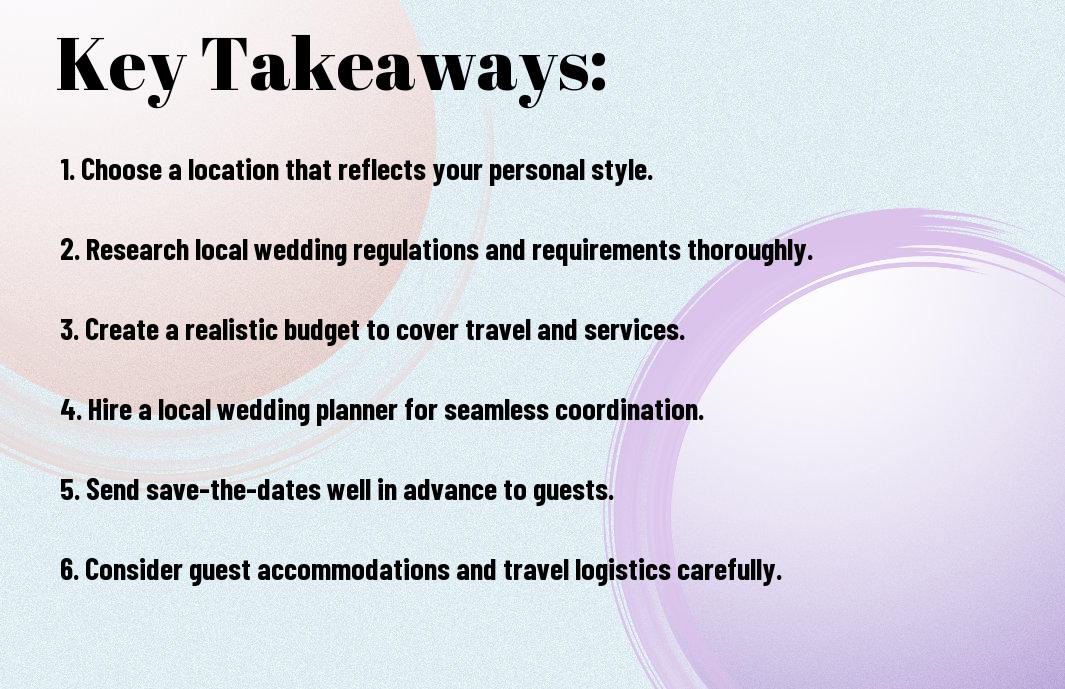
Key Takeaways:

  • Research the legal requirements for marriage in your chosen country to ensure compliance with local laws.
  • Budget appropriately for travel, accommodations, and vendor services, as costs can vary significantly based on location.
  • Choose a reliable local wedding planner who understands the area and can help coordinate details effectively.

Choosing the Perfect Destination

Your choice of destination is vital to creating the wedding of your dreams. Consider locations that hold personal meaning for you and your partner, as well as those that align with your vision, budget, and the experience you want to provide to your guests. Whether you prefer a tropical beach, a rustic vineyard, or a historic castle, your destination will set the stage for your special day.

Popular Destination Wedding Locations

By exploring some popular destination wedding locations, you can draw inspiration for your own special day. Consider places like Hawaii, the Caribbean, Italy, or Mexico, each offering unique landscapes and experiences that can make your wedding unforgettable.

Factors to Consider When Selecting a Location

To choose the ideal wedding destination, evaluate several important factors. Consider the following:

  • Accessibility for guests
  • Weather conditions during your preferred wedding date
  • Local marriage laws and requirements
  • Accommodations and amenities available

Knowing these details will help ensure a seamless experience for you and your loved ones.

Consequently, it is important to dive deeper into each factor influencing your destination choice. Assess these points:

  • Your budget for travel and accommodations
  • The desired vibe and aesthetic for your wedding
  • Potential restrictions or regulations specific to the location
  • Guest comfort and travel logistics

Knowing this information will greatly assist in narrowing down your options and selecting the perfect wedding destination for your celebration.

Budgeting for Your Destination Wedding

There’s no denying that planning a destination wedding requires careful budgeting. From travel costs to venue fees, it’s imperative to have a clear picture of your finances to ensure you don’t overspend. You’ll want to break down all possible expenses and prepare for unforeseen costs so that you can enjoy the planning process without added stress.

Estimating Total Costs

Destination weddings can vary greatly in price, depending on the location, guest count, and services you choose. You should consider receiving multiple quotes from vendors and outlining all necessary expenses, including accommodations, travel, venues, catering, and attire. Develop a comprehensive plan to accurately estimate your total costs, allowing you to make informed decisions.

Hidden Fees and Expenses

Behind every beautiful destination wedding, there can be unexpected hidden costs that can add up quickly. It’s crucial to identify these potential fees to avoid budget overruns.

Even the most meticulously planned budget may encounter surprises. Hidden costs can include resort service charges, extra fees for guests’ meals, or additional costs for decor that may not be included in vendor quotes. It’s wise to thoroughly read contracts and ask vendors about any potential extra charges upfront. Additionally, consider the costs of required marriage licenses, travel insurance, and site visits, as these can be overlooked in the initial planning phase. Being proactive about these hidden expenses will help keep your budget on track.

Legal Considerations

To successfully plan a destination wedding abroad, you must navigate various legal considerations that can impact your nuptials. Each country has its own marriage laws and requirements, so understanding these can save you time and ensure your wedding is legally recognized both locally and back home.

Understanding Marriage Laws Abroad

Laws governing marriage can vary significantly from one country to another. Some nations require specific residency periods or have unique legal stipulations, so it’s crucial to research the laws applicable in your chosen destination to avoid any potential issues.

Required Documentation

Understanding what documentation you need is vital to ensure your marriage is valid. Different countries may ask for various documents, such as birth certificates, passports, and divorce decrees if applicable.

Plus, it’s a good idea to have these documents translated into the local language and possibly notarized, as this can expedite the process. You should also inquire about any waiting periods or fees associated with obtaining a marriage license in your chosen destination. Being fully prepared can help your wedding day go smoothly without unnecessary legal hitches.

Planning the Timeline

Many couples underestimate the importance of creating a timeline for their destination wedding. Establishing a clear timeline helps you stay organized and ensures that all necessary tasks are completed leading up to your big day. By outlining deadlines and milestones, you can make informed decisions and reduce stress as the wedding date approaches.

When to Start Planning

To ensure a smooth planning process, it’s advisable to start planning your destination wedding at least 12 to 18 months in advance. This timeframe gives you ample opportunity to research locations, secure vendors, and allow your guests enough time to make travel arrangements. Early planning ensures that you have the best options available for your special day.

Key Milestones to Consider

After setting your wedding date, identify key milestones such as venue selection, booking travel accommodations, and sending out invitations. These milestones serve as benchmarks to help you track your progress and keep everything on schedule. Each milestone brings you closer to a well-organized celebration.

Also, don’t forget to plan for tasks like hiring a local wedding planner, scheduling meals and activities for your guests, and even sending save-the-dates. Creating a detailed timeline from the outset allows you to visualize the entire process, making it easier to allocate time for each task, and ultimately ensuring your destination wedding comes together seamlessly.

Vendor Coordination

Despite the distance, efficient vendor coordination is key to a successful destination wedding. From caterers to florists, establishing a strong relationship with your vendors can ensure that your vision comes to life. Start early and use organizational tools to keep all parties informed and aligned. This way, you minimize potential issues and ensure a seamless experience on your special day.

Finding Local Vendors

Any great destination wedding begins with finding local vendors who are familiar with the area and can provide the services you need. Utilize online resources, social media, and wedding forums to read reviews and get recommendations. Consider setting up initial consultations through video calls to gauge their professionalism and compatibility with your style.

Communicating with Vendors Remotely

Local vendors may be accustomed to working with clients from afar, providing you with various communication methods such as email, video calls, and messaging apps. Establish clear lines of communication early on to facilitate smooth interactions. Be organized in your discussions, sharing specific details and preferences so that you and your vendors are on the same page.

Coordination with vendors remotely requires maintained communication and an organized approach. Create a shared document or project management tool that allows all your vendors to access important timelines and checklists. This will help in keeping everyone updated and accountable while making adjustments as needed. By fostering a collaborative atmosphere, you can ensure a cohesive execution of your wedding plans without being physically present.

Travel and Accommodations

All destination weddings require careful planning around travel and accommodations to ensure your guests can easily join you on your special day. Start by providing your loved ones with details about the closest airports and local transportation options. Consider your wedding date when checking for travel deals, and promote group bookings to reduce costs for attendees. Providing a list of recommended hotels near the venue will help your guests find suitable places to stay, making their journey to your wedding more enjoyable.

Arranging Guest Travel

Accommodations should be a priority. You might consider arranging group travel with a travel agency to simplify the process for your guests. Reach out to airlines for potential group discounts and share this information with your attendees. Providing a travel itinerary may also help ensure everyone is on the same page and bolster excitement for the impending celebration.

Booking Accommodations for Guests

Between your wedding venue and guest accommodations, a seamless experience can help alleviate any travel-related stress. Look into hotels that offer group rates or packages tailored to wedding parties. Some venues even collaborate with local hotels to provide special services for guests, such as complimentary shuttle service or discounts. Share booking links and information in your invitations to guide your friends and family in securing their stay easily.

Consequently, by booking accommodations early and securing arrangements that prioritize guest comfort, you’ll foster a warm and welcoming environment for everyone attending. Don’t forget to check reviews and assess the proximity of the hotels to your venue. This can minimize travel time and maximize enjoyment, allowing your guests to focus on celebrating with you rather than worrying about logistics.

Final Words

Upon reflecting on your upcoming destination wedding, it’s crucial to organize each element to ensure a seamless experience. Start by choosing a locale that resonates with you and set a budget to guide your planning decisions. Secure reliable vendors and familiarize yourself with local customs and legal requirements. By prioritizing communication with your guests and addressing their travel needs, you can create an unforgettable celebration. With careful planning and consideration, your destination wedding can truly become a magical occasion that reflects your unique love story.

FAQ

Q: What are the first steps I should take when planning a destination wedding abroad?

A: The first steps involve several key decisions. Start by selecting a destination that resonates with you and your partner. Consider factors such as travel accessibility for guests, climate, and local attractions. Next, establish a budget that includes travel, accommodation, wedding venue, and any additional costs. Research local wedding vendors and venues to understand the options available and ensure they align with your vision. It might also be beneficial to enlist the help of a local wedding planner who understands the area and can provide recommendations and support throughout the process.

Q: How can I manage the logistics of inviting guests to a destination wedding?

A: Concerning inviting guests, clear and early communication is key. Send out save-the-date notifications well in advance, ideally six to twelve months before the wedding date. This allows guests ample time to arrange travel and accommodations. Create a wedding website where guests can find important information, such as travel tips, accommodation options, and links to local attractions. Address potential concerns by offering group booking options for hotels or transport and consider providing a detailed itinerary for the wedding weekend. Offering assistance with planning travel can also enhance the experience for your guests.

Q: What legal requirements should I be aware of for a destination wedding?

A: Legal requirements for a destination wedding can vary widely depending on the country or region where you are planning to marry. Start by researching the specific laws of your chosen destination, including marriage license application procedures, residency requirements, and necessary documents like identification or proof of eligibility to marry. It’s also important to consider whether you want a symbolic wedding ceremony or a legally binding marriage. If you choose the latter, ensure you have accounted for any waiting periods or required ceremonies. Consulting with a local wedding planner or an attorney knowledgeable about wedding laws in that area can provide valuable assistance.

Skip to content