Travel

How to Stay Healthy While Traveling Abroad

Health should be a top priority when you travel abroad, as exploring new cultures and cuisines can sometimes challenge your well-being. To ensure you enjoy your adventures without compromising your physical condition, you need practical strategies to maintain a balanced lifestyle on the go. This guide will equip you with valuable tips and insights, enabling you to navigate your trip while staying energized and fit. Whether it’s managing your diet, staying active, or prioritizing self-care, here’s how you can keep your health in check while discovering the world.

Key Takeaways:

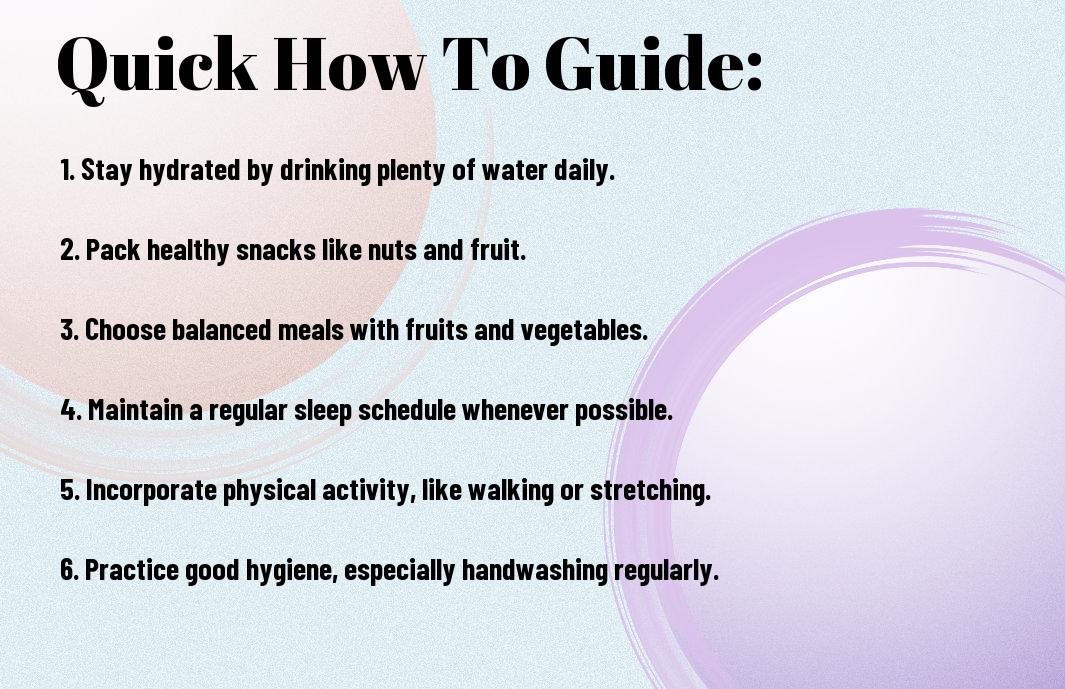
  • Stay Hydrated: Always carry a water bottle and drink plenty of fluids, especially in hot climates, to avoid dehydration.
  • Practice Good Hygiene: Wash your hands often and use hand sanitizer to minimize the risk of illness while exploring new places.
  • Choose Safe Foods: Be selective about where you eat; opt for cooked foods and bottled drinks to reduce the chances of foodborne illnesses.
  • Get Adequate Rest: Prioritize sleep and take breaks throughout your travels to keep your energy levels up and immune system strong.
  • Exercise Regularly: Incorporate physical activities like walking or hiking into your itinerary to maintain fitness and boost your mood.
Preparing for Your Trip

A thorough preparation is key to maintaining your health while traveling abroad. Start by planning your itinerary, ensuring you allocate time for wellness activities like exercise, and considering your dietary options. Pack strategically, including health necessarys like medications and a basic first-aid kit. The more organized you are, the easier it will be to stay healthy during your adventures.

Researching Your Destination

The best way to stay healthy while traveling is to research your destination beforehand. Understand the local cuisine, climate, and common health concerns in that area. This knowledge enables you to make informed choices about where to eat and what activities to participate in while ensuring you’re prepared for any potential health issues.

Vaccinations and Health Precautions

While preparing for your trip, check with your healthcare provider about necessary vaccinations and health precautions for your destination. Certain countries may require required vaccines, such as those for hepatitis or typhoid, and taking preventive medications for illnesses like malaria could be advisable.

Plus, it’s a good idea to register with your government’s travel advisory service to get alerts about your destination. Make a list of the nearest hospitals and clinics, and ensure you have adequate travel insurance that covers health emergencies. Carry documentation of your vaccinations with you, and familiarize yourself with any cultural practices related to health and hygiene in the area you’re visiting. These simple steps can make a significant difference in your travel experience.

Packing Smart for Health

Some thoughtfulness in your packing can significantly contribute to your well-being while traveling. Prioritize items that support your health journey, making conscious choices that keep you feeling great no matter where you’re headed.

Essential Medications and First-Aid Kits

Kits are vital for addressing minor health issues that may arise while you travel. Always pack a basic first-aid kit containing band-aids, antiseptic wipes, and pain relievers, along with any personal medications you require. This preparation will help you tackle unexpected situations quickly.

Health-Conscious Packing Tips

Some packing strategies can enhance your travel experience while keeping your health in check. Be sure to include nutritious snacks, a reusable water bottle, and fitness gear. As you pack, consider these tips:

  • Choose lightweight and quick-dry clothing.
  • Pack healthy snacks like nuts and dried fruit.
  • Include a travel-sized vital oils kit for relaxation.

After considering these elements, you can tailor your suitcase to support a healthier lifestyle on the go.

A well-planned packing list can make a tremendous difference in maintaining your health while traveling. Include items that align with your healthy habits, ensuring you stay energized. Think about these additional tips:

  • Opt for whole food options to avoid processed snacks.
  • Bring a travel blender for smoothies if feasible.
  • Incorporate exercise bands for easy workouts wherever you are.

After you establish these routines, you’ll enjoy a more vibrant and healthy travel experience.

Staying Healthy During Travel

Unlike staying at home, traveling abroad can expose you to new health risks and dietary changes. To ensure a healthy experience, you can check out Preparing for a healthy trip: What to know before you travel, which offers valuable insights on pre-travel preparations. Maintaining your health while exploring a new destination is key to enjoying your adventure fully.

Tips for a Balanced Diet

Balanced meals on the go can be challenging but are important for your well-being. Here are some tips to maintain a nutritious diet while traveling:

  • Pack healthy snacks like nuts and fruit for your journey.
  • Opt for local healthier food options when dining out.
  • Try to include a variety of food groups in your meals.

The right nutrition helps keep your energy levels high during your travels.

Staying Hydrated and Active

Healthy hydration and regular activity are vital while traveling. You should aim to drink plenty of water and stay active through walking, hiking, or other recreational activities.

Hydrated bodies function more effectively, improving your overall travel experience. Aim to drink water frequently, especially in warm climates or during long flights. Incorporate movement throughout your day by exploring cities on foot or engaging in sightseeing excursions that require physical activity. Prioritizing hydration and exercise not only enhances your health but also allows you to fully enjoy the cultural experiences your destination offers.

Navigating Health Risks Abroad

Not all destinations have the same health standards or amenities as you might be accustomed to at home. Before you travel, it’s necessary to understand the potential health risks you may encounter in different countries. Research the local healthcare system, vaccination requirements, and any prevalent illnesses to ensure that you are adequately prepared for your journey.

Understanding Local Health Conditions

Some regions may have specific health concerns, such as infectious diseases, air quality issues, or food safety problems. Familiarize yourself with these local health conditions to assess any risks you might face while exploring. Additionally, consider seeking advice from travel health professionals who can provide tailored recommendations based on your destination.

Emergency Contacts and Resources

If you encounter a health issue while abroad, knowing how to access medical care quickly is necessary. Compile a list of local emergency numbers, medical facilities, and your country’s embassy or consulate information before you go. This preparation allows you to act swiftly in case of an emergency, ensuring that you receive the necessary care without unnecessary delays.

With access to reliable emergency contacts you can navigate any health issue with ease. Research the nearest hospitals or clinics at your destination and consider downloading health apps that offer medical assistance or connect you with local healthcare providers. Also, having your travel insurance details handy, including a 24-hour hotline, gives you peace of mind should the unexpected occur. Equip yourself with this information so you can enjoy your trip without worrying about potential health concerns.

Travel Insurance and Health Coverage

For a worry-free journey, it’s necessary to invest in travel insurance that provides adequate health coverage. This safeguard not only protects you from unforeseen medical expenses but also offers peace of mind, allowing you to focus on enjoying your travels. Make sure to read the policy details carefully to understand the extent of the coverage, especially when traveling to countries with high medical costs.

Choosing the Right Policy

An effective travel insurance policy should align with your specific needs and travel plans. Look for options that cover emergency medical expenses, evacuation, and any pre-existing conditions if applicable. Be mindful of the provider’s reputation and customer service, as these can impact your experience during a crisis.

What to Cover

With travel insurance, it’s important to ensure that your policy covers necessary areas such as medical emergencies, trip cancellations, lost baggage, and personal liability. Each of these aspects can significantly affect your trip and finances if something goes wrong.

Health-related coverage is vital to protect yourself from unexpected medical incidents. Look for policies that cover hospital visits, prescription medications, and emergency evacuations, especially if you’re traveling to remote locations. Additionally, confirm that any activities you plan on participating in, such as skiing or scuba diving, are included in your coverage. Comprehensive protection can make all the difference for a safe and enjoyable travel experience.

Cultural Considerations for Health

Your health can be significantly impacted by the local customs and practices of the areas you visit. Understanding cultural norms regarding health and wellness can help you avoid misunderstandings and respect local traditions. Engaging with locals and being open to their ways of living will not only enhance your experience but also keep you healthier on your travels. Be sure to inquire about local health resources, practices, and any specific customs related to well-being.

Adapting to Local Customs

Customs can vary widely across different cultures, particularly in relation to health practices. You should take the time to learn about these practices, whether it’s greetings, body language, or personal space, as they can influence social interactions and your overall experience. For example, in some cultures, physical touch is common, while in others, it may be considered intrusive. Observing and adapting to these customs will help you navigate social situations more comfortably and maintain your health and well-being while abroad.

Understanding Food Safety Practices

With the variety of cuisines available while traveling, understanding food safety practices is paramount to avoiding foodborne illnesses. It’s crucial to be aware of how food is prepared, washed, and stored in different cultures to safeguard your health. Pay attention to local food safety guidelines and choose establishments that prioritize cleanliness. Opt for freshly cooked meals and avoid street food in areas where hygiene seems questionable. Additionally, drinking bottled or purified water can prevent potential health issues related to contaminated water sources.

This understanding of food safety practices can significantly enhance your travel experience. Prioritize eating in places that are busy and have good reviews, as this often indicates quality and freshness. Being cautious and thus more informed about what you consume will not only improve your overall health but also allow you to enjoy local flavors without the fear of illness. You will find that adapting to food practices in different cultures can be a rewarding part of your trip, enriching your culinary experiences while keeping you safe.

Final Words

Upon reflecting on how to stay healthy while traveling abroad, it’s crucial to prioritize your well-being with a few key strategies. Maintain hydration, practice good hygiene, and eat balanced meals to support your immune system. Stay active by planning engaging outdoor activities and incorporating exercise into your itinerary. Be mindful of local health advisories and ensure you have necessary vaccinations. By implementing these practices, you can enhance your travel experience and return home feeling revitalized and healthy.

Q: What are some imperative tips for maintaining a balanced diet while traveling abroad?

A: To maintain a balanced diet while traveling, prioritize fresh fruits and vegetables, whole grains, and lean proteins. Look for local markets to purchase fresh produce, and choose restaurants that offer healthy options. When dining out, try to fill half your plate with vegetables, and limit fried and processed foods. Additionally, stay hydrated by drinking plenty of water and avoid excessive consumption of sugary drinks. Planning ahead, such as packing healthy snacks for long journeys, can also help you stay on track with your nutritional goals.

Q: How can I stay active while traveling, especially in cities with limited outdoor spaces?

A: Staying active while traveling in urban environments can be achieved through various creative methods. Use walking or cycling tours to explore the local area, which not only provides exercise but also allows you to enjoy the sights. If you have access to a hotel gym, take advantage of it for workouts. Alternatively, consider utilizing free fitness apps or online workout videos that require no equipment and can be done in your hotel room. Activities like yoga, aerobics, or body-weight exercises can easily fit into your travel schedule and help keep you energized.

Q: What precautions should I take to avoid illness while traveling internationally?

A: To reduce the risk of illness while traveling abroad, it is wise to stay updated on local health advisories and vaccinations. Packing a travel health kit with basic medications and first-aid supplies can be beneficial. Always practice good hygiene by washing your hands frequently and using hand sanitizer, especially before eating. Be mindful of the food and water you consume; opt for bottled water or filtered options and eat at reputable establishments. Additionally, be cautious of street food that may not have the same health standards as restaurants. By being proactive about your health, you can enjoy a more comfortable travel experience.
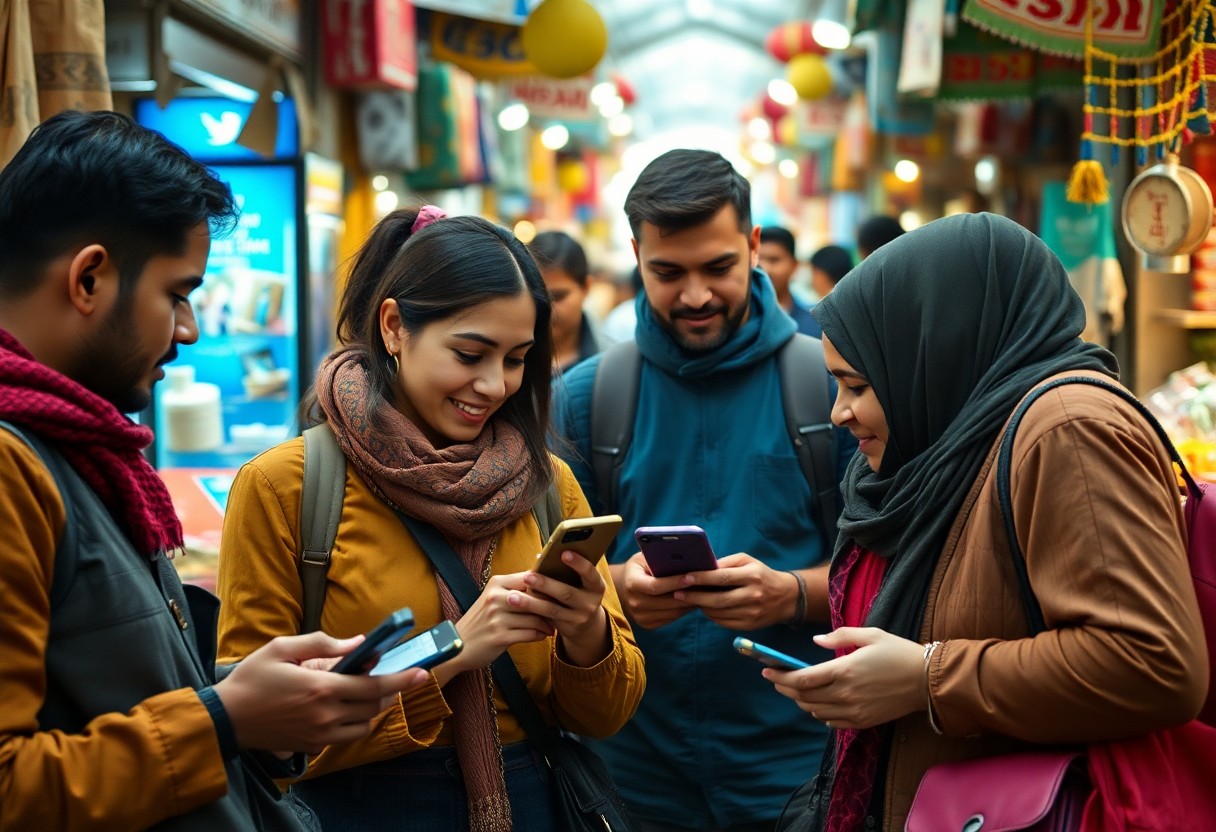
How to Stay Healthy While Traveling Abroad

Health should be a top priority when you travel abroad, as exploring new cultures and cuisines can sometimes challenge your well-being. To ensure you enjoy your adventures without compromising your physical condition, you need practical strategies to maintain a balanced lifestyle on the go. This guide will equip you with valuable tips and insights, enabling you to navigate your trip while staying energized and fit. Whether it’s managing your diet, staying active, or prioritizing self-care, here’s how you can keep your health in check while discovering the world.

Key Takeaways:

  • Stay Hydrated: Always carry a water bottle and drink plenty of fluids, especially in hot climates, to avoid dehydration.
  • Practice Good Hygiene: Wash your hands often and use hand sanitizer to minimize the risk of illness while exploring new places.
  • Choose Safe Foods: Be selective about where you eat; opt for cooked foods and bottled drinks to reduce the chances of foodborne illnesses.
  • Get Adequate Rest: Prioritize sleep and take breaks throughout your travels to keep your energy levels up and immune system strong.
  • Exercise Regularly: Incorporate physical activities like walking or hiking into your itinerary to maintain fitness and boost your mood.

Preparing for Your Trip

A thorough preparation is key to maintaining your health while traveling abroad. Start by planning your itinerary, ensuring you allocate time for wellness activities like exercise, and considering your dietary options. Pack strategically, including health necessarys like medications and a basic first-aid kit. The more organized you are, the easier it will be to stay healthy during your adventures.

Researching Your Destination

The best way to stay healthy while traveling is to research your destination beforehand. Understand the local cuisine, climate, and common health concerns in that area. This knowledge enables you to make informed choices about where to eat and what activities to participate in while ensuring you’re prepared for any potential health issues.

Vaccinations and Health Precautions

While preparing for your trip, check with your healthcare provider about necessary vaccinations and health precautions for your destination. Certain countries may require required vaccines, such as those for hepatitis or typhoid, and taking preventive medications for illnesses like malaria could be advisable.

Plus, it’s a good idea to register with your government’s travel advisory service to get alerts about your destination. Make a list of the nearest hospitals and clinics, and ensure you have adequate travel insurance that covers health emergencies. Carry documentation of your vaccinations with you, and familiarize yourself with any cultural practices related to health and hygiene in the area you’re visiting. These simple steps can make a significant difference in your travel experience.

Packing Smart for Health

Some thoughtfulness in your packing can significantly contribute to your well-being while traveling. Prioritize items that support your health journey, making conscious choices that keep you feeling great no matter where you’re headed.

Essential Medications and First-Aid Kits

Kits are vital for addressing minor health issues that may arise while you travel. Always pack a basic first-aid kit containing band-aids, antiseptic wipes, and pain relievers, along with any personal medications you require. This preparation will help you tackle unexpected situations quickly.

Health-Conscious Packing Tips

Some packing strategies can enhance your travel experience while keeping your health in check. Be sure to include nutritious snacks, a reusable water bottle, and fitness gear. As you pack, consider these tips:

  • Choose lightweight and quick-dry clothing.
  • Pack healthy snacks like nuts and dried fruit.
  • Include a travel-sized vital oils kit for relaxation.

After considering these elements, you can tailor your suitcase to support a healthier lifestyle on the go.

A well-planned packing list can make a tremendous difference in maintaining your health while traveling. Include items that align with your healthy habits, ensuring you stay energized. Think about these additional tips:

  • Opt for whole food options to avoid processed snacks.
  • Bring a travel blender for smoothies if feasible.
  • Incorporate exercise bands for easy workouts wherever you are.

After you establish these routines, you’ll enjoy a more vibrant and healthy travel experience.

Staying Healthy During Travel

Unlike staying at home, traveling abroad can expose you to new health risks and dietary changes. To ensure a healthy experience, you can check out Preparing for a healthy trip: What to know before you travel, which offers valuable insights on pre-travel preparations. Maintaining your health while exploring a new destination is key to enjoying your adventure fully.

Tips for a Balanced Diet

Balanced meals on the go can be challenging but are important for your well-being. Here are some tips to maintain a nutritious diet while traveling:

  • Pack healthy snacks like nuts and fruit for your journey.
  • Opt for local healthier food options when dining out.
  • Try to include a variety of food groups in your meals.

The right nutrition helps keep your energy levels high during your travels.

Staying Hydrated and Active

Healthy hydration and regular activity are vital while traveling. You should aim to drink plenty of water and stay active through walking, hiking, or other recreational activities.

Hydrated bodies function more effectively, improving your overall travel experience. Aim to drink water frequently, especially in warm climates or during long flights. Incorporate movement throughout your day by exploring cities on foot or engaging in sightseeing excursions that require physical activity. Prioritizing hydration and exercise not only enhances your health but also allows you to fully enjoy the cultural experiences your destination offers.

Navigating Health Risks Abroad

Not all destinations have the same health standards or amenities as you might be accustomed to at home. Before you travel, it’s necessary to understand the potential health risks you may encounter in different countries. Research the local healthcare system, vaccination requirements, and any prevalent illnesses to ensure that you are adequately prepared for your journey.

Understanding Local Health Conditions

Some regions may have specific health concerns, such as infectious diseases, air quality issues, or food safety problems. Familiarize yourself with these local health conditions to assess any risks you might face while exploring. Additionally, consider seeking advice from travel health professionals who can provide tailored recommendations based on your destination.

Emergency Contacts and Resources

If you encounter a health issue while abroad, knowing how to access medical care quickly is necessary. Compile a list of local emergency numbers, medical facilities, and your country’s embassy or consulate information before you go. This preparation allows you to act swiftly in case of an emergency, ensuring that you receive the necessary care without unnecessary delays.

With access to reliable emergency contacts you can navigate any health issue with ease. Research the nearest hospitals or clinics at your destination and consider downloading health apps that offer medical assistance or connect you with local healthcare providers. Also, having your travel insurance details handy, including a 24-hour hotline, gives you peace of mind should the unexpected occur. Equip yourself with this information so you can enjoy your trip without worrying about potential health concerns.

Travel Insurance and Health Coverage

For a worry-free journey, it’s necessary to invest in travel insurance that provides adequate health coverage. This safeguard not only protects you from unforeseen medical expenses but also offers peace of mind, allowing you to focus on enjoying your travels. Make sure to read the policy details carefully to understand the extent of the coverage, especially when traveling to countries with high medical costs.

Choosing the Right Policy

An effective travel insurance policy should align with your specific needs and travel plans. Look for options that cover emergency medical expenses, evacuation, and any pre-existing conditions if applicable. Be mindful of the provider’s reputation and customer service, as these can impact your experience during a crisis.

What to Cover

With travel insurance, it’s important to ensure that your policy covers necessary areas such as medical emergencies, trip cancellations, lost baggage, and personal liability. Each of these aspects can significantly affect your trip and finances if something goes wrong.

Health-related coverage is vital to protect yourself from unexpected medical incidents. Look for policies that cover hospital visits, prescription medications, and emergency evacuations, especially if you’re traveling to remote locations. Additionally, confirm that any activities you plan on participating in, such as skiing or scuba diving, are included in your coverage. Comprehensive protection can make all the difference for a safe and enjoyable travel experience.

Cultural Considerations for Health

Your health can be significantly impacted by the local customs and practices of the areas you visit. Understanding cultural norms regarding health and wellness can help you avoid misunderstandings and respect local traditions. Engaging with locals and being open to their ways of living will not only enhance your experience but also keep you healthier on your travels. Be sure to inquire about local health resources, practices, and any specific customs related to well-being.

Adapting to Local Customs

Customs can vary widely across different cultures, particularly in relation to health practices. You should take the time to learn about these practices, whether it’s greetings, body language, or personal space, as they can influence social interactions and your overall experience. For example, in some cultures, physical touch is common, while in others, it may be considered intrusive. Observing and adapting to these customs will help you navigate social situations more comfortably and maintain your health and well-being while abroad.

Understanding Food Safety Practices

With the variety of cuisines available while traveling, understanding food safety practices is paramount to avoiding foodborne illnesses. It’s crucial to be aware of how food is prepared, washed, and stored in different cultures to safeguard your health. Pay attention to local food safety guidelines and choose establishments that prioritize cleanliness. Opt for freshly cooked meals and avoid street food in areas where hygiene seems questionable. Additionally, drinking bottled or purified water can prevent potential health issues related to contaminated water sources.

This understanding of food safety practices can significantly enhance your travel experience. Prioritize eating in places that are busy and have good reviews, as this often indicates quality and freshness. Being cautious and thus more informed about what you consume will not only improve your overall health but also allow you to enjoy local flavors without the fear of illness. You will find that adapting to food practices in different cultures can be a rewarding part of your trip, enriching your culinary experiences while keeping you safe.

Final Words

Upon reflecting on how to stay healthy while traveling abroad, it’s crucial to prioritize your well-being with a few key strategies. Maintain hydration, practice good hygiene, and eat balanced meals to support your immune system. Stay active by planning engaging outdoor activities and incorporating exercise into your itinerary. Be mindful of local health advisories and ensure you have necessary vaccinations. By implementing these practices, you can enhance your travel experience and return home feeling revitalized and healthy.

Q: What are some imperative tips for maintaining a balanced diet while traveling abroad?

A: To maintain a balanced diet while traveling, prioritize fresh fruits and vegetables, whole grains, and lean proteins. Look for local markets to purchase fresh produce, and choose restaurants that offer healthy options. When dining out, try to fill half your plate with vegetables, and limit fried and processed foods. Additionally, stay hydrated by drinking plenty of water and avoid excessive consumption of sugary drinks. Planning ahead, such as packing healthy snacks for long journeys, can also help you stay on track with your nutritional goals.

Q: How can I stay active while traveling, especially in cities with limited outdoor spaces?

A: Staying active while traveling in urban environments can be achieved through various creative methods. Use walking or cycling tours to explore the local area, which not only provides exercise but also allows you to enjoy the sights. If you have access to a hotel gym, take advantage of it for workouts. Alternatively, consider utilizing free fitness apps or online workout videos that require no equipment and can be done in your hotel room. Activities like yoga, aerobics, or body-weight exercises can easily fit into your travel schedule and help keep you energized.

Q: What precautions should I take to avoid illness while traveling internationally?

A: To reduce the risk of illness while traveling abroad, it is wise to stay updated on local health advisories and vaccinations. Packing a travel health kit with basic medications and first-aid supplies can be beneficial. Always practice good hygiene by washing your hands frequently and using hand sanitizer, especially before eating. Be mindful of the food and water you consume; opt for bottled water or filtered options and eat at reputable establishments. Additionally, be cautious of street food that may not have the same health standards as restaurants. By being proactive about your health, you can enjoy a more comfortable travel experience.

How to Navigate Language Barriers in Foreign Countries

There’s no denying that traveling to a foreign country can be both exciting and challenging, especially when you encounter language barriers. Effective communication is key to enriching your travel experience and fostering connections with locals. In this guide, you’ll discover practical strategies and tools to help you navigate these obstacles with confidence, whether you’re ordering food, asking for directions, or engaging in meaningful conversations. With these tips at your disposal, you can enhance your travels and make the most of your adventures abroad.

Key Takeaways:

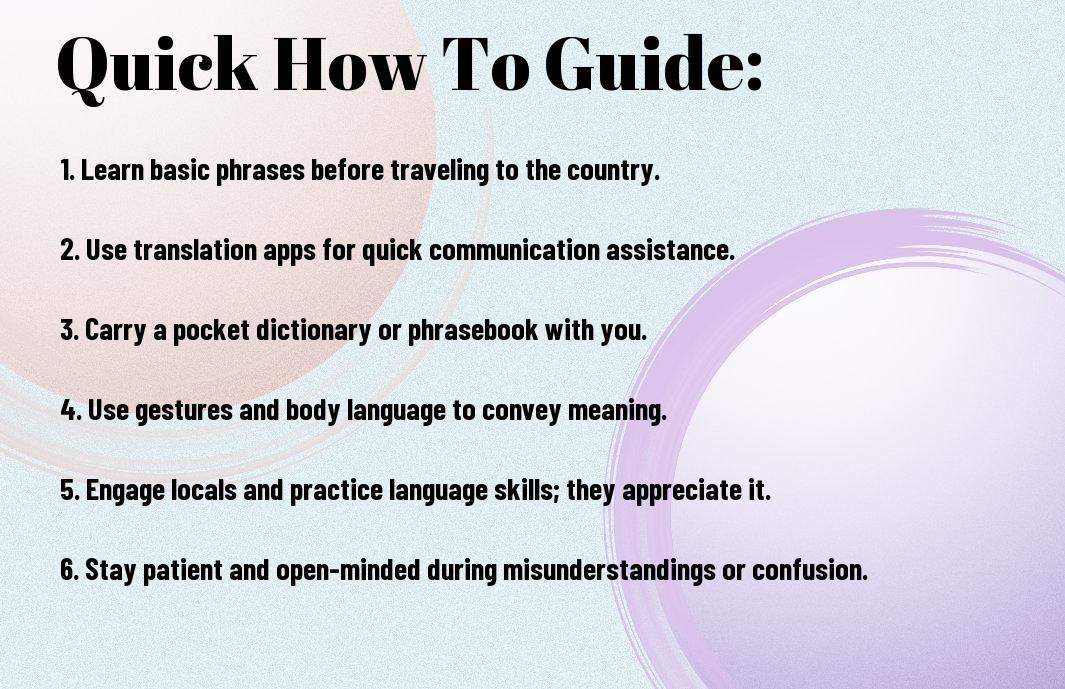
  • Learn Basic Phrases: Familiarize yourself with important expressions in the local language to enhance communication.
  • Use Translation Apps: Leverage technology by downloading reliable translation apps to assist in real-time conversations.
  • Non-verbal Communication: Utilize gestures, body language, and facial expressions to convey meaning when words fail.
  • Be Patient and Polite: Approach language barriers with a calm attitude, showing respect and willingness to communicate.
  • Visual Aids: Employ pictures, maps, or written instructions to bridge understanding when specificity is needed.

Understanding Language Barriers

The concept of language barriers revolves around the challenges faced when individuals who speak different languages attempt to communicate. These barriers can lead to misunderstandings and misinterpretations, significantly impacting your travel experience. It’s important to recognize that language is not just about speaking; it encompasses cultural nuances and expressions that may not translate directly. Embracing these complexities will help you navigate conversations more effectively while abroad.

Common Factors Contributing to Language Barriers

With your interactions in a foreign country, various factors can contribute to language barriers, including:

  • Differences in dialects and regional accents
  • Varying levels of proficiency in a common language
  • Cultural references and idioms that do not translate

Perceiving these elements can enhance your understanding of the local language landscape.

The Impact of Language Barriers on Communication

Contributing to misunderstandings, language barriers can significantly hinder effective communication and lead to frustrating experiences. When nuanced expressions and contextual meanings are lost, messages may become distorted or entirely misinterpreted, resulting in confusion. In unfamiliar environments, this can adversely affect your ability to gather important information, seek assistance, or build meaningful connections with locals.

This can also create feelings of isolation during your travels as you struggle to express your needs or understand others. Language barriers may limit your ability to engage fully in the culture or enjoy local experiences, hindering your overall travel enjoyment. By acknowledging these potential pitfalls, you can take proactive steps to mitigate their impact and enjoy a smoother interaction with the people you meet.

How to Prepare for Travel

If you want to navigate language barriers smoothly, preparation is necessary. Start by researching the local language and customs of the country you plan to visit. Familiarize yourself with common phrases, practice pronunciation, and even consider enrolling in a basic language course. The more prepared you are, the more confident you will feel while interacting with locals during your travels.

Learn Basic Local Phrases

Phrases can be a game changer when traveling to a foreign country. Focus on necessary expressions such as greetings, directions, and polite requests. You’ll find that even a few well-practiced words can bridge the gap between you and the people you meet, fostering goodwill and making your experience more enjoyable. Additionally, locals often appreciate your effort, which can lead to more meaningful interactions.

Utilize Technology and Translation Apps

For seamless communication, consider harnessing the power of translation apps. These tools can help you quickly convert written text or spoken phrases, making it easier to understand menus, signs, or locals’ conversations. You can communicate more effectively and gain confidence in navigating your surroundings, allowing you to focus on the adventure rather than on your language limitations.

Apps like Google Translate, Duolingo, and iTranslate offer features that go beyond simple translations. Many provide offline capabilities, document scanning, and even voice recognition to help you communicate in real-time. With these apps at your fingertips, you can effortlessly learn new phrases on the go or decipher written text instantly, granting you the freedom to fully immerse yourself in the local culture without feeling lost in translation.

Tips for Effective Communication

Your communication skills can significantly enhance your travel experience. Here are a few tips to help you connect with locals:

  • Learn key phrases in the local language.
  • Utilize translation apps for complex conversations.
  • Be patient and open-minded.
  • Use gestures and visual aids to convey your message.

This can be further explored in 4 Ways to Overcome Language Barriers When Traveling.

Non-Verbal Communication Techniques

Communication extends beyond words; utilizing non-verbal techniques can bridge gaps in understanding. Facial expressions, gestures, and body language can convey your intent even when words fail. Emphasizing these cues, such as using thumbs-up for approval or a frown for discontent, can greatly enhance interactions. Carrying a visual dictionary or drawing pictures can further assist in expressing your needs.

Engaging Local Guides and Interpreters

Communication with locals can be enriched through hiring guides or interpreters. They not only serve as language facilitators but can also provide invaluable insights into cultural nuances and traditions. Engaging a local guide can help you navigate conversations more effortlessly, ensuring a more authentic experience during your travels.

Effective guides and interpreters often have deep knowledge of the regional dialect and customs. By utilizing their expertise, you can foster meaningful connections with residents and gain a better understanding of their way of life. This can turn an average trip into a memorable cultural immersion, allowing you to appreciate the destination from a unique perspective.

Navigating Social Situations

Once again, mastering language nuances can significantly enhance your social experiences abroad. Whether you’re attending a local event or mingling at a party, being mindful of cultural differences and local customs will help you feel more at ease. Approach conversations with a friendly demeanor, even if you struggle with the language, as your willingness to engage will foster better connections with those around you.

Tips for Dining and Shopping

Dining in a foreign country can be a delightful experience. When ordering food or shopping, consider the following tips:

  • Learn basic menu vocabulary to make ordering easier.
  • Use visuals, like pictures or pointing, to help convey your needs.
  • Practice polite phrases such as “please” and “thank you”.

Recognizing your surroundings and adapting to local etiquette will enhance your interactions.

Engaging with Locals Respectfully

With respectful engagement, you can foster genuine connections with locals during your travels. Always approach situations with an open mind and a willingness to learn about their customs and values. Be aware of body language and non-verbal cues, as these play a significant role in communication. This attitude will help you navigate conversations with grace while creating memorable experiences.

Shopping overseas can be much more than just a transaction. You’ll often encounter unique products and the opportunity to converse with shopkeepers. Showing appreciation for their craft by asking questions or complimenting their work can lead to insightful exchanges. Additionally, using gestures or translating apps can bridge any language gaps you may have faced, ensuring a more enjoyable shopping experience.

Overcoming Misunderstandings

After encountering a language barrier, misunderstandings can often arise, leading to frustration and confusion. It’s important to stay calm and approach these situations with patience. By being aware of potential misinterpretations, you can actively work to resolve issues and foster clearer communication. Don’t hesitate to ask for clarification or repetition, as this can help bridge the gap between different languages and cultural nuances.

Strategies for Clarifying Conversations

Overcoming misunderstandings starts with employing effective strategies. Always ask open-ended questions that require more than a yes or no answer, encouraging deeper dialogue. Paraphrasing what you’ve heard can also help verify understanding, as it allows the other person to confirm or correct your interpretation. Engaging in active listening and maintaining a positive attitude will further enhance communication and ease tensions.

Utilizing Context and Visual Aids

For effective communication, using context and visual aids can significantly enhance your understanding. When words fail, gestures, body language, and relatable visuals can convey meaning and context, helping you make sense of conversations.

Visual cues, such as pictures, maps, or diagrams, can greatly complement verbal communication. Pointing to items in your surroundings or using your phone to show images can clear up confusion easily. Additionally, cultural context—like local foods, clothing, or landmarks—can provide valuable clues to meanings behind words. By combining these strategies, you enable yourself to navigate through the challenges of language barriers with better performance and effectiveness.

Building Cultural Awareness

Many travelers underestimate the importance of cultural awareness when navigating language barriers. Understanding the customs, traditions, and social norms of the country you are visiting can enhance your interactions and foster mutual respect. By taking the time to learn about the local culture, you can bridge the gap created by language differences, making your experiences more enriching and enjoyable.

Understanding Cultural Nuances and Etiquette

Cultural nuances can significantly impact communication, so it’s crucial to grasp the etiquette of the region you are exploring. Simple gestures, such as greetings or body language, may vary from one culture to another. By observing and adopting local customs, you will convey respect and openness, making your efforts to communicate more effective.

Embracing Diversity in Communication

For effective communication, embracing diversity means acknowledging the various ways people express themselves. Different cultures often have distinct norms for verbal and non-verbal communication, and being aware of these differences can lead to more meaningful exchanges.

Etiquette plays a significant role in embracing diversity. Adapting your communication style to the preferences of others, whether through tone, body language, or listening skills, will help you connect better. Practice patience, as you may encounter different communication rhythms; this flexibility will allow you to enjoy diverse perspectives, fostering a richer interaction during your travels.

Summing up

Ultimately, navigating language barriers in foreign countries requires a combination of preparation, patience, and resourcefulness. Equip yourself with basic phrases and cultural knowledge to enhance your interactions. Utilize translation apps and non-verbal communication to bridge any gaps. Don’t hesitate to engage locals, as they often appreciate your efforts and may offer valuable assistance. By remaining open and adaptable, you can turn potential misunderstandings into meaningful connections, enriching your travel experience and deepening your understanding of different cultures.

FAQ

Q: What are some effective strategies for communicating in a foreign country where your language skills are limited?

A: When navigating language barriers, consider using visual aids such as pictures or maps to convey your message. Gestures can also be helpful, so use body language to supplement your communication. Another effective strategy is to learn a few key phrases in the local language, which can demonstrate effort and help in gaining respect from locals. Additionally, utilizing translation apps on your mobile device can provide real-time assistance when you’re struggling to communicate.

Q: How can I ensure that I understand local customs and cultural nuances when language is a barrier?

A: To better understand local customs, research the culture of your destination prior to your trip. Watching videos or reading articles about cultural etiquette can provide valuable insight. Engaging with locals, even with limited language skills, can also enhance your understanding of their customs. Consider joining guided tours where local guides can explain cultural practices in English, thereby bridging the language gap while enriching your travel experience.

Q: What tools or resources can assist me in overcoming language barriers while traveling?

A: There are several tools and resources to help you overcome language barriers. Language translation apps, such as Google Translate, can be downloaded to your smartphone for immediate translation assistance. Phrasebooks or language dictionaries can be handy for offline use. Additionally, consider enrolling in language classes or using language learning platforms beforehand to familiarize yourself with the basics. Lastly, networking with fellow travelers through forums or social media can offer tips and support to help you navigate your journey.

How to Choose the Right Travel Insurance for International Trips

Just because you’re planning a fantastic international getaway doesn’t mean everything will go smoothly. Travel insurance is necessary for protecting yourself against unforeseen events like trip cancellations, medical emergencies, and lost belongings. In this guide, you will learn how to evaluate different insurance options, understand what coverage you truly need, and ensure you’re adequately protected during your travels. With the right information, you can confidently select travel insurance that meets your specific needs and gives you peace of mind on your adventure.

Key Takeaways:

  • Assess Your Needs: Consider factors like destination, duration, and activities involved in your trip to determine what coverage is necessary.
  • Understand Coverage Types: Familiarize yourself with various coverage options, including medical expenses, trip cancellation, and lost luggage.
  • Check Policy Exclusions: Review the fine print for any exclusions that may affect your coverage, such as pre-existing conditions or certain high-risk activities.
  • Compare Providers: Evaluate multiple insurance providers to find the best policy that offers comprehensive coverage at a competitive price.
  • Read Reviews: Look for feedback from other travelers regarding the service and claims process of the insurance provider you are considering.

Understanding Travel Insurance

A travel insurance policy offers financial protection and peace of mind against unexpected events that may occur during international trips. It covers various potential risks, including trip cancellations, medical emergencies, and lost belongings, ensuring that you are not left helpless in unfamiliar territories. By choosing a suitable plan, you can travel with confidence knowing you have safety nets in place for unforeseen situations.

Types of Travel Insurance

There are several types of travel insurance policies available, each catering to different needs:

  • Trip Cancellation Insurance
  • Medical Coverage
  • Travel Delay Insurance
  • Personal Liability Coverage
  • Lost Baggage Protection

Knowing your travel habits and needs can help you select the right type of coverage for your adventures.

Common Exclusions and Limitations

Assuming you carefully review your travel insurance policy, you will discover common exclusions and limitations that could affect your coverage.

Travel insurance policies often contain specific exclusions that you should be aware of. These may include pre-existing medical conditions, certain high-risk activities (like skydiving), and travel to countries with travel warnings. Additionally, certain policies may have limits on the amount they will pay for medical expenses or the duration of coverage. Understanding these exclusions is necessary to avoid surprises when making a claim during your trip.

Key Factors to Consider

While choosing travel insurance for your international trips, you should consider several key factors that can affect your coverage. These include:

  • Your destination
  • Duration of the trip
  • Your health needs
  • Adventure activities planned
  • Pre-existing medical conditions

Perceiving the importance of these aspects will guide you in selecting the best insurance plan suited to your specific travel needs.

Destination-Specific Coverage

An important factor to evaluate is whether your insurance plan offers destination-specific coverage. Different countries have varying healthcare systems and risk levels, so your policy should be tailored accordingly. For example, traveling to a location with high medical costs may require more extensive coverage to ensure you are adequately protected against potential expenses.

Duration of Trip

On the other hand, the duration of your trip greatly influences the type of insurance you need. Short trips may require basic coverage, while extended travels can lead to unforeseen circumstances that warrant comprehensive plans. An extended trip might expose you to various risks, including trip cancellation, lost luggage, or medical emergencies, making it vital to have a policy that accommodates longer durations.

This can mean choosing between single-trip coverage or an annual policy if you travel frequently. You should assess how long you will be away and whether your activities change across different locations, as this could affect your insurance needs. Make sure to clearly understand the terms related to duration, ensuring your coverage extends for the entire length of your stay without gaps.

How to Evaluate Insurance Providers

Unlike choosing a budget airline or a hotel, evaluating travel insurance providers requires a careful assessment of various factors. You should consider their reputation, financial stability, and the range of coverage options they offer. Look for companies that have been in the industry for a substantial period, as this may indicate reliability. Comparing multiple providers will help you find the best policy suited to your needs.

Checking Reviews and Ratings

The feedback from other travelers can provide valuable insight into an insurance provider’s performance. Checking reviews and ratings on trusted platforms will help you gauge customer satisfaction and the overall reputation of the company. Look for patterns in the reviews, especially regarding claims handling and customer service, as these aspects are vital when you’re in need of assistance abroad.

Assessing Customer Support

An insurance provider’s customer support can make a significant difference during your travels. You want to ensure they are easily accessible, responsive, and equipped to handle inquiries or emergencies when they arise. Evaluating the variety of support channels (such as phone, email, and live chat) can give you a clearer picture of their service quality.

Checking for availability and responsiveness during different time zones is necessary, especially since travel emergencies often occur at inconvenient hours. Consider testing their customer support by reaching out with questions before purchasing your policy, as this can give you an idea of how they operate. Additionally, inquire about the claims process and how quickly they can deliver assistance in an emergency situation, as this will be key to your peace of mind while traveling abroad.

Tips for Finding the Best Policy

Your search for the best travel insurance policy can be simplified by following these tips:

  • Assess your travel needs carefully.
  • Look for comprehensive coverage that fits your itinerary.
  • Check for exclusions or limitations in the policy.
  • Read reviews and ratings from other travelers.
  • Consider the insurer’s customer service and claims process.

Assume that taking the time to evaluate these factors will lead you to a well-suited insurance plan.

Comparing Multiple Quotes

To find the best deal, consider comparing multiple quotes from different providers. This ensures you understand the price range and features available.

Comparison Table

Provider Monthly Premium
Provider A $30
Provider B $40
Provider C $35

Understanding Policy Terms

With a variety of policies available, understanding the terms of each policy is vital for your travel safety.

A thorough review of policy terms ensures you know what is covered and what isn’t, including limitations on medical coverage, trip cancellations, and emergency assistance. Be particularly vigilant about fine print, which may contain important information regarding exclusions for pre-existing conditions or specific activities. By grasping these details, you can make an informed decision that provides you peace of mind on your travels.

Essential Coverage Elements

For a comprehensive travel insurance policy, it is vital to consider crucial coverage elements that provide protection against unforeseen events. These elements typically include medical coverage, trip cancellation and interruption, baggage loss, and emergency assistance. Evaluating these components will help you select a policy that meets your specific needs and ensures peace of mind during international travel.

Medical Coverage

To safeguard yourself from unexpected medical expenses abroad, thorough medical coverage is crucial. This should cover hospital stays, outpatient treatment, and emergency services. Additionally, ensure that it includes coverage for repatriation and medical evacuation, as these can incur significant costs in case of serious illness or injury.

Trip Cancellation and Interruption

Some policies offer trip cancellation and interruption coverage, which can protect you against financial loss if you need to cancel or shorten your trip due to unforeseen circumstances. This benefit typically includes cancellations due to illness, family emergencies, or natural disasters, helping you recover non-refundable expenses like flights and accommodation.

Cancellation coverage allows you to reclaim costs associated with pre-paid bookings in case an emergency arises, preventing significant financial strain. Additionally, interruption coverage can reimburse you for unused trip costs if you must return home earlier than planned. Be sure to check the policy’s specific conditions, as each insurer may have different stipulations regarding what qualifies for coverage.

How to Purchase Travel Insurance

Despite the plethora of travel insurance options available, purchasing the right policy can be straightforward. Start by researching reputable providers and comparing their offerings. For a comprehensive overview of the best choices, check out International Travel Insurance: 5 Best Options for 2024. Once you’ve narrowed down your choices, you can confidently proceed with your purchase, ensuring you are adequately covered for your journey.

Online vs. Agent Purchase

Purchase your travel insurance either online or through an insurance agent, depending on your preference and comfort level. Online platforms typically offer quicker access to compare various policies, while agents can provide personalized assistance. If you have specific needs or complex questions, consulting with an agent might be beneficial to ensure you fully understand your options.

Timing Your Purchase

You should aim to purchase your travel insurance as soon as you book your trip. This timing ensures you are covered for any unexpected events that may arise before your departure, such as cancellation due to illness or natural disasters. Many policies have a time-sensitive enrollment period, and buying early often allows you to take advantage of a wider range of protection options.

With adequate planning, securing your travel insurance soon after booking your trip not only provides peace of mind but also prepares you for any uncertainties. Be aware that waiting too long to purchase may lead to limitations on coverage, especially regarding trip cancellation or pre-existing medical conditions. Thus, acting promptly is an important step in your travel preparations.

To wrap up

With these considerations in mind, you can make informed decisions when selecting travel insurance for your international trips. Assess your specific needs, compare different policies, and ensure they cover medical emergencies, trip cancellations, and other potential risks. Look for reputable providers and read the fine print to understand exclusions and limitations. By taking your time to choose wisely, you’ll protect yourself against unforeseen challenges and enjoy peace of mind throughout your travels.

Q: What factors should I consider when selecting travel insurance for international trips?

A: When dicking out travel insurance for international trips, consider the following factors:
1. Coverage Types: Look for comprehensive coverage that includes medical expenses, trip cancellation, lost luggage, and emergency evacuation. Understanding the specific types of coverage that fit your travel needs is imperative.
2. Destination Specifics: Different locations may pose unique risks. For instance, you might need higher medical coverage for countries with high healthcare costs. Also, check if the insurer has experience and a good reputation in the area you’ll be traveling to.
3. Policy Exclusions: Read the fine print to identify what is not covered. Some policies may exclude pre-existing conditions, adventurous activities, or certain destinations, impacting the effectiveness of your insurance in a crisis.

Q: How can I determine the appropriate level of medical coverage for my travel insurance?

A: To determine the appropriate level of medical coverage, consider the following elements:
1. Destination’s Healthcare Cost: Research the medical costs in your destination country. Countries like the United States or certain European nations can have significantly higher healthcare expenses compared to others.
2. Duration of Travel: If you’re traveling for an extended period, you may want to secure a higher coverage limit to cater to unexpected medical situations.
3. Personal Health Evaluations: Assess your own health and any potential risks. If you have pre-existing conditions, ensure that your insurance adequately covers necessary treatments and does not exclude them.

Q: Is it beneficial to purchase travel insurance through my airline or travel provider?

A: Purchasing travel insurance through your airline or travel provider can have its advantages and disadvantages:
1. Convenience: It’s often easier to secure insurance through the same entity. It can be a smoother process if you face issues related to your travel.
2. Coverage Limitations: However, the policies offered may not be as comprehensive as those from specialized insurers. Evaluate their coverage terms, limits, and exclusions before making a decision.
3. Comparative Research: Take the time to compare different policies from various providers. This can help ensure you find the best coverage that meets your travel needs rather than settling for the first option presented.

What to Do If You Lose Your Passport Abroad

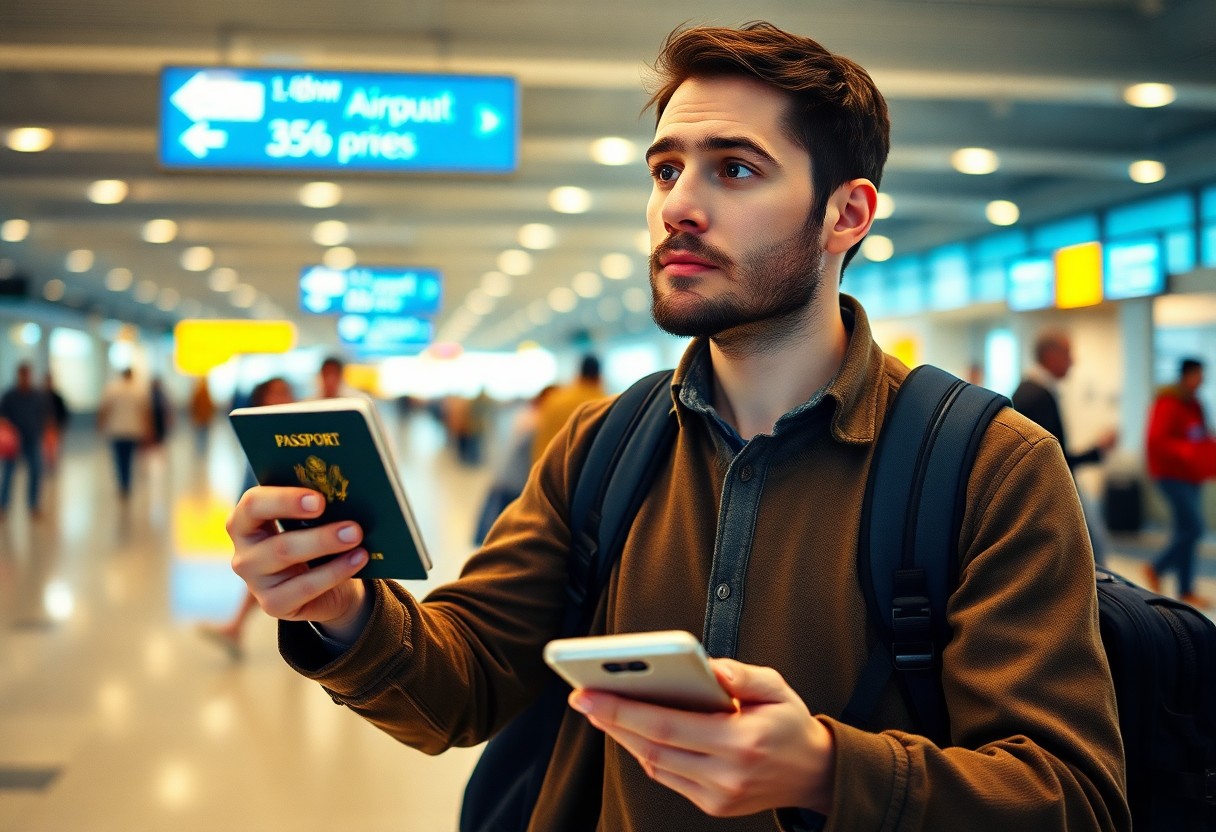
There’s nothing quite as alarming as realizing you’ve lost your passport while traveling abroad. This document is crucial for your identity and re-entry to your home country, so it’s important to act quickly. In this guide, you’ll learn the necessary steps to take if you find yourself in this situation, from reporting the loss to obtaining a replacement. By following these straightforward instructions, you can minimize the disruption to your travel plans and ensure your safety and security while navigating through unfamiliar territory.

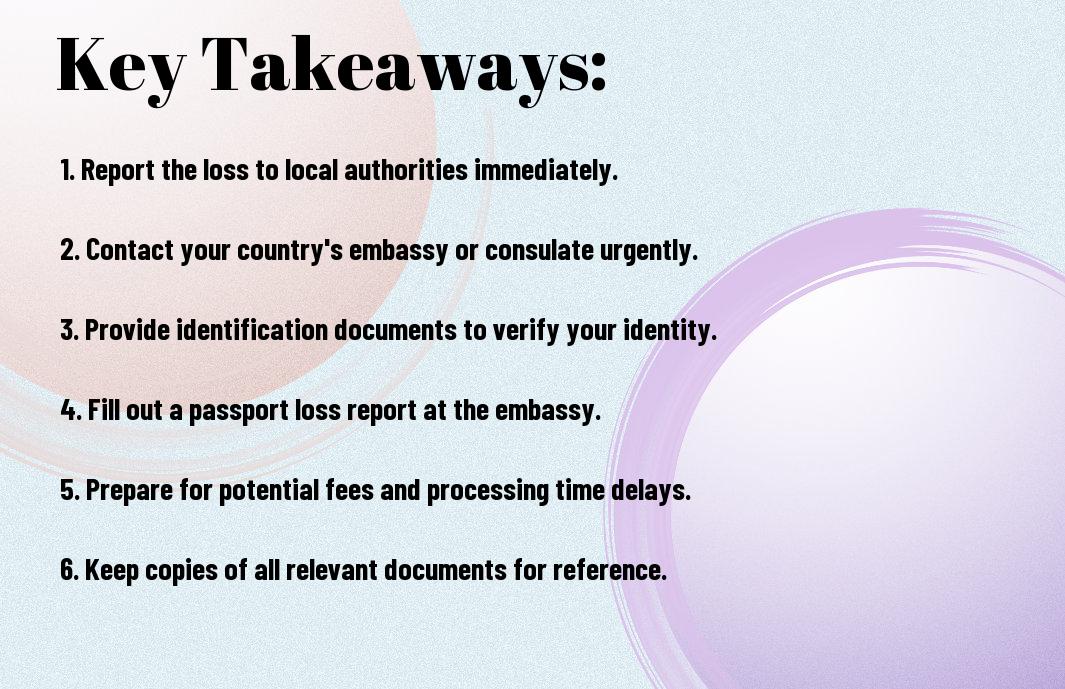
Key Takeaways:

  • Report the Loss: Immediately inform local authorities and file a police report to document the loss of your passport.
  • Contact Your Embassy: Reach out to your country’s embassy or consulate for assistance in obtaining a replacement passport.
  • Gather Documentation: Collect necessary documents such as identification, photographs, and proof of citizenship to expedite the passport replacement process.
  • Stay Informed: Familiarize yourself with local customs, laws, and emergency procedures regarding lost passports in your destination country.
  • Secure Backup Copies: Keep electronic and physical copies of your passport and other important documents in a safe place while traveling.

Immediate Steps to Take

While losing your passport abroad can be distressing, it’s crucial to take immediate action. Start by identifying where and when you lost your passport, and look around for any possible locations it might have been misplaced. Contact local authorities for assistance and consider reporting the loss for added security. Your next steps will often involve contacting your country’s embassy or consulate for further guidance on replacing your passport.

Stay Calm and Assess the Situation

By keeping a level head, you can better navigate the situation. Take a few deep breaths and gather your thoughts; panicking will not help. Focus on recalling the last time you had your passport. This can help jog your memory and possibly lead you to its location or narrow down the circumstances of its loss.

Check for Alternative Forms of Identification

Against the backdrop of losing your passport, your next move is to look for any other identification you may have brought along with you. This could be a driver’s license, a photocopy of your passport, or an ID card issued by your country. Having alternative forms of ID can significantly ease the process of getting assistance from local authorities or your embassy.

Another option is to check your email or files for digital copies of your passport or any other identification documents. Many travelers store these documents in cloud services or emails for this reason. If you have scanned copies, they can be helpful when filing a police report or when applying for an emergency passport at the embassy. This documentation may also expedite the process of verifying your identity, so ensure that any travel documents you do possess are readily accessible during this time.

Reporting the Loss

Some immediate actions are vital when you realize your passport is lost. Begin by documenting the circumstances of the loss, including when and where it occurred. This information will be vital for both local authorities and your embassy or consulate. Keeping a record not only helps in filing reports but also assists in any potential identity theft issues you might face later.

Contact Local Authorities

Above all, report the loss to local authorities as soon as possible. This may be the police or a local government office, depending on the country. They will provide you with a report of the incident, which typically serves as an official record of your lost passport and may be required when you contact your embassy.

Report to Your Country’s Embassy or Consulate

Contact your country’s embassy or consulate promptly after reporting to local authorities. They can guide you through the recovery process and assist in replacing your passport as quickly as possible.

It is advisable to visit your embassy or consulate’s website or call ahead to confirm what documents you need to bring. Typically, you’ll need your police report, identification, and passport photos. Some embassies may allow you to fill out the necessary forms online before your visit. Being organized and prepared with all relevant information will facilitate a smoother replacement process.

Applying for a Replacement Passport

Your next step involves applying for a replacement passport. Depending on your location, you will need to visit your country’s embassy or consulate. The staff there will guide you through the replacement process and provide you with the necessary forms to fill out. It’s important to act quickly, as obtaining a replacement passport can take time, and you don’t want to delay your travel plans.

Gather Required Documentation

An important part of applying for a replacement passport is gathering the required documentation. You will typically need to provide proof of your identity, such as a police report confirming your passport was lost or stolen, a passport photo, and any supporting documents that verify your citizenship.

Understand the Application Process

Passport processing for replacements may vary by location. It’s imperative to follow the specific guidelines provided by your embassy or consulate to ensure a smooth application experience.

Process your application by filling out the required form and submitting it alongside the documentation you gathered. Be prepared to pay any fees associated with the passport replacement. After submission, processing times can vary; it’s advisable to inquire about expedited options if your travel is imminent. Stay in contact with the consulate or embassy for updates, and provide any additional information they might request.

Emergency Travel Documents

Despite losing your passport abroad, you have options for obtaining emergency travel documents. Many countries provide emergency solutions that can help you continue your journey. You should contact your local embassy or consulate to learn about the specific requirements and processes for acquiring these temporary documents. Taking immediate action will make your travel experience smoother during this challenging time.

Temporary Passports

Among the options available, temporary passports are often issued by your home country’s embassy or consulate when your passport is lost or stolen. These documents are valid for a limited duration and can facilitate your return home or allow you to travel to another destination. It’s important to bring identification and any relevant documents to support your application.

Travel Letters and Their Use

Beside temporary passports, travel letters can also be issued to assist you during your travels if you’ve lost your passport. These letters confirm your identity and explain your situation to authorities or airlines.

For instance, a travel letter may include details such as your full name, date of birth, and travel history, along with a declaration from your embassy confirming your citizenship. This document can help you navigate border controls or assist with airline check-in processes until your passport situation is resolved. Having this letter can alleviate stress and provide assurance that you are taking the right steps to regain your travel credentials.

Tips for Prevention

Once again, taking preventive measures can significantly reduce the risk of losing your passport while traveling abroad. Follow these tips:

  • Keep your passport in a secure place, such as a hotel safe.
  • Consider using a travel wallet to keep important documents organized.
  • Don’t carry your passport in your back pocket or easily accessible bags.
  • Stay alert in crowded areas and practice caution against pickpockets.

Any steps you take towards safeguarding your passport can lead to a more stress-free travel experience.

Preparing Before You Travel

Before your journey, it’s vital to give thought to how you will protect your passport. Research the laws and safety practices of your destination, and familiarize yourself with local customs to avoid drawing unnecessary attention to yourself. This preparation can go a long way in minimizing risks and ensuring a seamless travel experience.

Keeping Copies of Important Documents

Around your travel plans, it’s wise to create copies of your passport and other important documents. Store these copies separately from the originals and consider keeping digital versions in a secured cloud service. This strategy ensures that you have vital backup information should anything go missing during your trip.

Traveling without your passport can lead to significant disruptions. By keeping copies of your important documents, you provide yourself with a safety net. In addition to having physical copies, consider saving scans on your phone or a secure cloud platform. This way, even if your passport gets lost or stolen, you’ll have vital information on hand to help with replacement processes. Having this backup increases your chances of resolving any issues quickly and effectively.

Additional Resources

After losing your passport abroad, it’s crucial to have access to the right resources. Various organizations and websites can provide the necessary support and information to help you navigate the recovery process. From embassy details to online assistance, knowing where to turn can make all the difference in a stressful situation.

Useful Contact Information

Additional resources include contact information for your country’s embassy or consulate. Keep a personal record of these contacts, as well as any local emergency services, to ensure you can quickly reach out for assistance. They can guide you through the steps needed to replace your passport and offer other support.

Online Tools and FAQs

Among the resources available, many websites offer online tools and frequently asked questions, specifically designed for travelers facing passport issues. These platforms can provide instant access to information you may need.

This online assistance can guide you through the steps of reporting your lost passport, finding the nearest embassy, or accessing any forms required for replacement. Utilizing these tools allows you to gather necessary information quickly, which can ease your anxiety and streamline the process of getting your passport replaced while you are traveling.

To wrap up

Considering all points, if you find yourself in the unfortunate situation of losing your passport abroad, act promptly by reporting the loss to local authorities and contacting your country’s embassy or consulate. They can help you obtain a replacement. It’s also wise to document your passport details beforehand for easier reporting. For guidance on the specific steps to take to return to your home country, check this link on How do I fly back to the US if I lose my passport abroad?. Stay calm, and you’ll navigate this challenge successfully.

Skip to content