Visa

How to Travel to Multiple Countries Without a Visa

This guide will help you explore the exciting possibility of traveling to multiple countries without needing a visa. You’ll learn about destinations that offer visa-free access, how to maximize your travels within the legal limits, and tips for smooth transitions between countries. By strategically planning your itinerary, you can fully immerse yourself in diverse cultures and experiences without the hassle of visa applications. For further insights, check out this informative resource on traveling without a visa.

Key Takeaways:

  • Research visa policies: Different countries have varying visa requirements based on your nationality; know which countries allow visa-free entry.
  • Plan your itinerary: Create a travel route that prioritizes countries with similar entry regulations to simplify border crossing.
  • Stay updated on entry requirements: Check for any changes in immigration laws or restrictions that may affect your travel plans.
  • Use a travel passport: Some travelers may benefit from holding a passport from a country that has broader travel privileges.
  • Utilize layovers wisely: Some countries may allow entry during layover periods, enabling you to explore additional destinations without a visa.
Understanding Visa-Free Travel

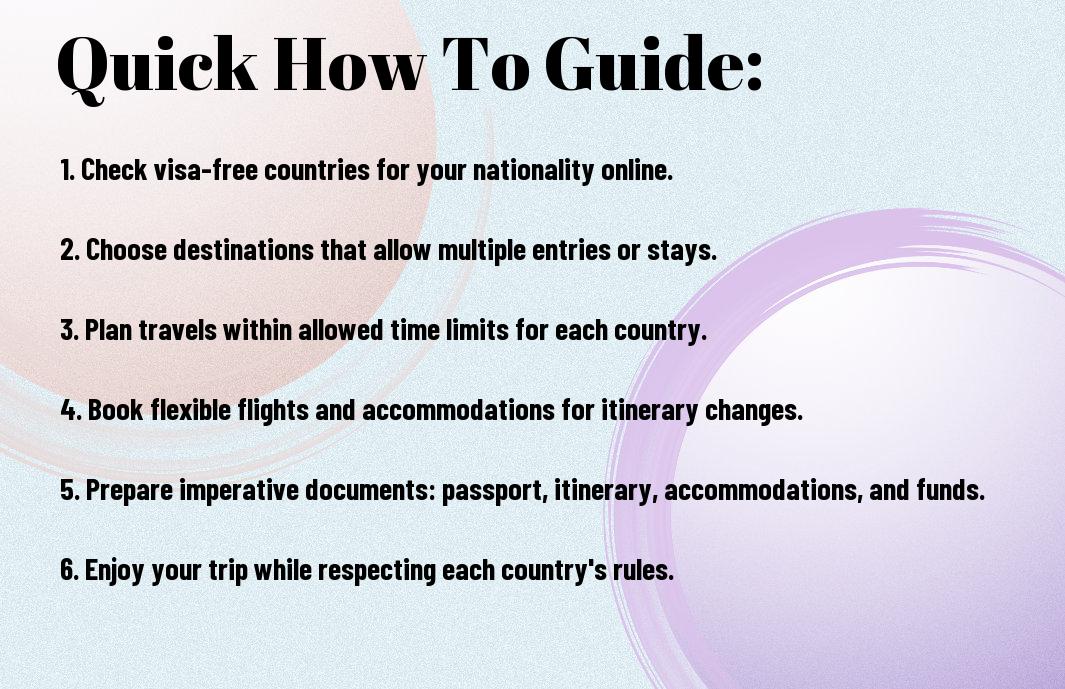
Your journey begins with understanding what visa-free travel means. Visa-free travel allows you to enter certain countries without needing a visa, making it easier and more convenient to explore multiple destinations. However, this privilege can vary significantly based on your nationality, so it’s imperative to know which countries you can visit without the hassle of paperwork before planning your itinerary.

How to Identify Visa-Free Countries

While the world map may seem vast, the list of visa-free countries is manageable with the right resources. Various online tools, government websites, and travel guides can help you identify which countries you can visit without a visa. Make sure to cross-reference your nationality as this will impact your travel options.

Tips for Researching Entry Requirements

Assuming you know your nationality, it’s time to dig deeper into entry requirements for your chosen destinations. Many countries have specific regulations concerning passport validity, proof of onward travel, and health requirements. Here are a few helpful tips:

  • Check government travel advisory websites for updates.
  • Consult travel forums or blogs for personal experiences.
  • Contact the embassy of the country if in doubt.

Thou must ensure you have the most current information to avoid unexpected issues at immigration.

With the right approach, you can easily navigate the entry requirements for each country. Start by gathering information from reliable sources like official government websites, or travel intelligence tools. Here are further suggestions:

  • Set up alerts for any changes in visa policies.
  • Join travel groups online for up-to-date advice.
  • Document your findings for each country you plan to visit.

Thou will find preparing for your trip less stressful and more enjoyable.

Planning Your Itinerary

Some individuals might think planning for multiple countries is a daunting process, but with proper strategies, it can be highly rewarding. Start by selecting the countries you wish to visit that have visa-free agreements with your nationality. Ensure your itinerary allows you enough time in each destination while considering transportation options, accommodation, and local attractions. A well-structured plan will enhance your travel experience, giving you a chance to explore diverse cultures without visa hassles.

Factors to Consider for Multiple Destinations

Any effective itinerary for multiple countries should take several important factors into account. These include:

  • Duration of stay in each country
  • Travel distance between destinations
  • Local weather conditions
  • Cultural events or festivals

Recognizing these factors will help you create a balanced travel plan tailored to your interests and preferences.

How to Optimize Your Travel Route

Multiple destinations on one trip can quickly lead to frustration if you haven’t optimized your travel route. Begin by mapping out all the countries and cities on your must-see list, then identify the most efficient way to travel between them. Use online tools and apps to compare flight routes, train schedules, or bus availability, and align these with your desired travel dates. Prioritize visiting neighboring countries to reduce travel time and costs, ensuring you can enjoy the journey as much as the destinations.

Factors such as transportation methods, duration of stays, and even time zone differences can significantly impact your experience. By plotting your route according to these considerations, you’ll maximize your time in each location while minimizing transit stress. Additionally, staying flexible allows for spontaneous adventures that make travel memorable. An efficient itinerary not only saves you time and money but also grants you a richer travel experience across multiple countries.

Preparing for Your Trip

All successful travels begin with thorough preparation. To make your journey across multiple countries smooth and enjoyable, you’ll want to gather crucial documents, plan your itinerary, and understand the cultural nuances of each destination. Doing so will help you avoid last-minute surprises and ensure a seamless experience as you explore new places.

Essential Documents and Information

An organized collection of your travel documents is crucial for visa-free travel. Ensure you have your passport, travel insurance, medical records, and any required vaccination certificates readily accessible. Additionally, keep copies of your accommodation and transportation bookings, along with emergency contact information. This documentation will make navigating border crossings and unexpected situations much easier.

Packing Tips for Visa-Free Travel

On a visa-free journey, efficient packing can enhance your travel experience. Prioritize versatile clothing and lightweight items to maximize space in your luggage. Think about packing the following crucials to stay organized:

  • Travel-sized toiletries
  • Reusable water bottle
  • Multi-purpose shoes
  • Portable charger
  • Lightweight daypack

This will ensure you have everything you need while keeping your luggage manageable.

A well-planned packing list is key to enjoying your travels without unnecessary stress. Consider your destinations’ climates, cultural expectations, and activities you’ll participate in to create an optimal packing strategy. Additionally, incorporating items like a travel umbrella or a universal adapter can save you from inconveniences.

  • Quick-dry clothing
  • Sarong or travel towel
  • Travel guidebook or downloaded maps
  • Snacks for long journeys
  • Compression bags for organizing

This will keep your belongings organized and your travel experience enjoyable.

Navigating Customs and Immigration

To ensure a smooth journey through customs and immigration, familiarize yourself with each country’s entry requirements. Being aware of what is expected from you as a traveler can save you time and avoid unnecessary complications. Prepare your documentation and have any needed items, like declarations or identification, easily accessible as you approach the checkpoint.

How to Smoothly Enter Each Country

There’s no substitute for preparation when it comes to entering new countries. Before you arrive, research the specific customs regulations of your destinations, so you can confidently answer any questions that immigration officials may have.

Tips for Dealing with Common Issues

Little challenges may arise while traveling, but being proactive can help you handle them effectively. Here are some helpful tips to navigate potential issues with customs and immigration:

  • Stay calm and composed if you encounter delays or misunderstandings.
  • Keep your important documents organized and in one place.
  • Have reliable information about your travel plans on hand, such as accommodation details.

Recognizing potential issues before they arise can significantly improve your travel experience. Understanding what you might face will enhance your confidence throughout your journey.

Issues with customs and immigration are common experiences that many travelers face. To be better prepared, consider these additional tips:

  • Always follow the rules regarding the items you can bring into the country.
  • Be polite and respectful during your interactions with officials.
  • Stay informed about any recent changes in immigration policies that may affect your travel.

Recognizing these problems and preparing for them will make your travels more enjoyable and stress-free.
Enjoying Your Travels

After planning your itinerary and booking accommodations, it’s time to immerse yourself in the rich experiences that each destination offers. Allow yourself to wander proudly through local markets, taste regional delicacies, and engage with locals. Embrace spontaneity while making memories that will last a lifetime.

How to Experience Each Country Fully

While you travel, try to engage with the culture on a deeper level. Participate in local festivals, attend workshops, or take guided tours from locals. This interaction will enrich your understanding and appreciation of each country.

Tips for Cultural Sensitivity

Experience new cultures with sensitivity and respect by following these guidelines:

  • Learn a few basic phrases in the local language.
  • Dress appropriately, respecting local customs.
  • Ask before taking photos of people or private properties.
  • Be mindful of local customs and traditions.

Thou will find that being open-minded fosters richer connections.

To enhance your travel experience while being respectful, here are additional tips on cultural sensitivity:

  • Research customs and etiquette before visiting.
  • Listen more than you speak when in social situations.
  • Participate in local traditions; it’s often appreciated.
  • Support local businesses by shopping locally and eating at small eateries.

Thou will leave a positive impression, fostering goodwill.

Conclusion

Now that you understand the strategies for traveling to multiple countries without a visa, you can plan your trips more efficiently. By researching visa-free or visa-on-arrival destinations and utilizing your passport’s advantages, you can explore various cultures and experiences seamlessly. Always check the latest entry requirements and regulations for each country on your itinerary to ensure a smooth journey. With these tips, you can enjoy hassle-free travel while discovering the beauty of our world.

FAQ

Q: What options do I have for traveling to multiple countries without needing a visa?

A: Many travelers can take advantage of visa-free agreements between countries. Some nations have arrangements that allow for short stays without a visa, typically ranging from a few days to several months. To maximize your travel, consider carefully planning an itinerary that includes countries within the Schengen Area in Europe, for instance, or countries in the Caribbean, where visa shows are generally relaxed. You may also look into passport rankings; travelers from certain countries enjoy broader access to more nations without the requirement for a visa. Always check the specific regulations of each country before planning your trip, as rules may change.

Q: How can I determine the visa requirements for my destination countries?

A: Checking visa requirements can be done easily online. Start by visiting the official government or embassy websites of the countries you plan to visit. These sites usually provide the most accurate and updated information regarding entry requirements. Additionally, consider using trusted travel advisory websites or official travel forums where other travelers share their experiences. It’s also beneficial to verify if your nationality qualifies for any special agreements like visa waivers or e-Visas that could facilitate easier entry into the respective countries.

Q: What should I consider when traveling through countries with different visa policies?

A: When traveling through multiple countries with varying visa policies, consider the duration of stay allowed in each country and any entry requirements specific to your nationality. Create a travel itinerary that respects the allowed timeframes to ensure smooth transitions between countries. Be aware of the regulations regarding passport validity; many nations require passports to be valid for several months beyond your intended stay. Additionally, familiarize yourself with any health or safety regulations, such as COVID-19 measures or vaccination proof, which may vary by country. This preparation can help avoid unexpected issues during your travel.

How to Travel to Countries with Strict Visa Requirements

Traveling to countries with strict visa requirements can be a daunting experience, but with the right preparation, you can navigate the process smoothly. Understanding the specific entry requirements for your destination is necessary to avoid any last-minute hurdles. From gathering necessary documents to applying well in advance, you can ensure that your travel plans proceed without a hitch. In this guide, you will find practical tips and insights to help you successfully obtain the necessary visas and make the most of your trip abroad.

Key Takeaways:

  • Research Requirements: Thoroughly investigate the visa requirements, including documentation and processing times, for your destination country.
  • Plan Ahead: Start the visa application process early to avoid any last-minute complications or delays.
  • Consult Experts: Seek advice from travel agencies or visa consultants who specialize in travel to countries with strict visa policies.

Understanding Visa Requirements

A comprehensive grasp of visa requirements is important when planning your travel. Each country has specific regulations and procedures for obtaining a visa, which can differ significantly. Always check the official embassy or consulate website of your destination to get the most accurate and up-to-date information. Your ability to travel will largely depend on your nationality and purpose of visit, so staying informed is key.

Types of Visas

Along with understanding the requirements, you should familiarize yourself with the various types of visas available. Here’s a brief overview:

Tourist Visa For leisure and tourism activities
Business Visa For business-related activities
Student Visa For study purposes
Work Visa For employment in the host country
Transit Visa For passing through a country
  • You may need to provide additional documents.
  • Each visa type comes with its own processing time.
  • Check if a visa-on-arrival is an option for your destination.
  • You may require a sponsor from the host country for certain visas.
  • Thou should validate your visa type before application.

Common Restrictions

Around the globe, many countries impose specific restrictions that you must take into account. These might include limited duration of stay, prohibited activities, or requirements for insurance coverage. Adhering to these limitations can prevent any complications during your travels.

Consequently, it’s important to understand that violations of visa restrictions can lead to serious repercussions, including fines or deportation. Many countries also require proof of onward travel and sufficient funds to support your stay. Being aware of these common restrictions will help ensure a smoother experience during your time abroad. Always read up on specific country policies well in advance to avoid any pitfalls.

Preparing for Your Trip

Some of the most exciting adventures can begin with the challenges of obtaining a visa. Before launching on your journey, ensure you familiarize yourself with the particulars of the destination’s visa policies. You can find valuable insights and experiences shared by fellow travelers on 10 most difficult countries to get a visa : r/knowyourvisa.

Researching Visa Options

Among the first steps in your preparation should be thorough research into the various visa options available for your destination. Different countries impose different requirements based on your nationality, the purpose of your visit, and the length of your stay. Make sure to explore official government websites and consult recent travel forums for comprehensive details on the types of visas you can apply for.

Gathering Necessary Documents

By gathering the necessary documents well in advance, you can streamline the visa application process. Typically, you will require a valid passport, recent photographs, an itinerary, proof of accommodation, and sometimes financial statements to demonstrate your ability to support your stay.

Also, be aware that specific countries may request additional documentation such as a letter of invitation or a travel insurance policy. Organizing these documents early on can prevent delays in the process. Always double-check the requirements for your country and category of visa to ensure you have all necessary paperwork at hand when applying.

Applying for a Visa

Now that you understand the importance of a visa for your travel, the next step is applying for it. This process can vary significantly depending on the country you intend to visit, so it’s important to familiarize yourself with their specific requirements and guidelines. Detailed preparation can make the difference between a smooth application and unnecessary delays that could affect your travel plans.

Application Process

Around the world, visa applications typically require you to fill out a form and submit various documents, including your passport, photographs, and travel itinerary. Some countries may also ask for proof of financial means or an invitation letter. Always check the official embassy or consulate website to ensure that you gather all necessary documents and follow the proper procedures to avoid any complications.

Tips for a Successful Application

Along with carefully completing your application, there are several tips to boost your chances of success. Ensure you check the visa processing times and submit your application well in advance to avoid last-minute issues. Here are some key pointers:

  • Double-check your application for errors.
  • Provide all requested documentation in the correct format.
  • Be ready for an interview if it’s part of the application process.

The more thorough and accurate you are, the smoother your application process will likely be.

Further enhancing your application outcome involves thorough preparation and understanding of common pitfalls. Ensure that your finances are in order and all documents reflect accurate information. Consider the following additional practices:

  • Reach out to others who have successfully applied for a visa to gain insights.
  • Use a checklist to keep track of your documentation and deadlines.
  • Seek expert advice if you encounter difficulties during the process.

The effort you invest in this preparation pays off with a higher chance of your visa application being approved.

Navigating Interview Processes

Not every visa application is straightforward, and navigating interviews can be overwhelming. Countries with strict visa requirements often conduct interviews to assess your eligibility. It’s necessary to approach this process with confidence and preparedness to increase your chances of approval.

Types of Interviews

  • In-person interviews
  • Telephone interviews
  • Video interviews
  • Group interviews
  • Follow-up interviews

Recognizing the type of interview you will face is vital for your preparation.

Interview Type Description
In-person Face-to-face meetings at embassies or consulates.
Telephone Conducted over the phone, often for initial assessments.
Video Using conferencing software for remote interviews.
Group Interviews with multiple applicants assessed together.
Follow-up Additional interviews if further clarification is needed.

Preparing for Common Questions

About anticipating the questions that may arise during your interview, preparation is key. Familiarizing yourself with common queries can help you formulate clear and concise responses.

To effectively prepare, research and compile a list of typical questions asked during visa interviews, such as your travel purpose, financial stability, and ties to your home country. Practice your responses aloud, ensuring you convey your intentions clearly. It’s also helpful to have relevant documents at hand to support your answers, which demonstrates your preparedness and determination.

Alternatives to Traditional Visa Applications

All travelers should explore alternatives to traditional visa applications, particularly when visiting countries with strict entry requirements. These options can simplify your travel experience and save you time and effort. By understanding available alternatives, you can enhance your journey while navigating complex visa regulations.

Visa Waiver Programs

The Visa Waiver Program (VWP) allows citizens of certain countries to travel to participating nations without a visa for short stays. This option provides a convenient way to enter a country for tourism or business, as long as you meet specific criteria, such as having a valid passport and an approved travel authorization. Check if your country qualifies for this program to streamline your travel plans.

e-Visas and Fast-Track Options

Waiver programs are not the only alternatives; e-visas and fast-track options can significantly simplify the visa process. Many countries now offer electronic visa applications, enabling you to apply online without visiting an embassy. This convenience often includes expedited processing times, allowing you to receive your visa quickly and efficiently.

Indeed, e-visas are becoming increasingly popular for their accessibility and convenience. These online applications often require minimal documentation and can be completed from the comfort of your home. Fast-track options, on the other hand, allow travelers to bypass lengthy queues and processing times at borders, making the travel experience smoother. By utilizing these modern alternatives, you can save valuable time and focus on enjoying your trip rather than navigating bureaucratic hurdles.

Cultural Considerations and Etiquette

Despite the challenges of strict visa requirements, embracing the local culture can enhance your travel experience. Understanding and respecting social norms, traditions, and behaviors in the host country helps you navigate interactions more smoothly. Be mindful of dress codes, greetings, and dining etiquette, as these aspects can significantly impact how locals perceive you. Demonstrating cultural sensitivity fosters goodwill and opens doors for enriching connections throughout your journey.

Understanding Local Customs

Above all, familiarize yourself with the customs and traditions of the country you are visiting. This includes learning about regional holidays, social hierarchies, and taboos that might influence your interactions. Engaging with locals using their customs can create a positive atmosphere and demonstrate your appreciation for their heritage, enhancing your overall experience.

Language Barriers and Solutions

Behind every smile is the potential for miscommunication. Language barriers can be a significant obstacle while traveling, impacting your ability to navigate, build connections, and enjoy authentic experiences. However, simple strategies can help bridge this gap effectively.

Cultural misunderstandings often arise from language barriers, but there are several solutions to enhance communication. Consider downloading translation apps or carrying a pocket phrasebook to assist you in real-time conversations. Engaging with locals through gestures or visual aids can also help convey your message. Additionally, many people are appreciative when you make an effort to speak their language, even if it’s just a few basic phrases. This approach fosters goodwill and may lead to more enriching interactions with the local community.

To wrap up

Now that you have a comprehensive understanding of how to navigate countries with strict visa requirements, you can take informed steps towards your travel goals. Make sure to thoroughly research the specific visa application processes, gather all necessary documentation, and submit your applications well in advance. This preparation will not only enhance your chances of approval but also streamline your travel experience. By adhering to these guidelines, you can enjoy your journey to destinations with stringent entry regulations confidently and efficiently.

Q: What steps should I take to prepare for applying for a visa to countries with strict requirements?

A: When preparing for a visa application to countries with stringent requirements, start by researching the specific visa requirements for your destination. This includes understanding the types of visas available, documentation needed, and any financial proofs you’ll have to submit. Gather your documents well in advance, such as your passport, photographs, travel itinerary, invitation letters, and evidence of financial solvency. Next, fill out any necessary application forms carefully, ensuring accuracy. Finally, be prepared for an interview, where you may need to explain your travel intentions clearly.

Q: How can I increase my chances of getting a visa for a country with strict entry regulations?

A: To enhance your chances of obtaining a visa, focus on presenting a complete and well-organized application. This may involve providing detailed travel plans, proving ties to your home country (like employment or family), and demonstrating your ability to support yourself financially during your stay. It can also be advantageous to obtain any required vaccinations or travel insurance as stipulated by the embassy. Additionally, if applicable, include letters of invitation from contacts in the destination country, as these can substantiate your reasons for traveling.

Q: What common mistakes should I avoid when applying for a visa to a country with strict visa policies?

A: There are several common pitfalls to avoid when applying for a visa to a stringent country. The first is providing incomplete or incorrect information on your application forms; inaccuracies can lead to delays or rejection. Another mistake is failing to provide sufficient financial documentation, which can raise concerns about your ability to support yourself while abroad. Additionally, be cautious not to underestimate processing times; submitting your application too close to your intended travel dates can result in complications. Finally, don’t ignore the specifics that each country’s visa policy may require, as overlooked requirements could adversely affect your application.

Skip to content